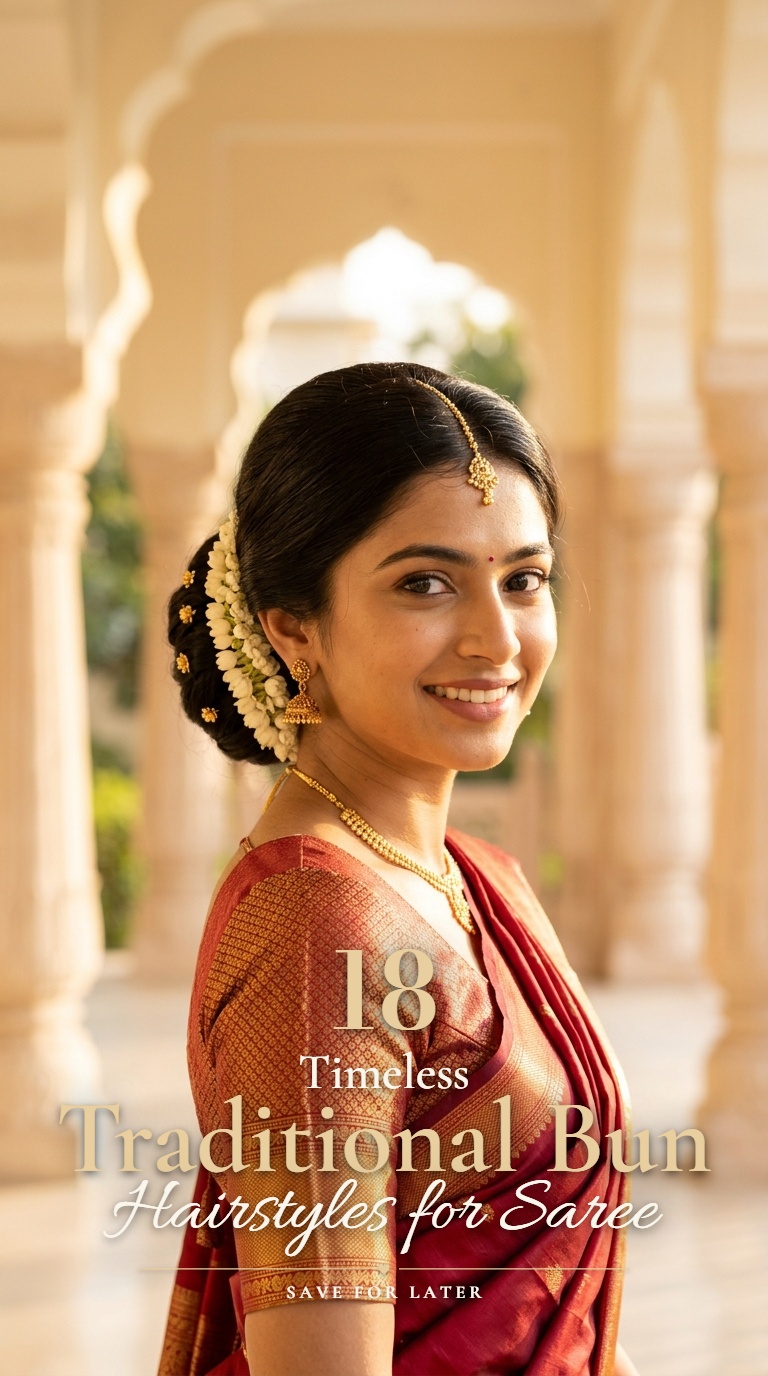
Choosing traditional bun hairstyles for saree draping ensures a look that remains elegant and sophisticated across generations. This hairstyle provides a clean canvas for showcasing intricate jewelry and drape details.
The classic bun offers a versatile foundation for various hair textures and lengths. It keeps hair neatly secured while highlighting the neckline and facial features during special occasions.
Traditional styling techniques often incorporate cultural elements like fresh flowers or metallic accessories. These details transform a simple updo into a personalized statement of heritage and grace.
1. Gajra Wrapped Traditional Bun for Saree
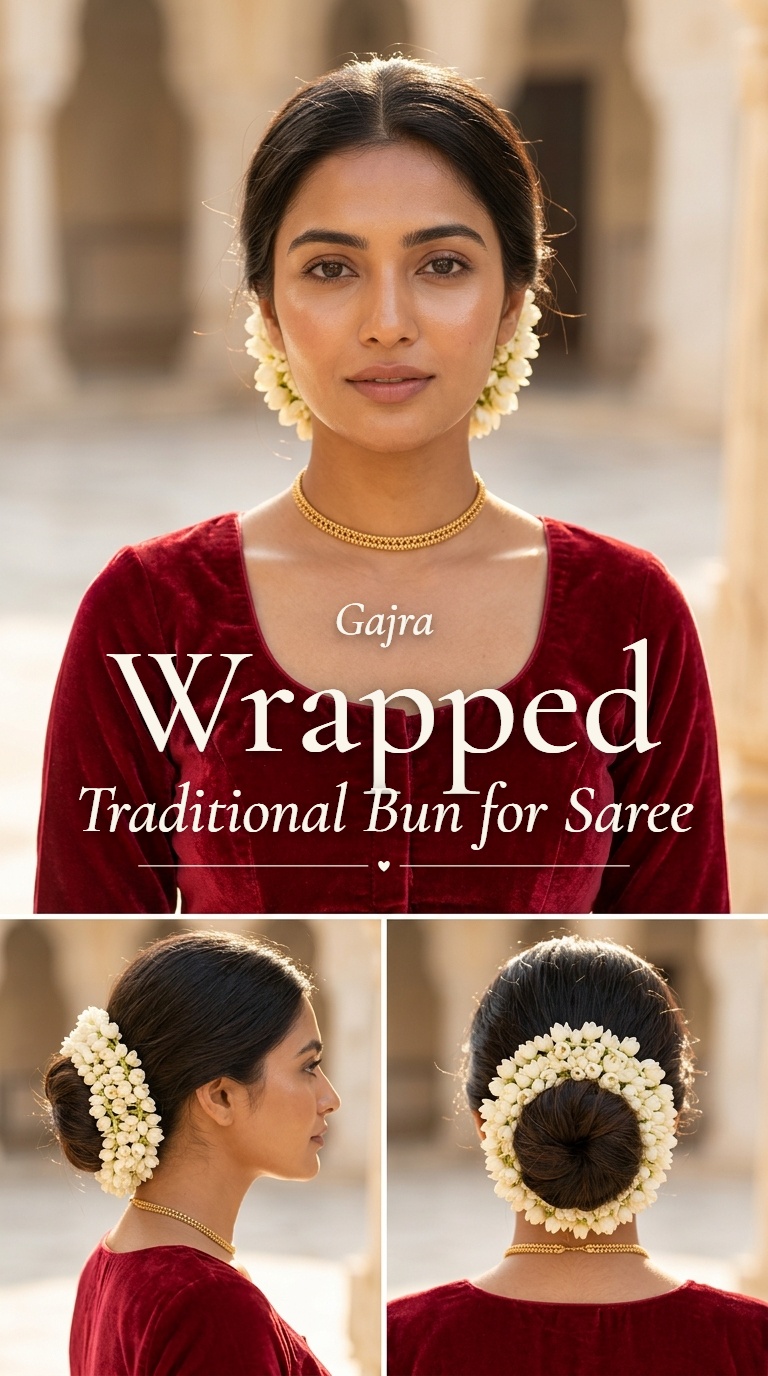
A low bun wrapped in fresh jasmine flowers creates a quintessential look for any festive occasion. The white petals provide a stark, beautiful contrast against dark hair and vibrant silk fabrics.
Securing the gajra tightly around the base of the bun ensures the fragrance and the aesthetic remain intact throughout the day. This style is particularly favored for its timeless cultural significance.
You can use single or multiple strands of flowers depending on the volume of your hair. This approach adds a natural touch that complements the rich texture of a traditional saree.
2. Braided Low Traditional Bun for Saree
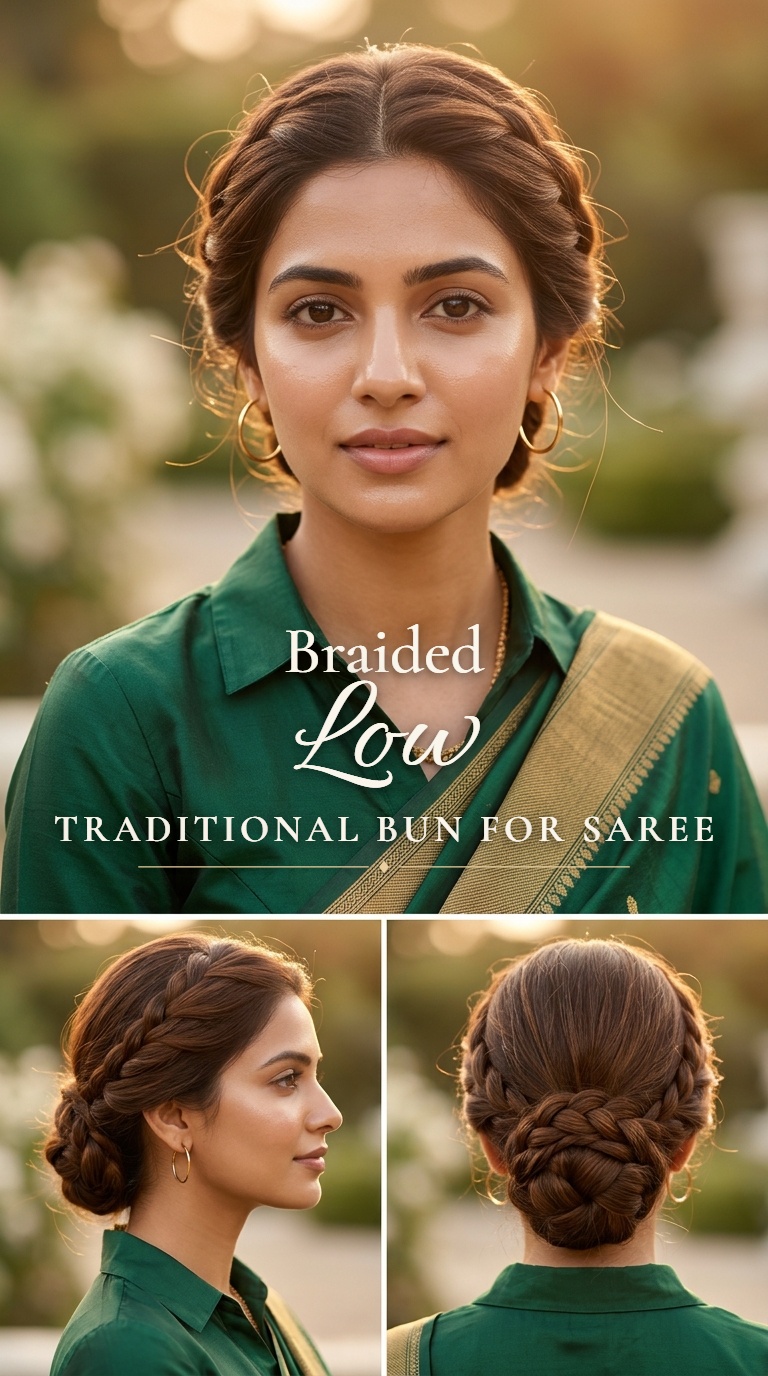
The braided low bun combines structural integrity with a delicate finish that prevents loose strands from falling out. It starts with a simple three-strand braid that is coiled into a neat circle.
This variation works exceptionally well for thick hair that requires extra security during long events. The braided texture adds visual depth to the back of the hairstyle without needing many accessories.
Pair this look with a deep-back blouse to emphasize the intricate pattern of the braids. It offers a sophisticated silhouette that remains stable from morning rituals until evening celebrations.
3. Sleek Low Bun for Silk Saree
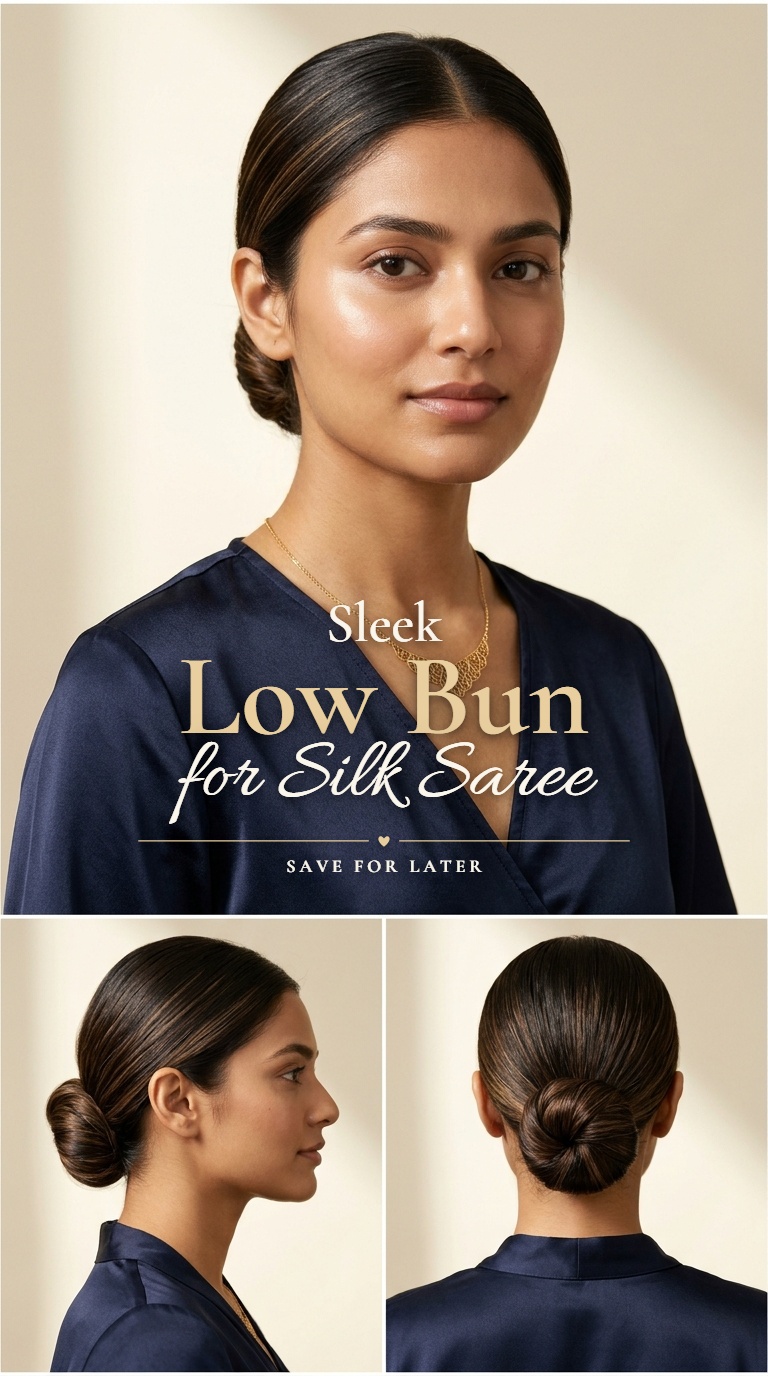
A sleek low bun provides a modern and polished finish that pairs perfectly with heavy Kanjeevaram or Banarasi silks. The hair is pulled back tightly to create a smooth, reflective surface.
Using a light pomade or hair serum helps in achieving the flyaway-free look required for this specific style. It directs all attention toward the saree’s weave and the wearer’s jewelry.
This hairstyle is ideal for those who prefer a minimalist aesthetic while maintaining a traditional vibe. It works beautifully with both middle and side partitions depending on face shape.
4. Floral Embellished Traditional Bun for Saree
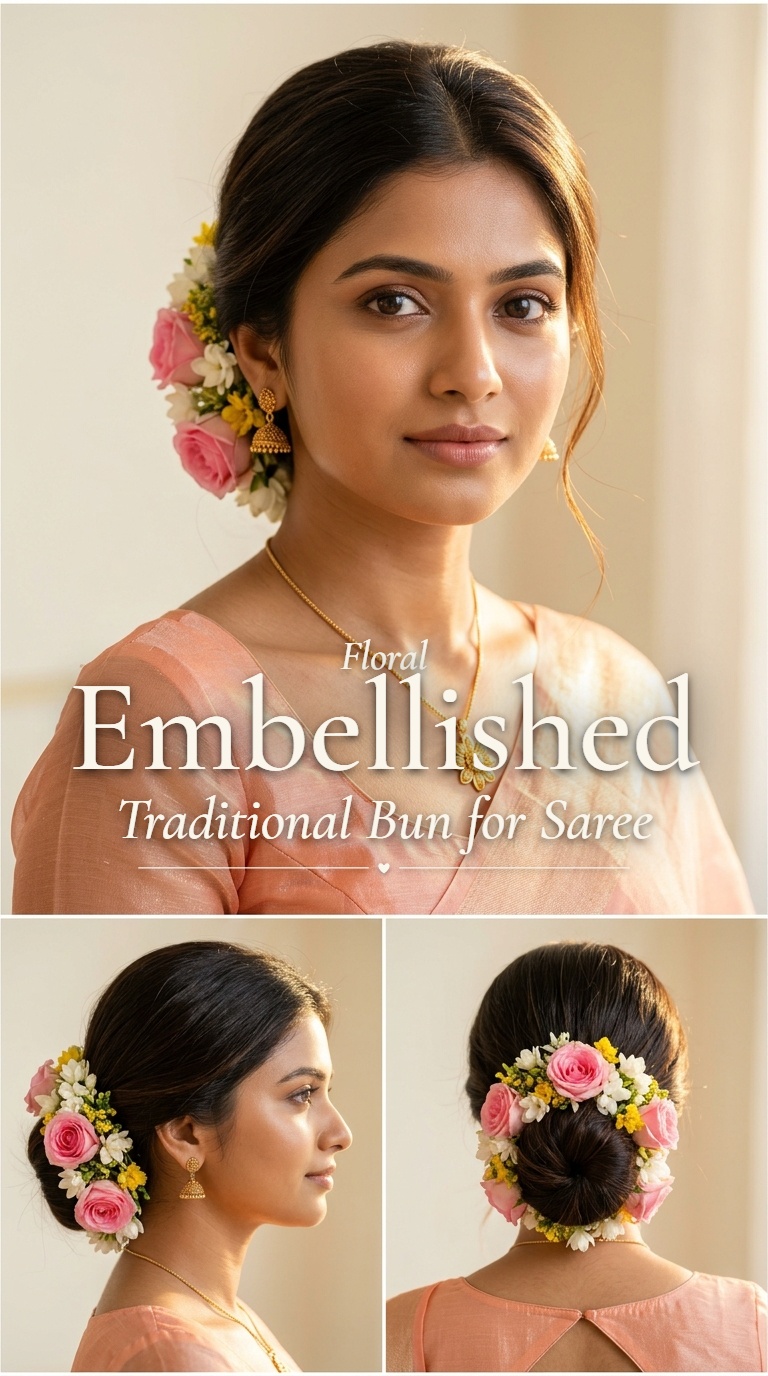
Instead of a full wrap, this style focuses on pinning individual small flowers across the surface of the bun. Roses, carnations, or orchids are often chosen to match the color of the saree.
The placement of flowers can be symmetrical or scattered for a more whimsical, garden-inspired appearance. It adds a pop of color that brightens the overall ensemble effortlessly.
This technique allows for more creativity with floral choices beyond the traditional jasmine. It is a popular choice for daytime weddings where natural light enhances the floral details.
5. Side Partition Traditional Bun for Saree
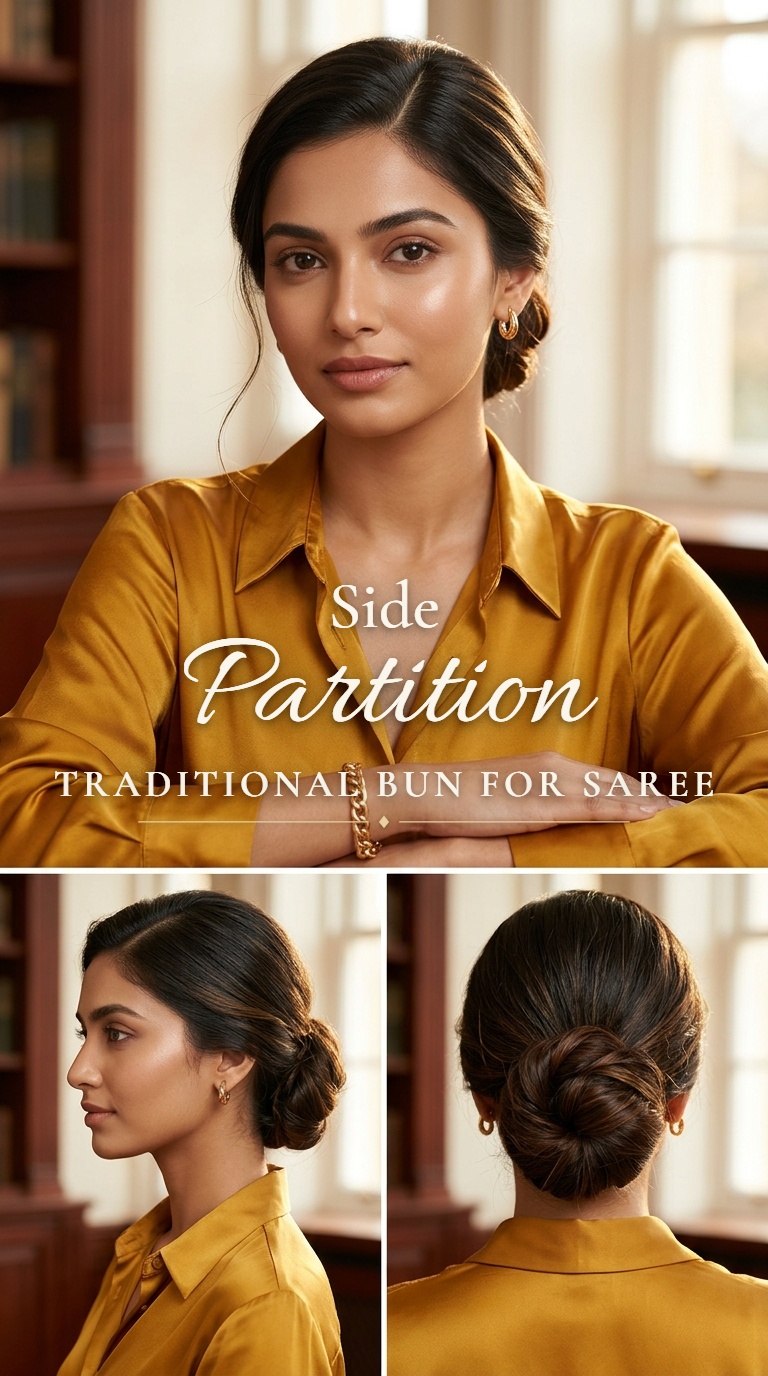
A side partition adds a soft, asymmetrical element to the traditional bun that can help frame the face. It creates a gentle sweep across the forehead before the hair joins the bun.
This style is often chosen to balance facial features or to accommodate a specific style of maang tikka. The bun itself remains centered at the nape of the neck for stability.
The side sweep can be kept sleek or given a slight wave for added volume. It provides a more contemporary twist to the standard pulled-back traditional look.
6. Rose Shape Traditional Bun for Saree
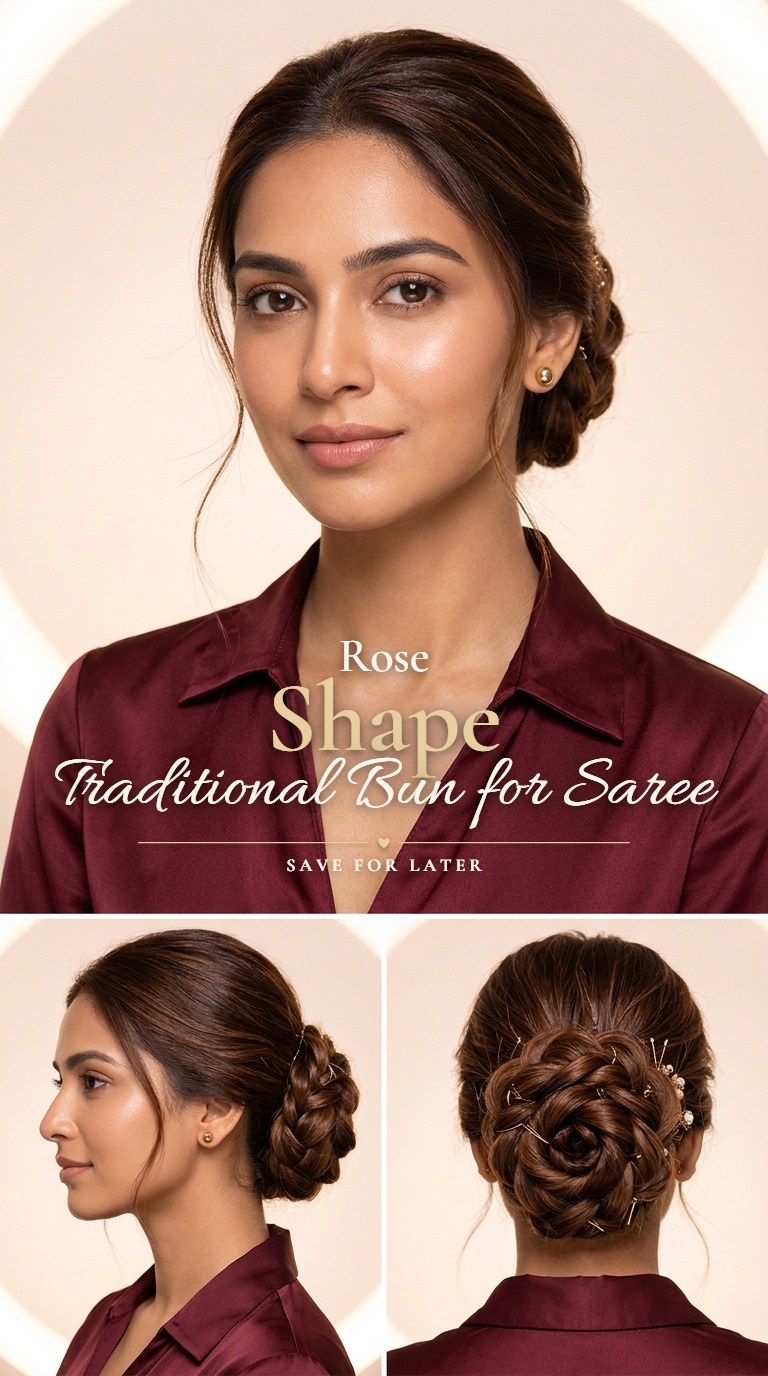
Creating a rose shape involves twisting sections of hair into small coils that resemble flower petals. These coils are then pinned together to form a large, textured floral bun.
This artistic hairstyle serves as a centerpiece, often requiring no additional ornaments to look complete. It showcases the skill of the stylist and the natural luster of the hair.
Because of its intricate nature, this bun is perfect for grand receptions or formal gatherings. It maintains its shape well and offers a unique 3D effect from every angle.
7. Gold Accessory Traditional Bun for Saree
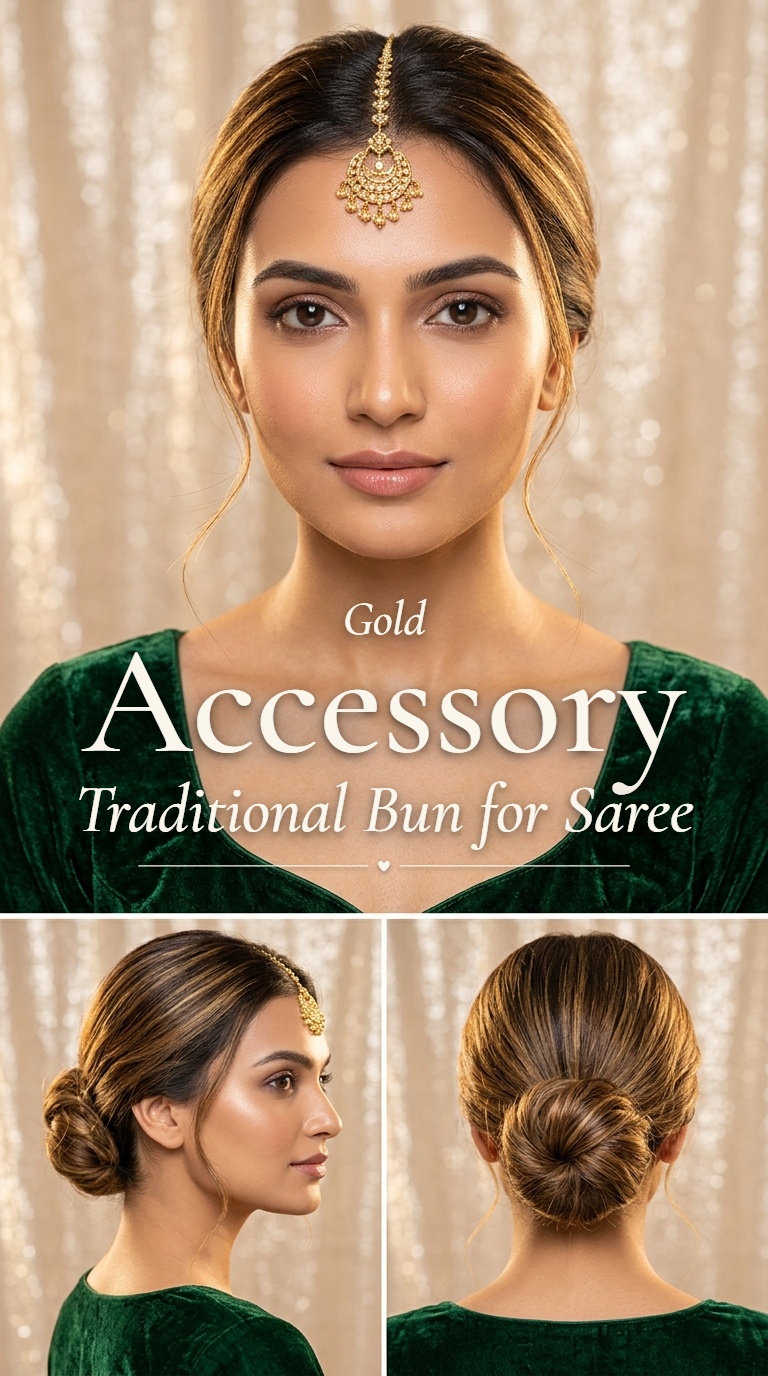
Traditional gold accessories like the “Juda pin” or “Braid rings” are integrated directly into the bun structure. These metallic elements add a regal touch that complements gold-bordered sarees.
The accessories can be placed at the center of the bun or around the perimeter for a halo effect. They provide a structural gleam that catches the light beautifully during indoor events.
Using heirloom jewelry pieces in the hair is a great way to incorporate family history into a modern look. The metal weight also helps in keeping the bun firmly in place.
8. Twisted Traditional Bun for Saree
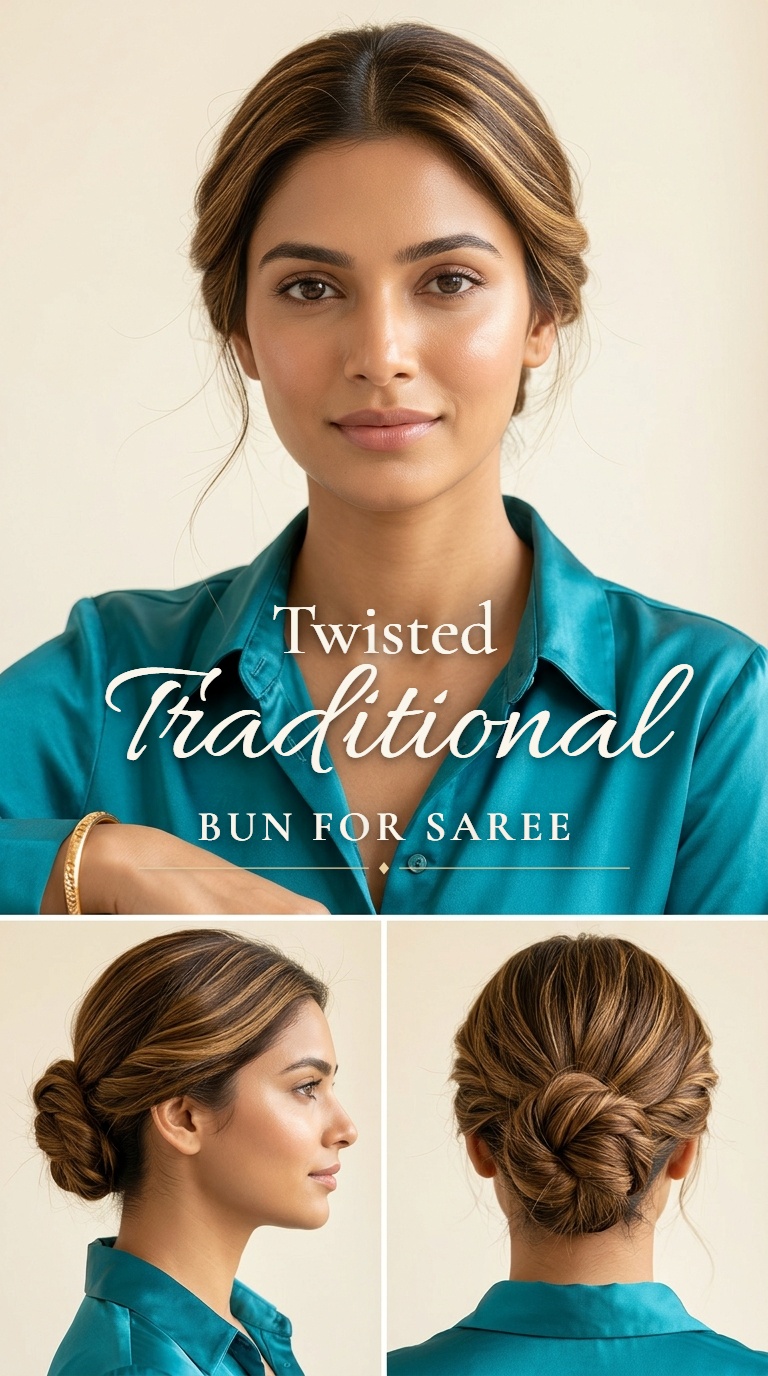
The twisted bun is created by dividing the hair into two sections and wrapping them around each other. This results in a rope-like texture that looks complex but is simple to achieve.
The twists add volume to the bun, making it an excellent choice for those with medium-thickness hair. It provides a soft, feminine silhouette that matches the drape of a chiffon saree.
Pinning the ends securely under the twists ensures a clean finish. This style works well with minimal floral accents or a single decorative pin at the side.
9. High Top Traditional Bun for Saree
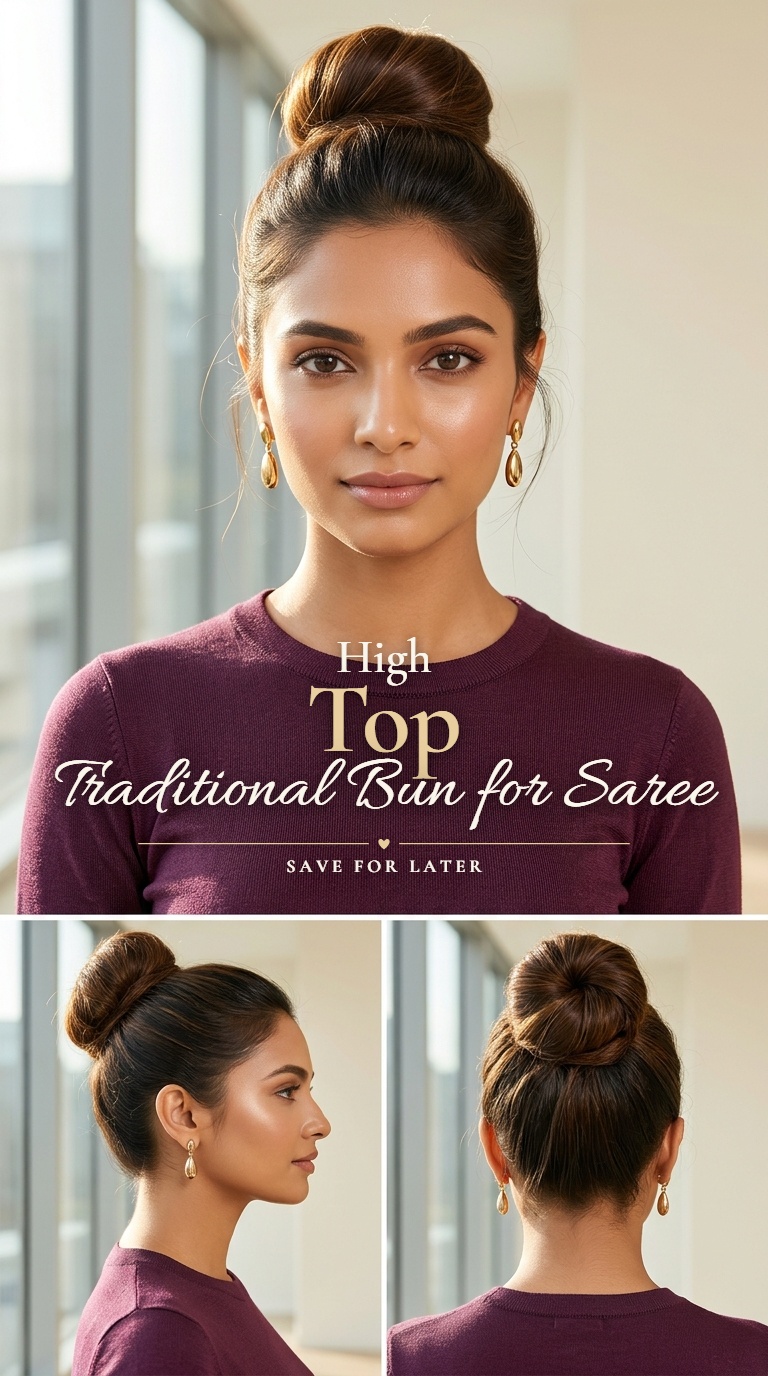
While most traditional buns sit low, the high top bun offers an elongated silhouette that adds height. It is gathered at the crown or slightly below to create a regal profile.
This style is particularly effective for showcasing high-neck blouses or statement necklaces. It keeps the hair completely away from the shoulders, emphasizing the saree’s shoulder drape.
A high bun can be styled with a donut filler for extra volume and a perfectly round shape. It remains a popular choice for formal portraits and evening gala events.
10. Textured Traditional Bun for Saree
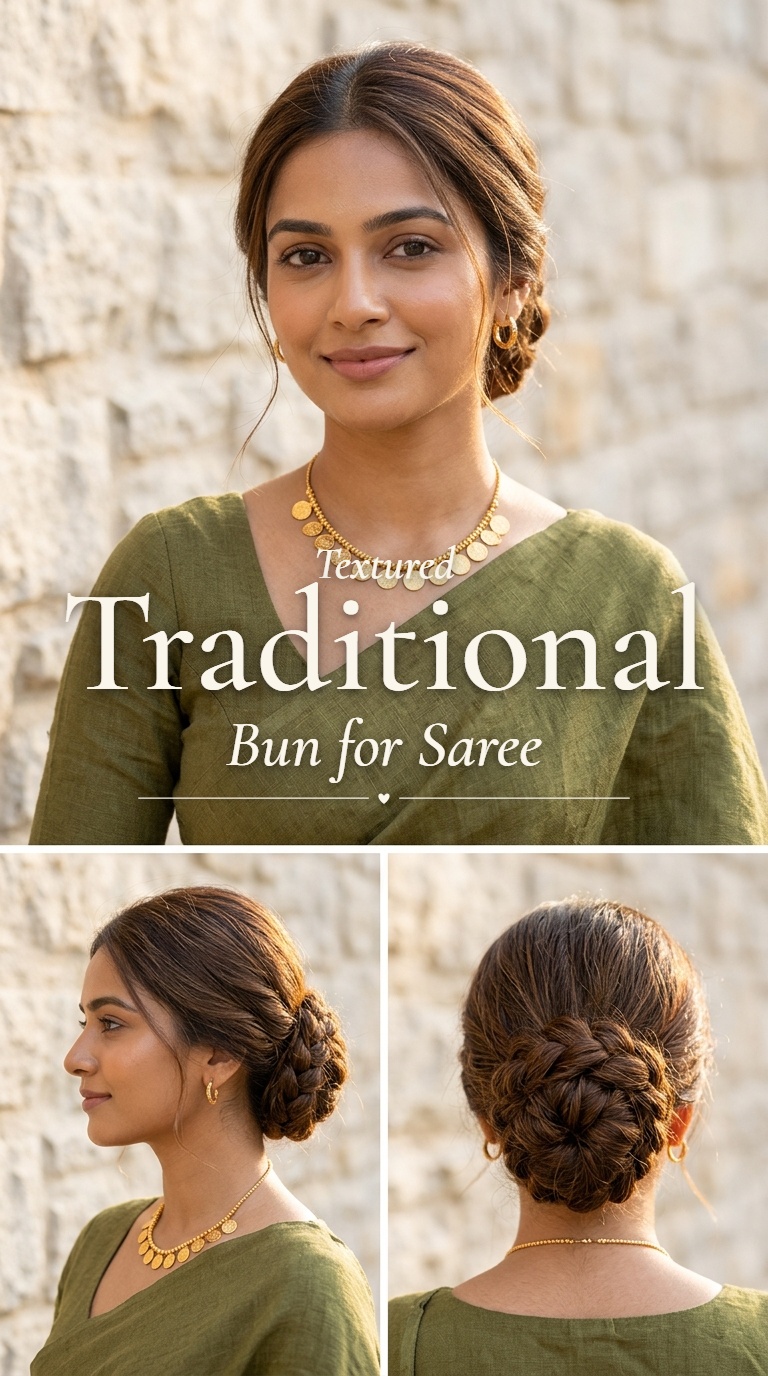
The textured bun focuses on creating ripples or small waves in the hair before it is pinned up. This adds a sense of movement and softness to the overall traditional look.
Rather than a flat surface, the bun appears full of life and depth. This is a great option for those who find sleek styles too harsh against their features.
Finishing with a light-hold spray helps maintain the texture without making the hair feel stiff. It pairs wonderfully with handloom sarees that have a slightly rougher, organic texture.
11. Messy Low Traditional Bun for Saree
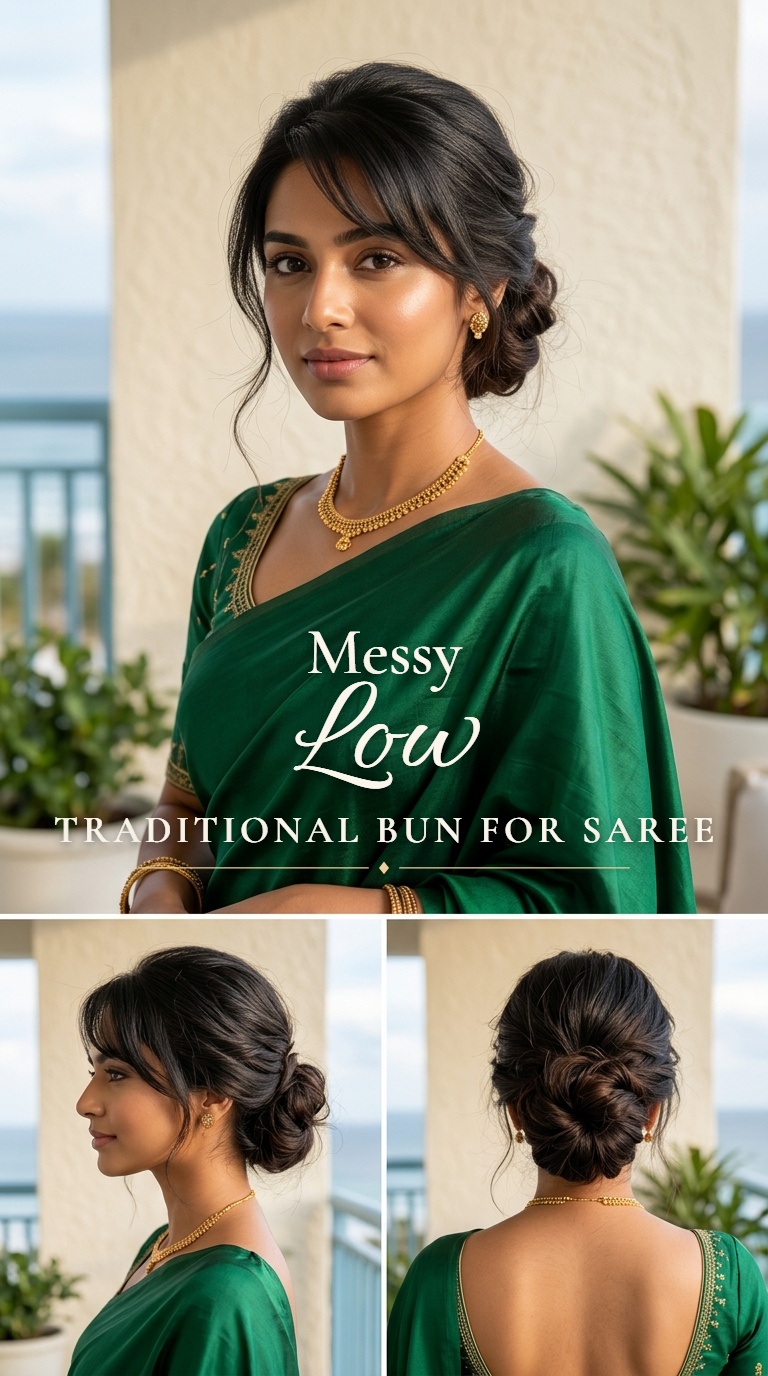
The “intentionally messy” bun offers a relaxed and romantic take on the classic traditional updo. It features loose strands and a softer grip that feels effortless yet curated.
This style is perfect for outdoor events where a stiff hairstyle might feel out of place. It allows for natural movement and looks better as the day progresses and more strands loosen.
Tucking a few small wildflowers into the loose sections enhances the bohemian vibe. It provides a youthful energy to the traditional saree ensemble without sacrificing elegance.
12. Pearl Detailed Traditional Bun for Saree
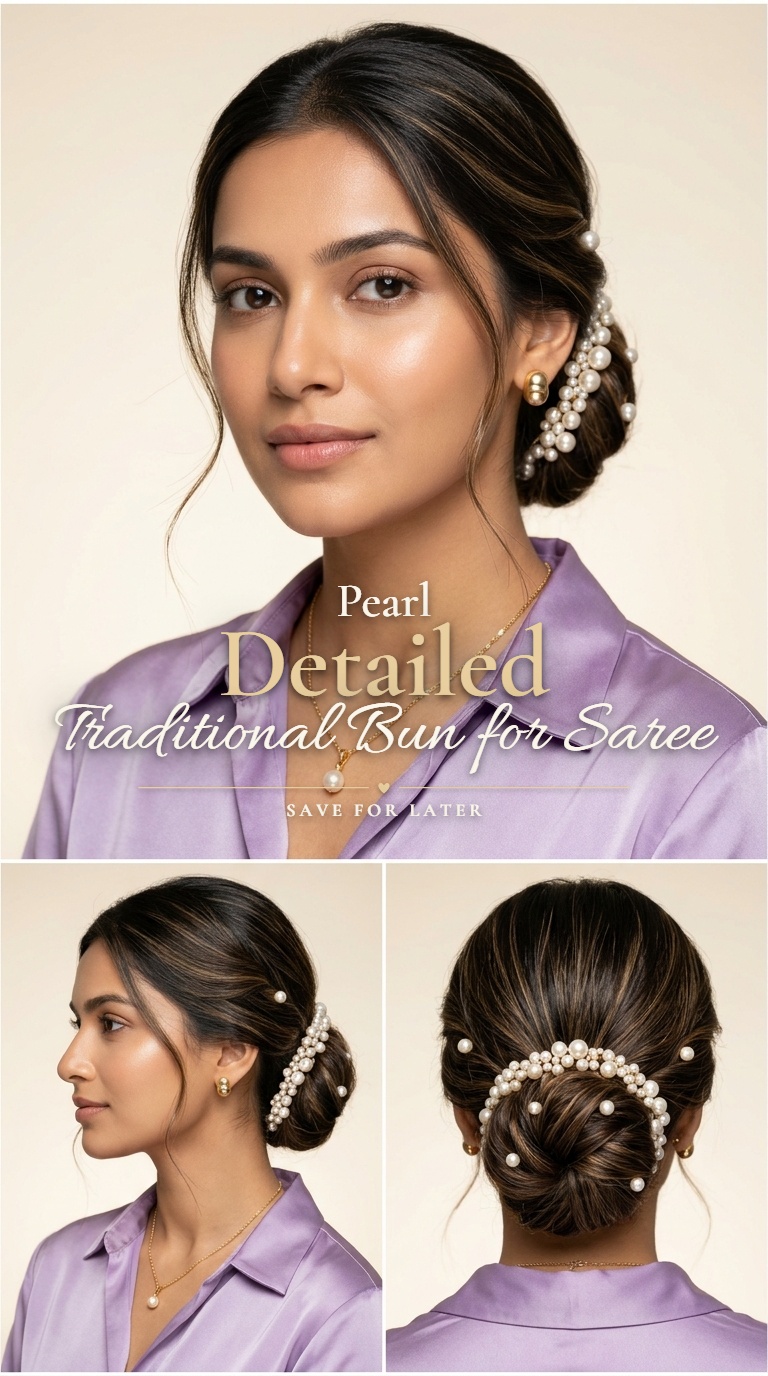
Integrating pearls into a traditional bun offers a sophisticated alternative to gold or fresh flowers. Strands of pearls can be draped across the bun or pinned individually.
The soft white glow of pearls complements pastel-colored sarees and silver-work embroidery. It creates a look that is both vintage and incredibly refined for formal occasions.
Pearls are often lighter than metal accessories, making them comfortable for long-duration wear. This style is frequently chosen for sophisticated evening parties or engagement ceremonies.
13. Double Braid Traditional Bun for Saree
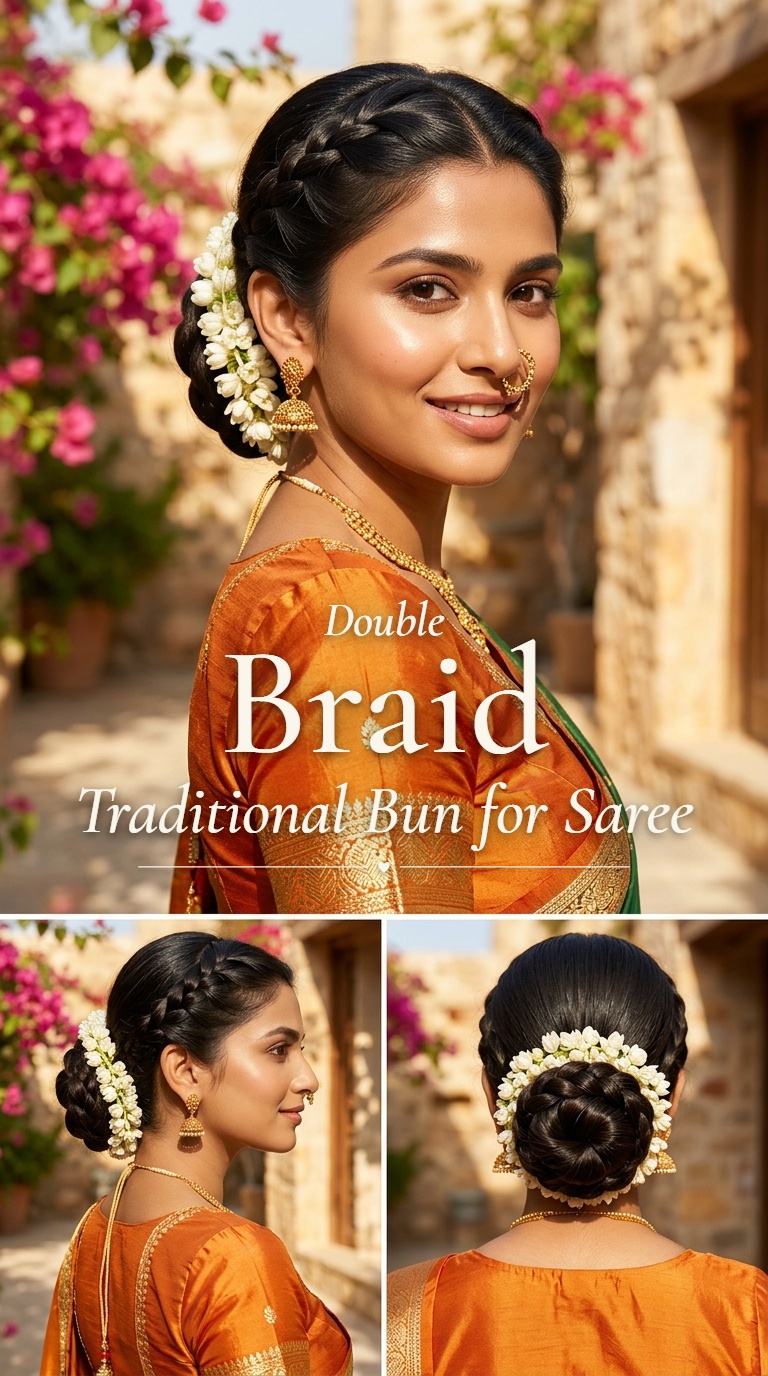
Two braids are started from the temples and brought back to merge into a single low bun. This adds detail to the sides of the head as well as the back.
The double braid technique ensures that the front of the hair stays neat and tucked away. It creates a beautiful pattern that leads the eye toward the central bun.
This style is highly functional for active events like dance performances or weddings. It provides maximum security while offering a complex and beautiful visual structure.
14. French Braid Traditional Bun for Saree
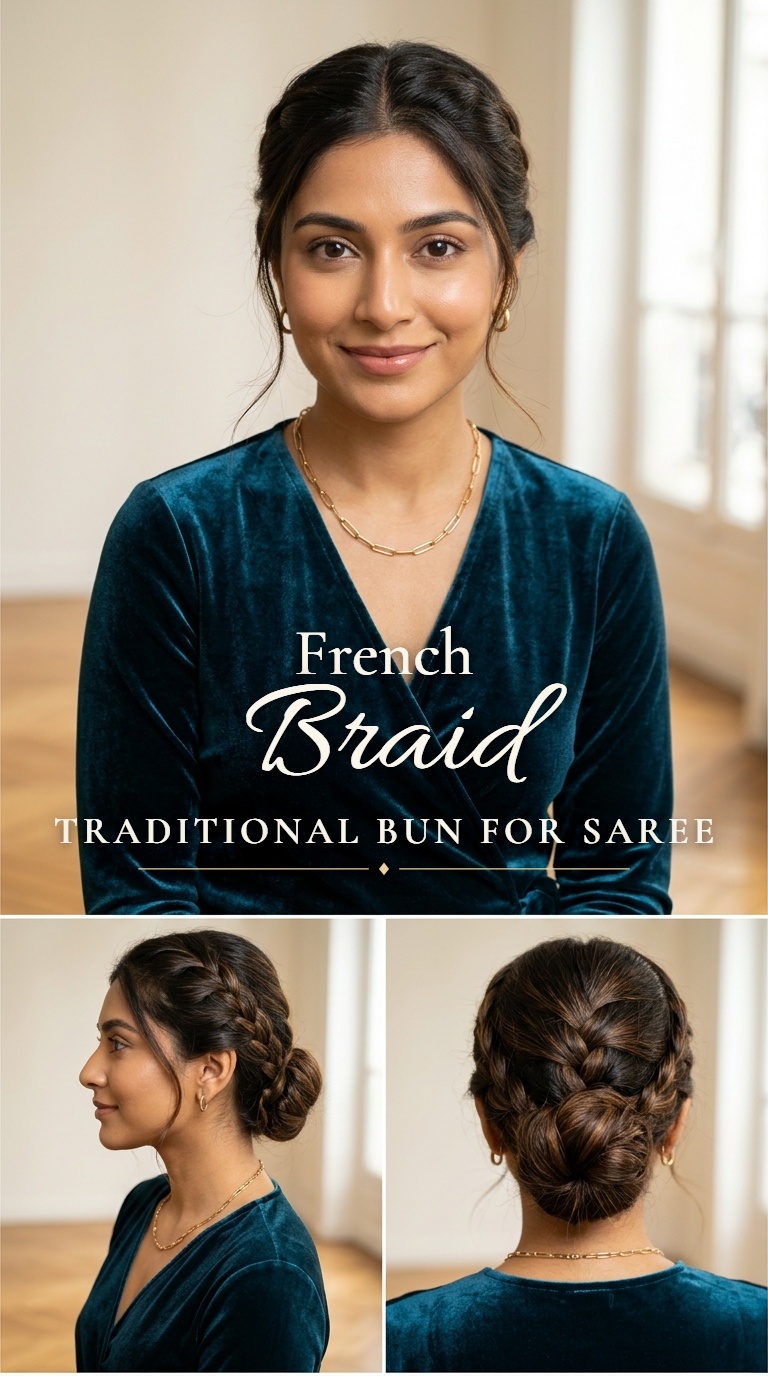
Incorporating a French braid that transitions into a bun adds a touch of fusion to the traditional saree look. The braid starts from the front, adding volume at the crown.
The transition from the braid to the bun should be seamless and well-pinned. This style is excellent for hiding shorter layers or bangs that might otherwise fall out.
It offers a contemporary profile that bridges the gap between western braiding styles and eastern traditional updos. This makes it a versatile choice for modern festive celebrations.
15. Classic Chignon Traditional Bun for Saree
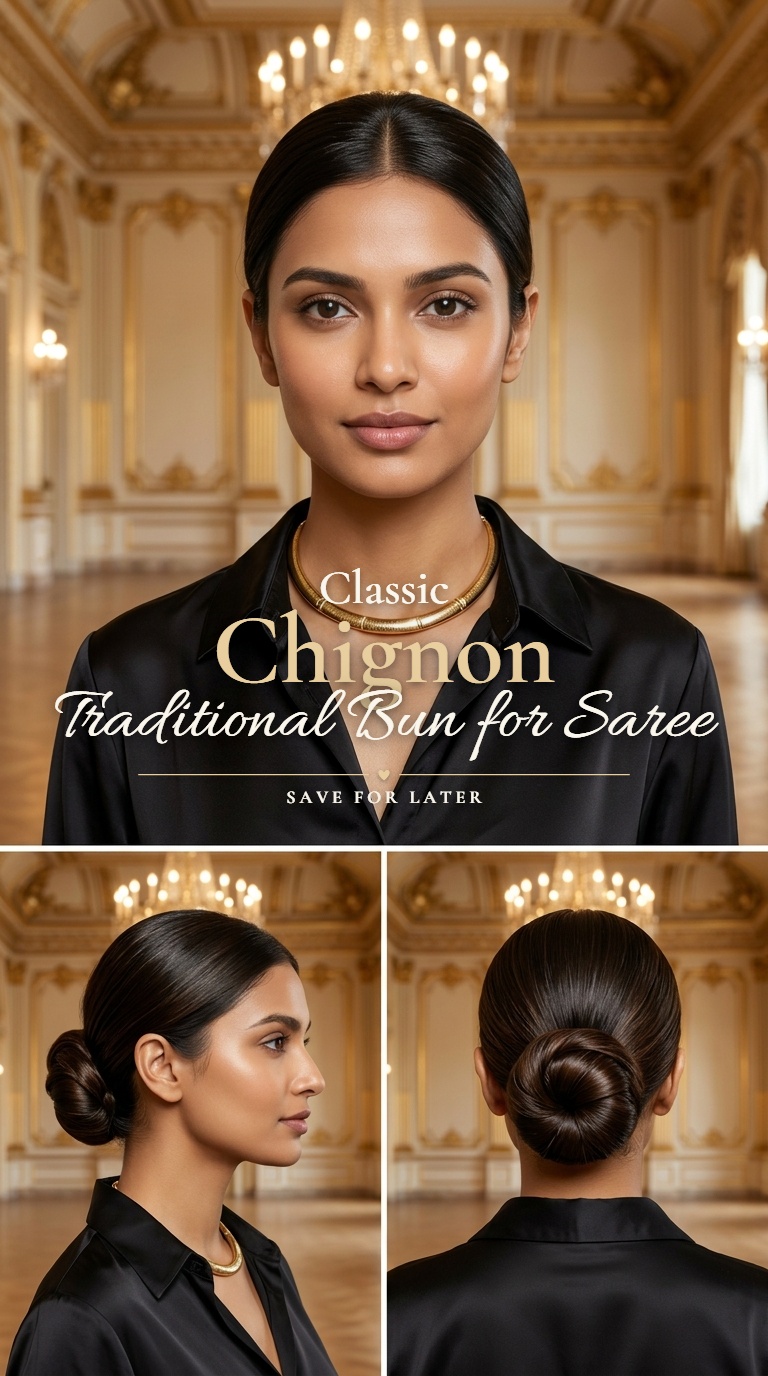
The chignon is a refined bun style that sits very low at the nape of the neck. It is characterized by its horizontal shape rather than a perfectly round one.
This style exudes an air of classic grace that is hard to replicate with other updos. It is simple, understated, and focuses entirely on the poise of the wearer.
A chignon can be adorned with a single statement brooch or a small cluster of flowers at one side. It is the go-to choice for those seeking a “less is more” approach.
16. Jasmine Adorned Traditional Bun for Saree
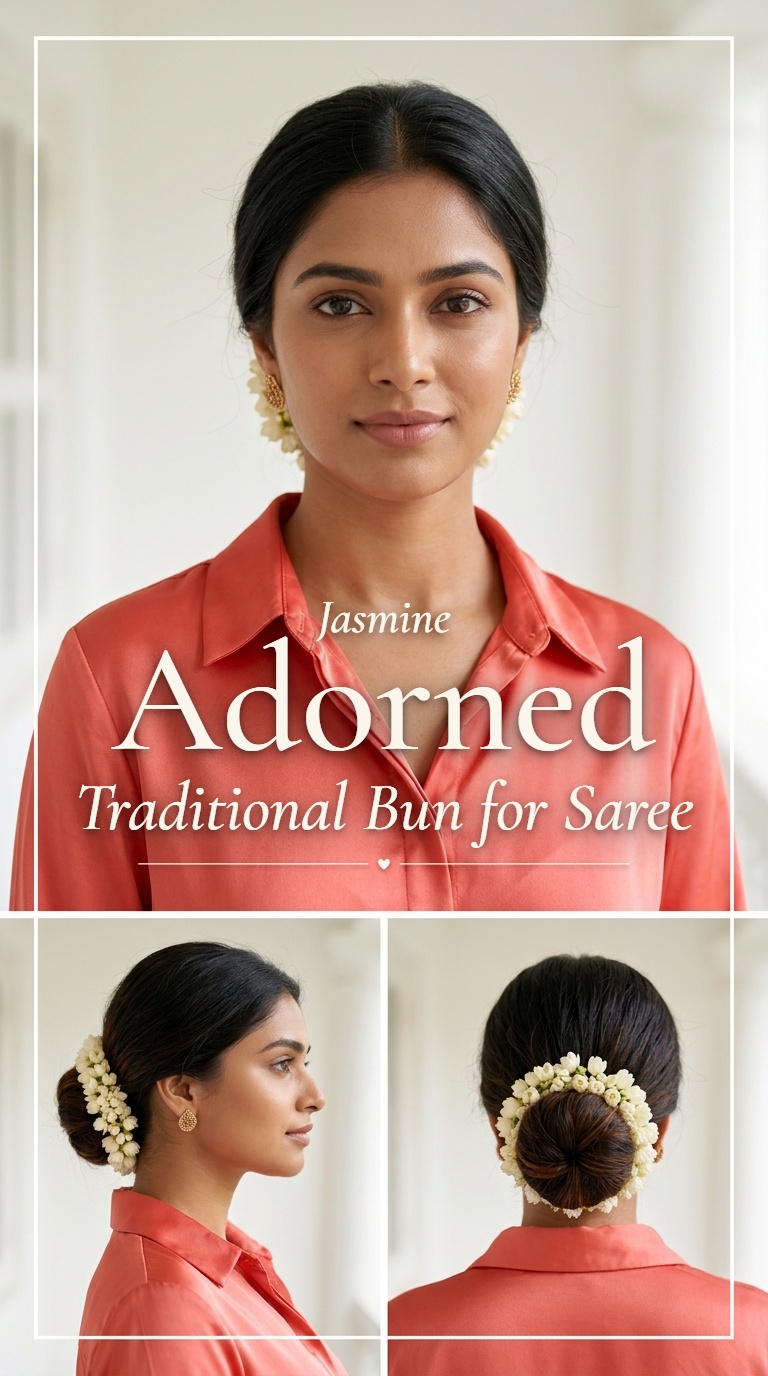
Using jasmine specifically for its heavy scent and traditional roots remains a top choice for saree wearers. The flowers are usually pinned in a semi-circle over the top of the bun.
The contrast of the white buds against a dark bun is a visual staple of traditional aesthetics. It represents purity and celebration in many cultural contexts across the region.
The jasmine can be fresh or high-quality artificial versions depending on the duration of the event. Fresh flowers provide the added benefit of a natural, calming fragrance.
17. Halo Braid Traditional Bun for Saree
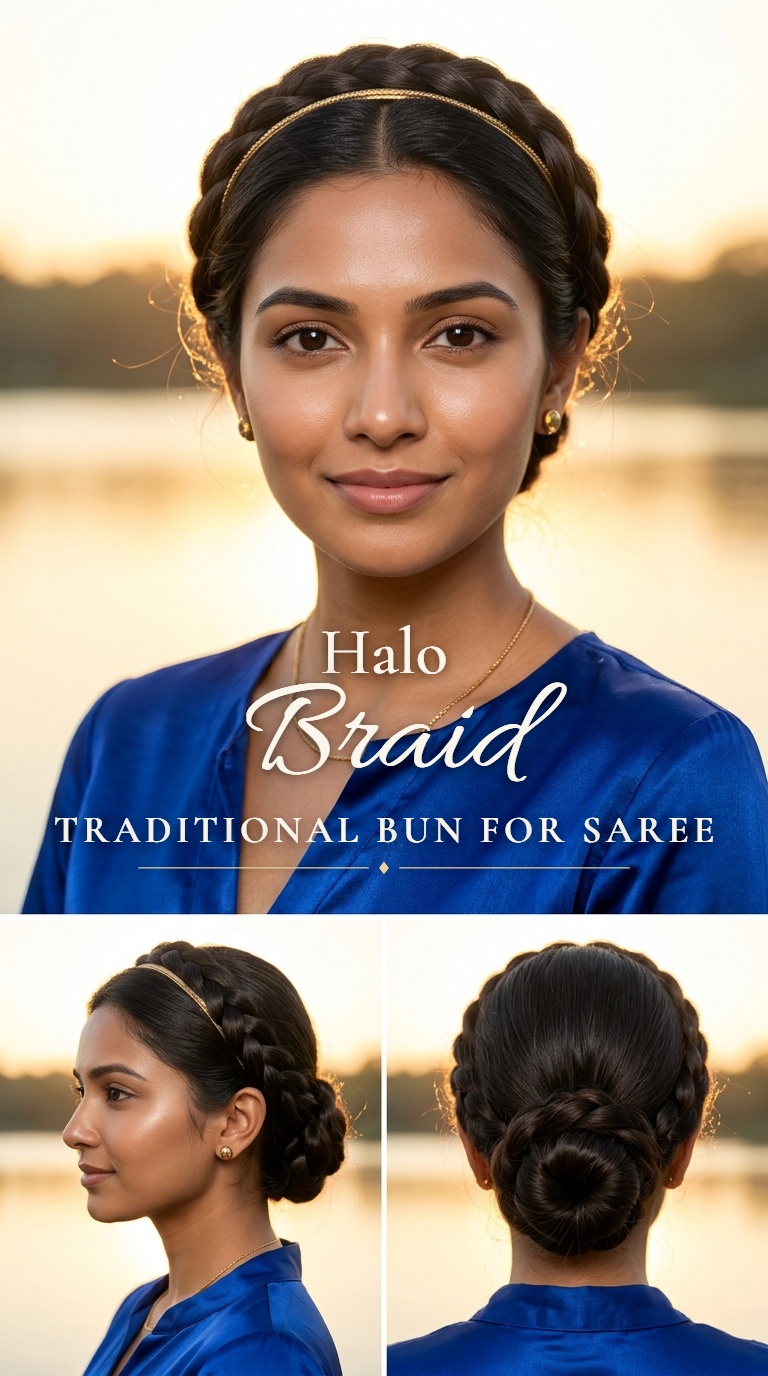
The halo braid bun involves a thick braid that circles the head like a crown before finishing in a bun. It creates a very regal and structured appearance.
This style is particularly helpful for keeping hair completely off the face and neck. It distributes the weight of the hair evenly, making it comfortable for long periods.
Adding small beads or sequins into the braid itself can provide a subtle sparkle. This is a grand hairstyle that pairs well with heavily embellished bridal or festive sarees.
18. Sleek Middle Part Traditional Bun
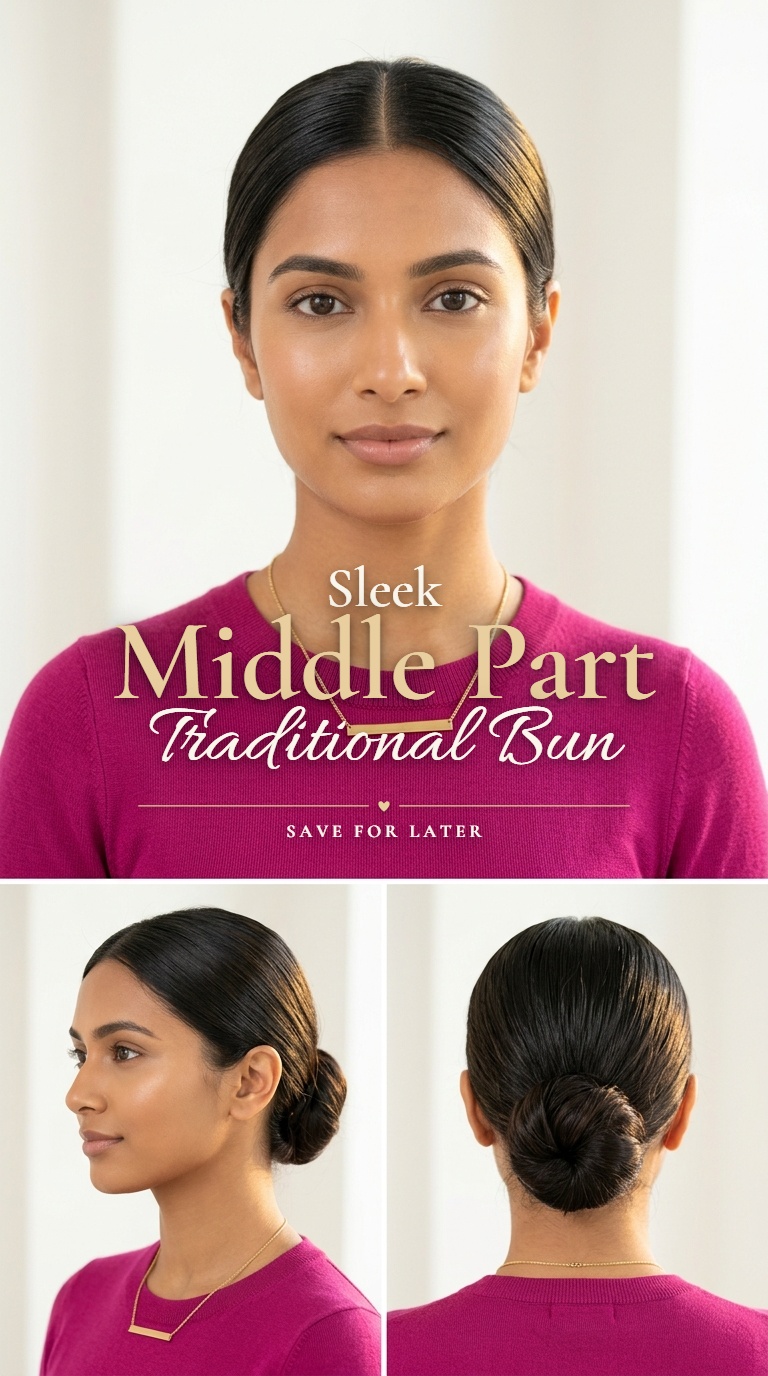
The middle part is a traditional favorite that offers perfect symmetry to the face. When combined with a sleek bun, it creates a very powerful and traditional silhouette.
This partition is the ideal placement for a maang tikka, allowing the jewelry to sit perfectly centered. It highlights the eyes and cheekbones with its structured framing.
A high-shine hairspray ensures that the partition remains crisp and the bun looks polished. It is a timeless choice that never goes out of style for saree enthusiasts.
What are the best traditional bun hairstyles for saree for beginners?
Simple low buns and twisted buns are excellent starting points for those new to traditional styling. These require minimal tools and can be secured easily with a few U-pins and a hair tie. Adding a pre-made gajra or a decorative clip can instantly elevate these basic styles into festive looks.
How do I make a traditional bun hairstyles for saree stay all day?
Preparation is key to ensuring longevity; use a bit of hair mousse on damp hair before drying for extra grip. Secure the base with a strong elastic band before pinning the bun sections. Finish the look with a firm-hold hairspray and ensure you use high-quality, non-slip bobby pins for the final structure.
Which traditional bun hairstyles for saree work best for short hair?
For those with shorter hair, a donut bun maker or hair extensions can provide the necessary volume for a traditional look. Alternatively, a small “chignon” style pinned at the nape can look very elegant with a saree. Using decorative pins or flowers can help mask any shorter layers that might stick out.
Can I add flowers to all traditional bun hairstyles for saree?
Yes, flowers are a versatile addition that can be integrated into almost any bun style. Whether it is a single rose, a strand of jasmine, or scattered petals, they enhance the traditional aesthetic. Just ensure the flowers are pinned securely to the hair rather than just the bun to prevent them from slipping.
What accessories are needed for traditional bun hairstyles for saree?
A basic kit should include a fine-tooth comb, hair ties, U-pins, bobby pins, and a donut filler for volume. For traditional flair, consider adding gold-toned hair pins, pearl strings, or fresh floral strands. A good hairspray and serum are also essential for managing frizz and providing a polished finish.
Are traditional bun hairstyles for saree suitable for all face shapes?
Traditional buns can be customized to suit any face shape by adjusting the partition or the height of the bun. A middle partition suits oval faces, while side-swept bangs or loose tendrils can soften square or heart-shaped faces. Raising the height of the bun can also help elongate a rounder face shape.