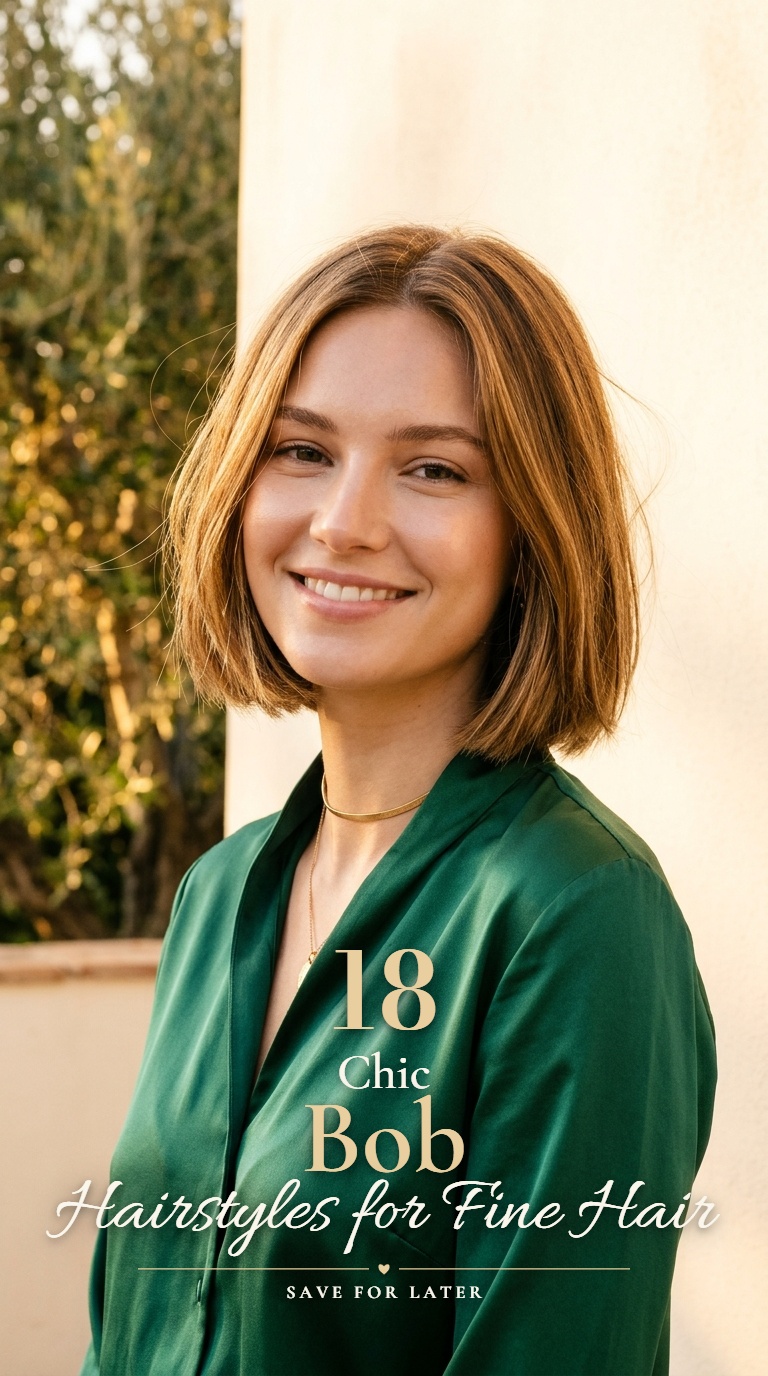
Finding the right bob hairstyles for fine hair can completely transform your look by adding much-needed volume and movement. A great cut provides the illusion of density and thickness.
Fine hair often lacks natural body, making it feel flat or lifeless without the proper shape. A well-executed bob solves this issue instantly through strategic weight distribution.
This collection explores various lengths and textures designed to elevate finer strands. Discover how a professional cut creates the structure and style you desire.
1. Blunt Chin Length Bob for Fine Hair
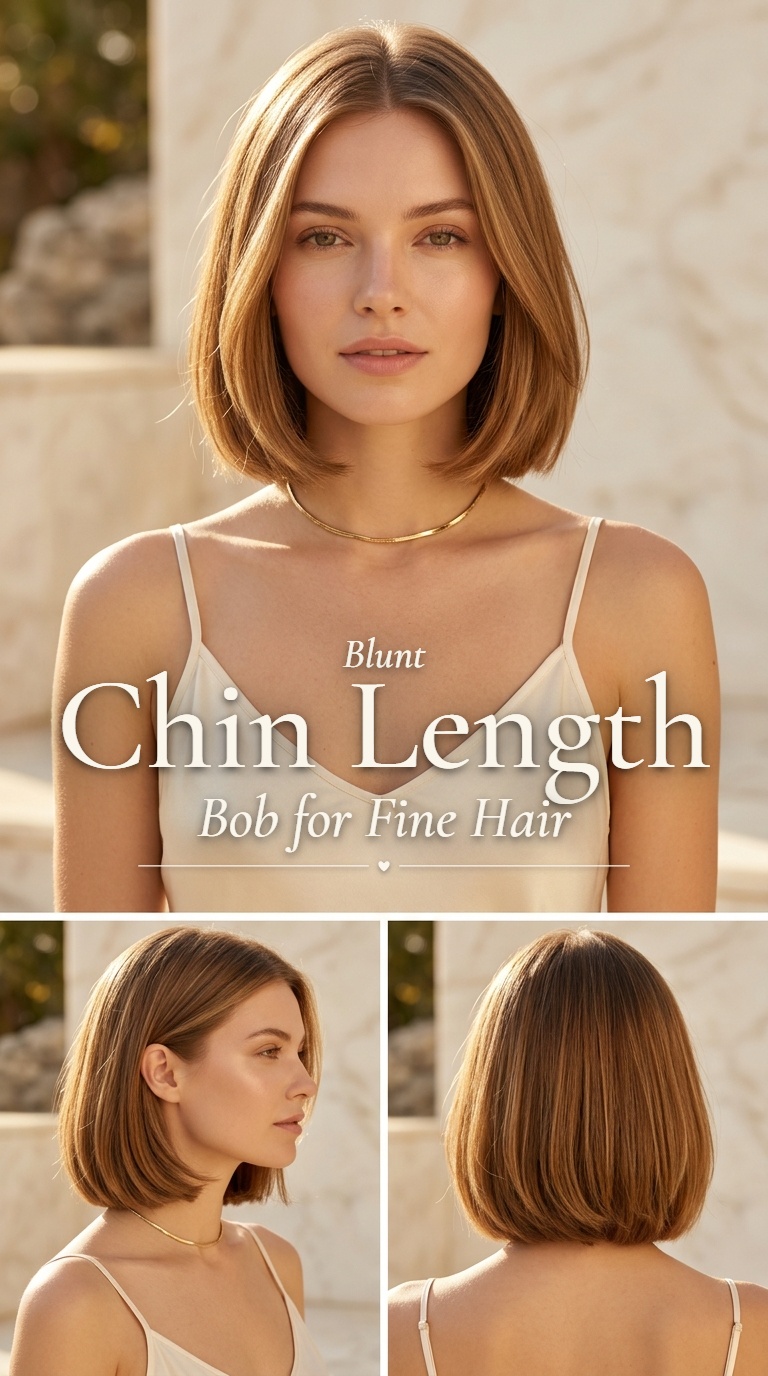
A blunt perimeter is one of the most effective ways to make thin strands look significantly thicker. By keeping the ends at a uniform length, you remove the wispy appearance that often plagues fine hair.
This specific length hits right at the jawline, framing the face while maintaining maximum density. It is a structured look that requires minimal styling but delivers a high-fashion impact for daily wear.
To maintain this sharp edge, regular trims are necessary every six to eight weeks. Using a lightweight smoothing serum can add shine without weighing down the roots or sacrificing natural volume.
2. Textured Shaggy Bob for Fine Hair
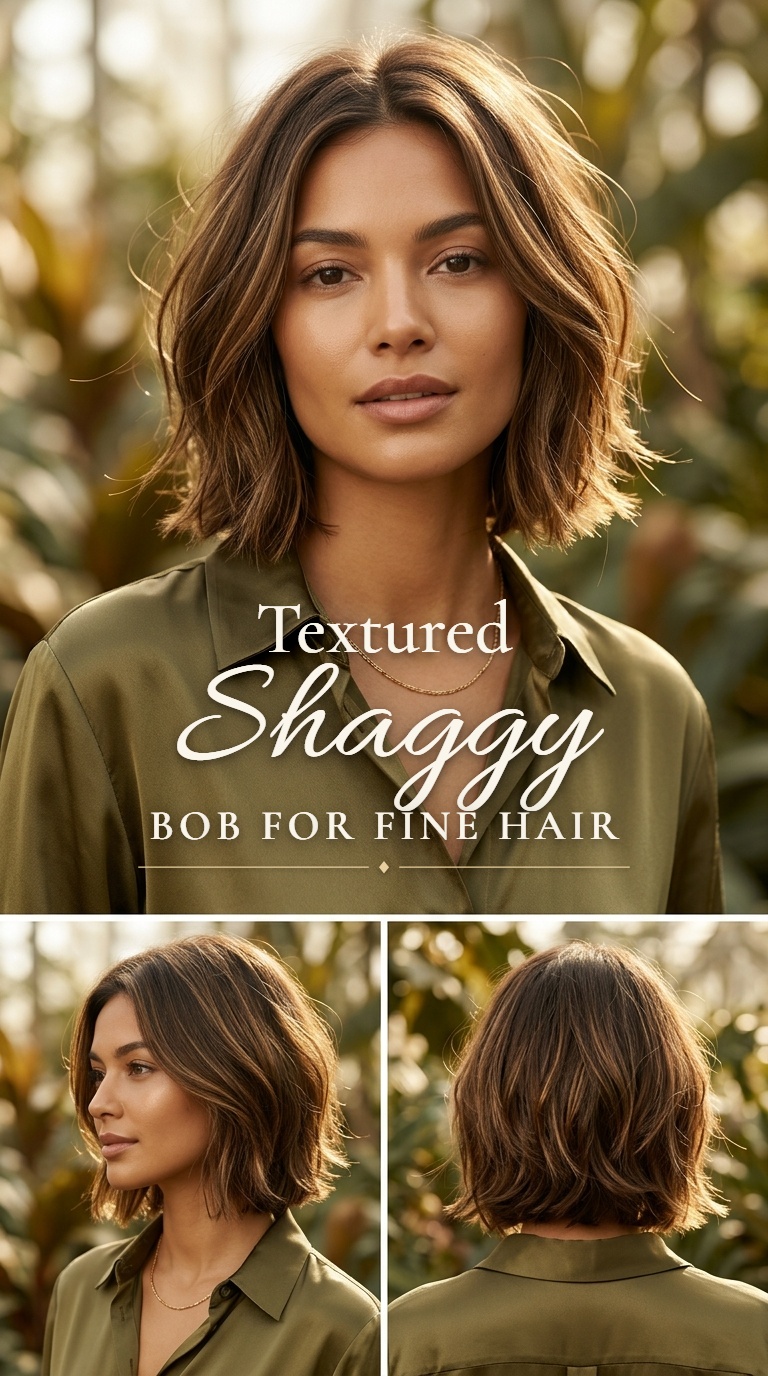
The shaggy approach uses soft, choppy layers to create a sense of airiness and movement throughout the hair. It breaks up the flat surface of fine strands to suggest a fuller silhouette.
Unlike heavy layers that can make fine hair look sparse, these textured tiers are designed to overlap. This technique builds internal structure that supports the hair from underneath, preventing it from lying flat.
Styling this look is simple with the help of a sea salt spray or volumizing mousse. Simply scrunch the hair while air-drying or use a diffuser to enhance the natural texture and grit.
3. Inverted Stacked Bob for Fine Hair
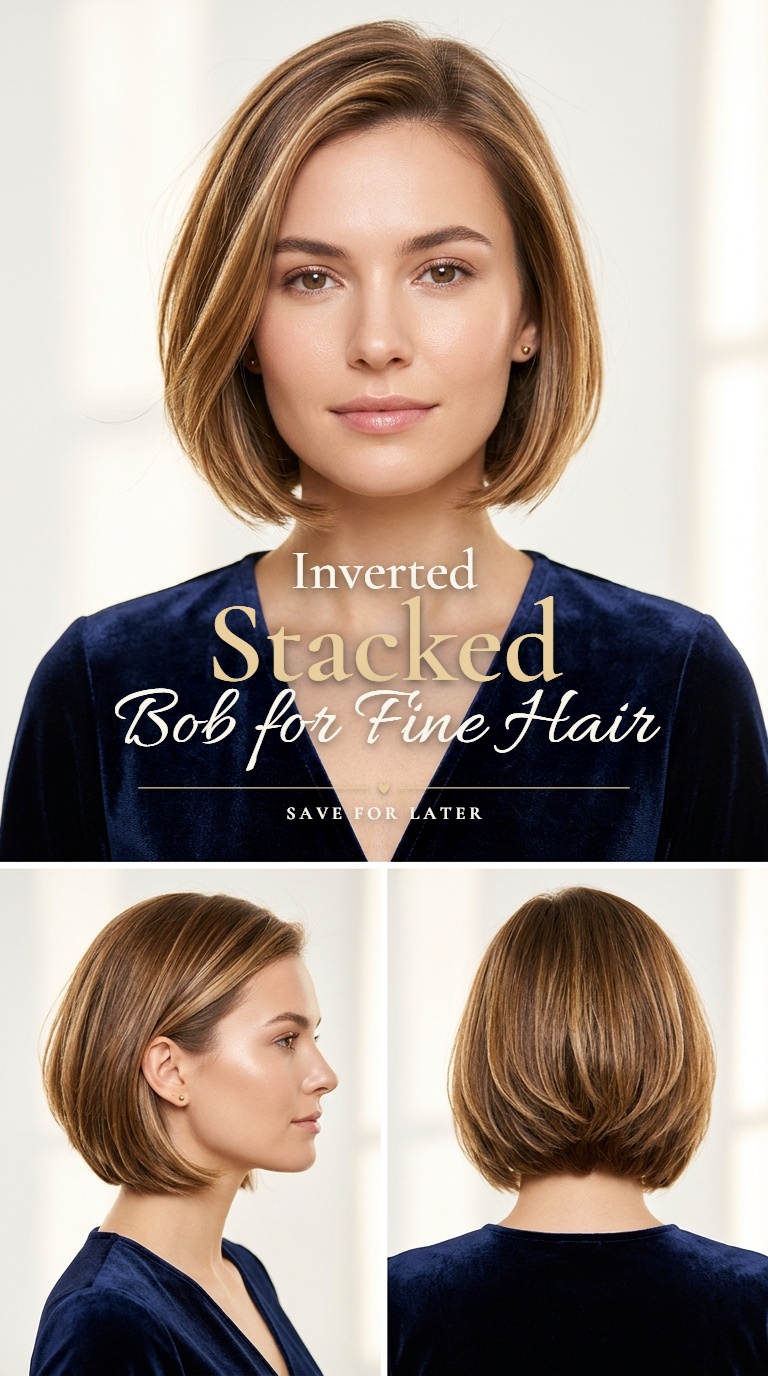
An inverted shape features a shorter back that gradually lengthens toward the front. The “stacked” element refers to the precise layering at the nape of the neck which creates a built-in lift.
This style is particularly beneficial for those who struggle with flatness at the crown. The graduated layers act as a foundation, pushing the hair upward and outward for a voluminous profile view.
Because the back is shorter, it removes excess weight that might otherwise pull the hair down. It results in a chic, architectural look that remains lightweight and very easy to manage.
4. Sleek A-Line Bob for Fine Hair
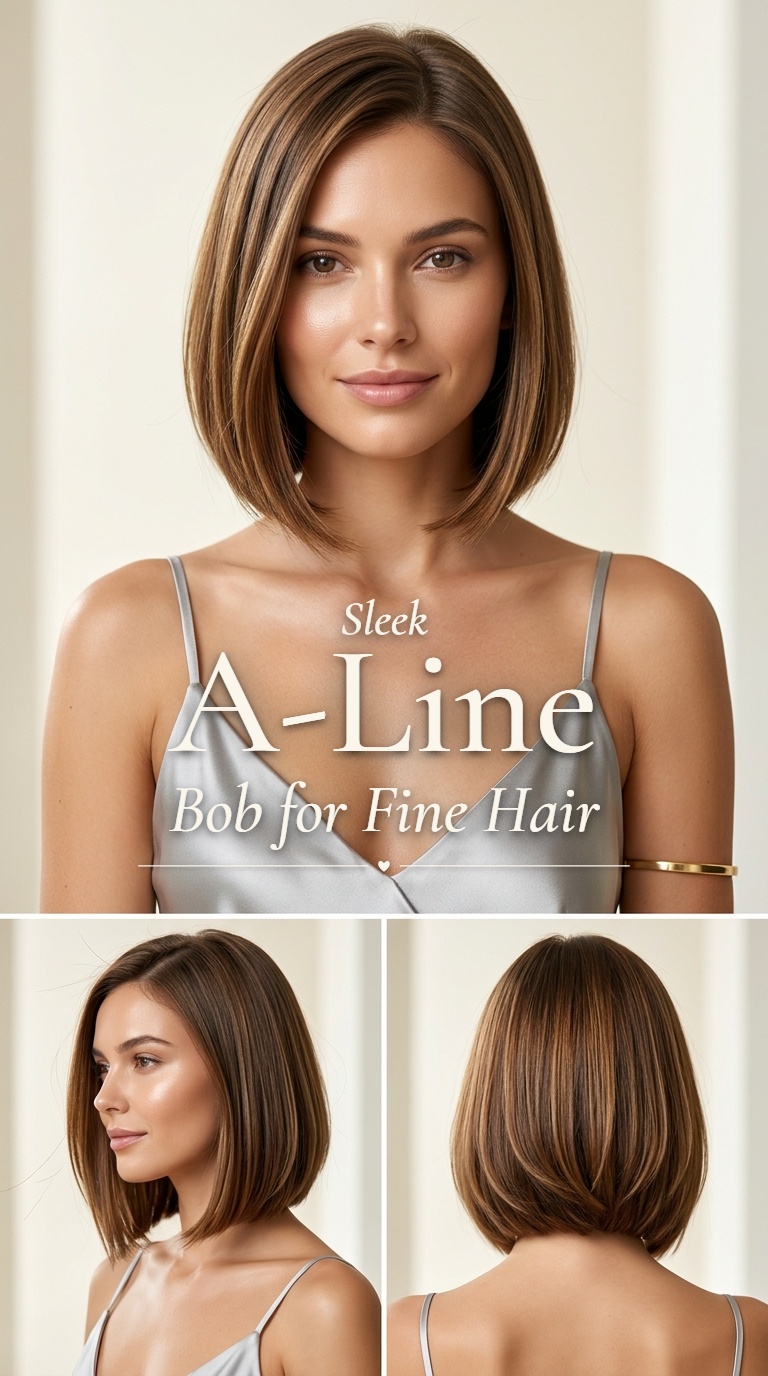
The A-line variation offers a sophisticated slant where the back is slightly shorter than the front without heavy stacking. It provides a clean, geometric line that emphasizes the hair’s natural silkiness.
For fine hair, this cut works wonders because the sharp angle draws the eye downward and forward. It creates a sense of purposeful direction and prevents the ends from appearing thin or frayed.
Keeping the surface sleek is key to this aesthetic, so a quality heat protectant is essential. A quick pass with a flat iron ensures the ends are crisp and the overall shape remains polished.
5. French Bob With Bangs for Fine Hair
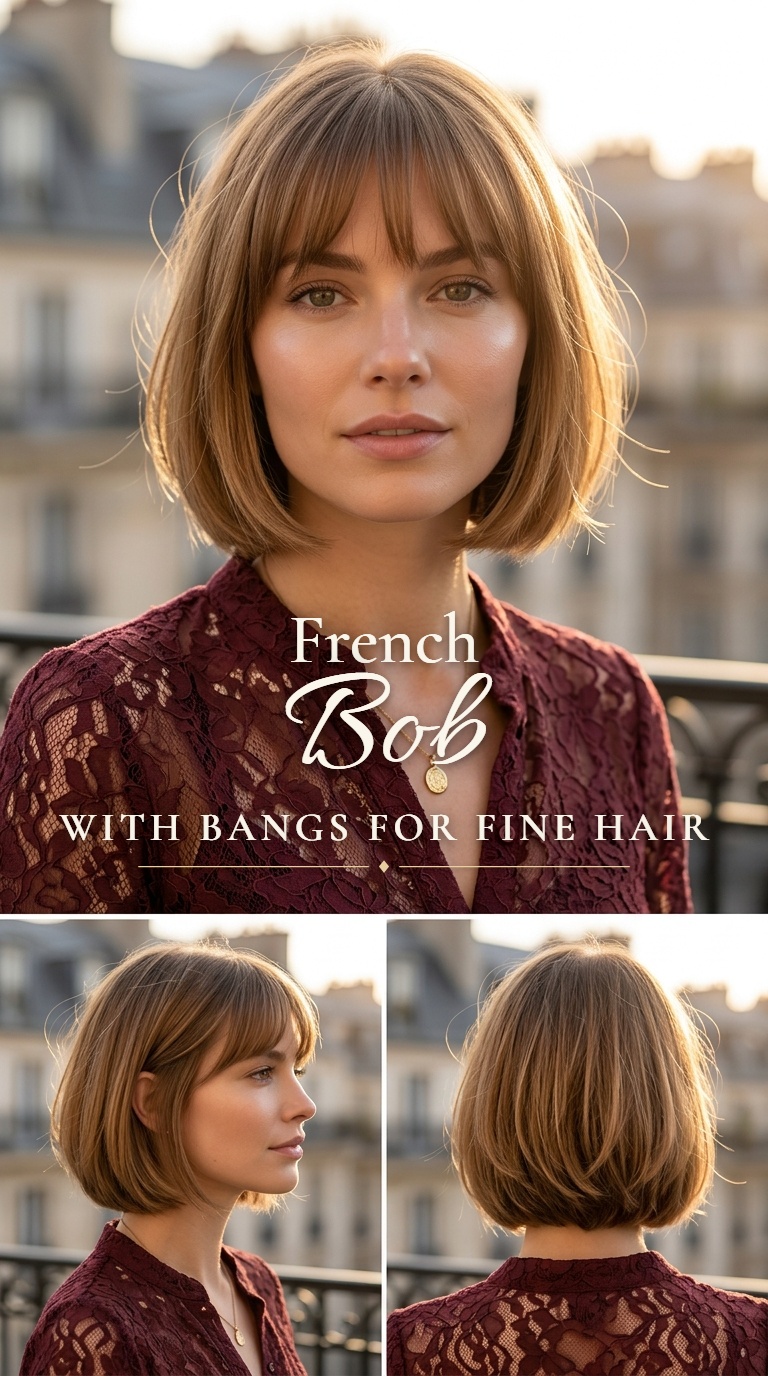
The French bob is typically cut at mouth level and paired with brow-grazing bangs. This shorter length is ideal for fine hair because it places the bulk of the weight near the cheekbones.
Adding bangs helps to occupy the space around the forehead, making the overall hairstyle appear more substantial. The slightly undone, “lived-in” texture inherent to this style disguises any lack of natural thickness.
This cut thrives on a bit of natural wave or a rough blow-dry. It is a low-maintenance option that prioritizes personality and effortless style over rigid, perfect lines.
6. Layered Graduated Bob for Fine Hair
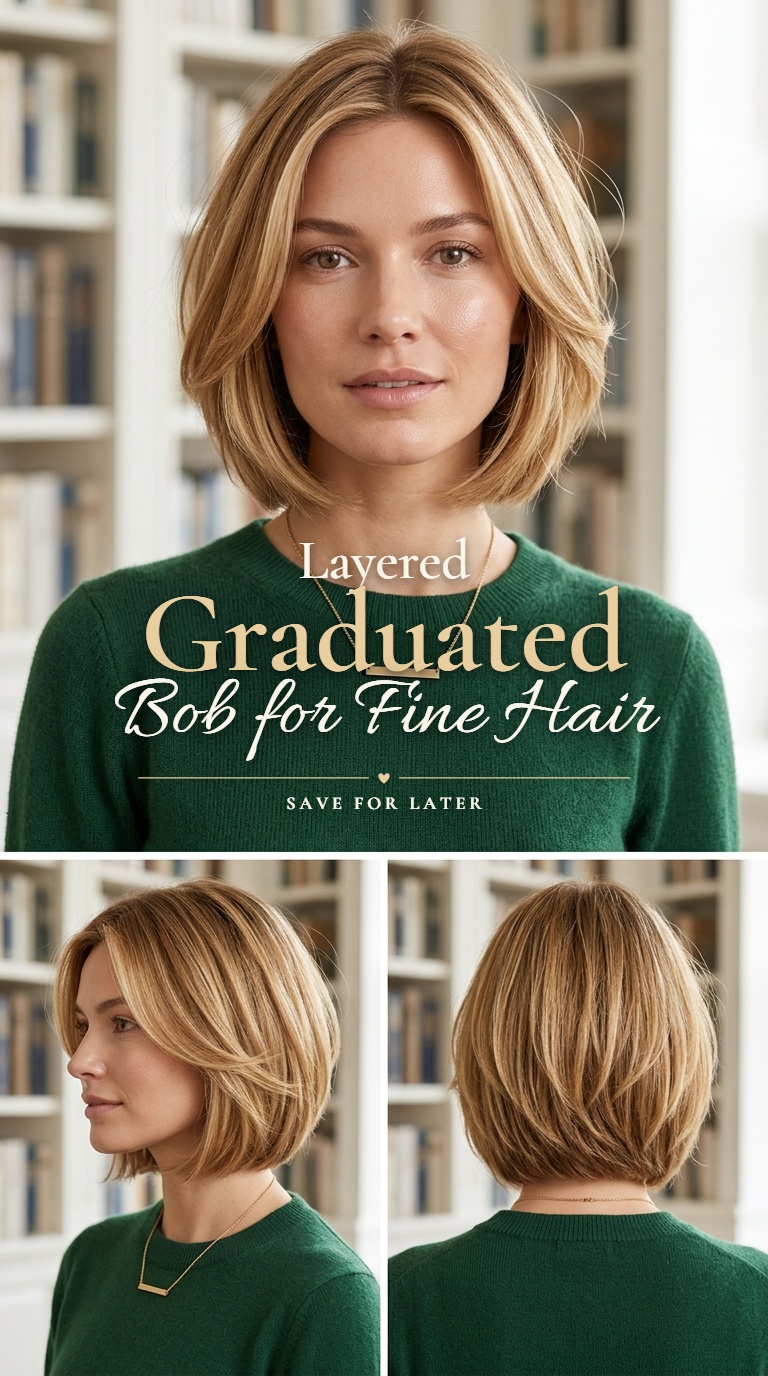
Graduated layers are cut with precision to create a sloped effect that builds volume toward the middle of the head. This technique is a classic solution for adding body to limp strands.
The layers are subtly blended to ensure there are no harsh steps, allowing the hair to fall into a rounded shape. This fullness makes the hair look healthy and much more abundant than it actually is.
Round brushing during the drying process will amplify the results of this cut. Focus on lifting the hair at the roots to maximize the height provided by the internal layering.
7. Side Parted Asymmetrical Bob for Fine Hair
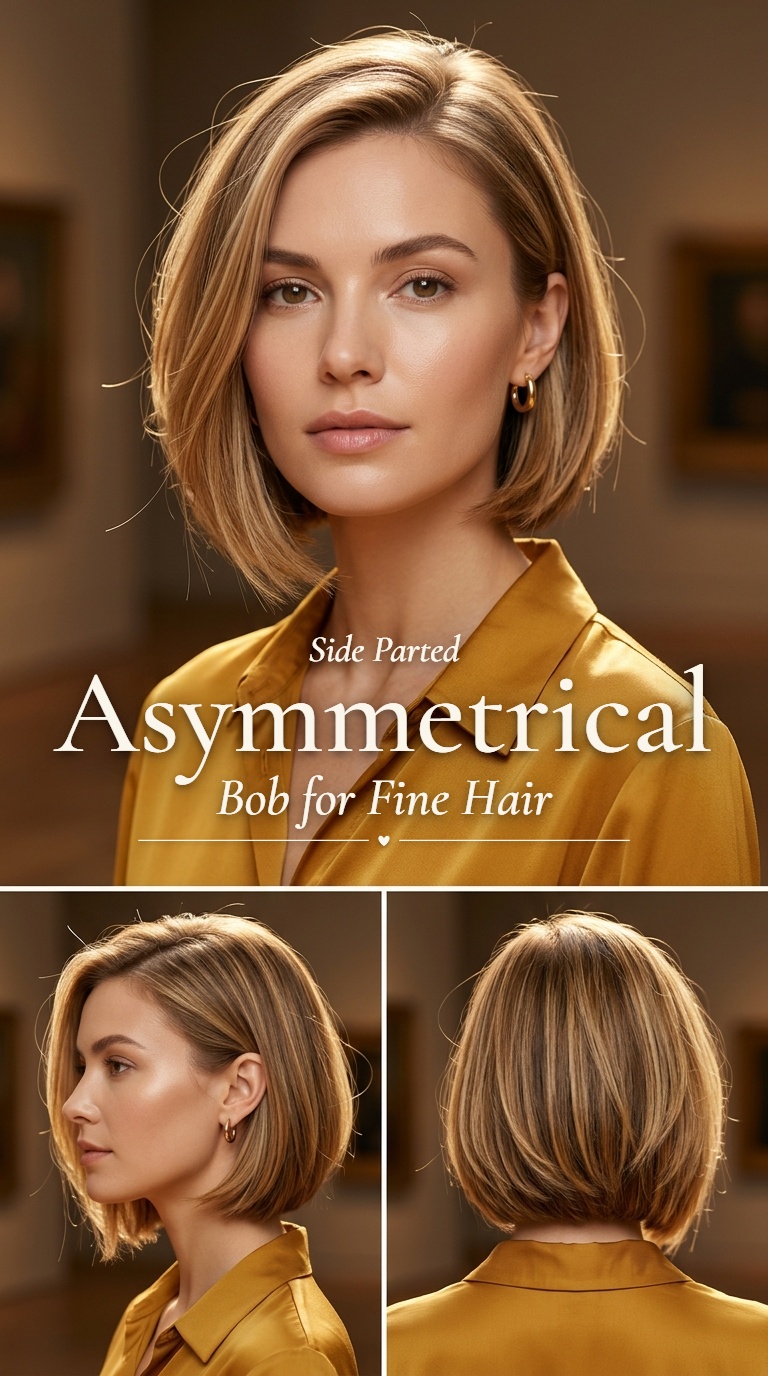
Asymmetry adds an edgy element by making one side of the bob longer than the other. This uneven distribution of weight is a clever trick to distract from a lack of density.
A deep side part shifts the majority of the hair to one side, which creates immediate height and volume at the root. It breaks up the symmetry that can sometimes make fine hair look too thin.
This style is versatile and can be worn straight or with a slight bend. The variation in length provides a modern silhouette that feels intentional and full of movement.
8. Soft Wavy Lob for Fine Hair
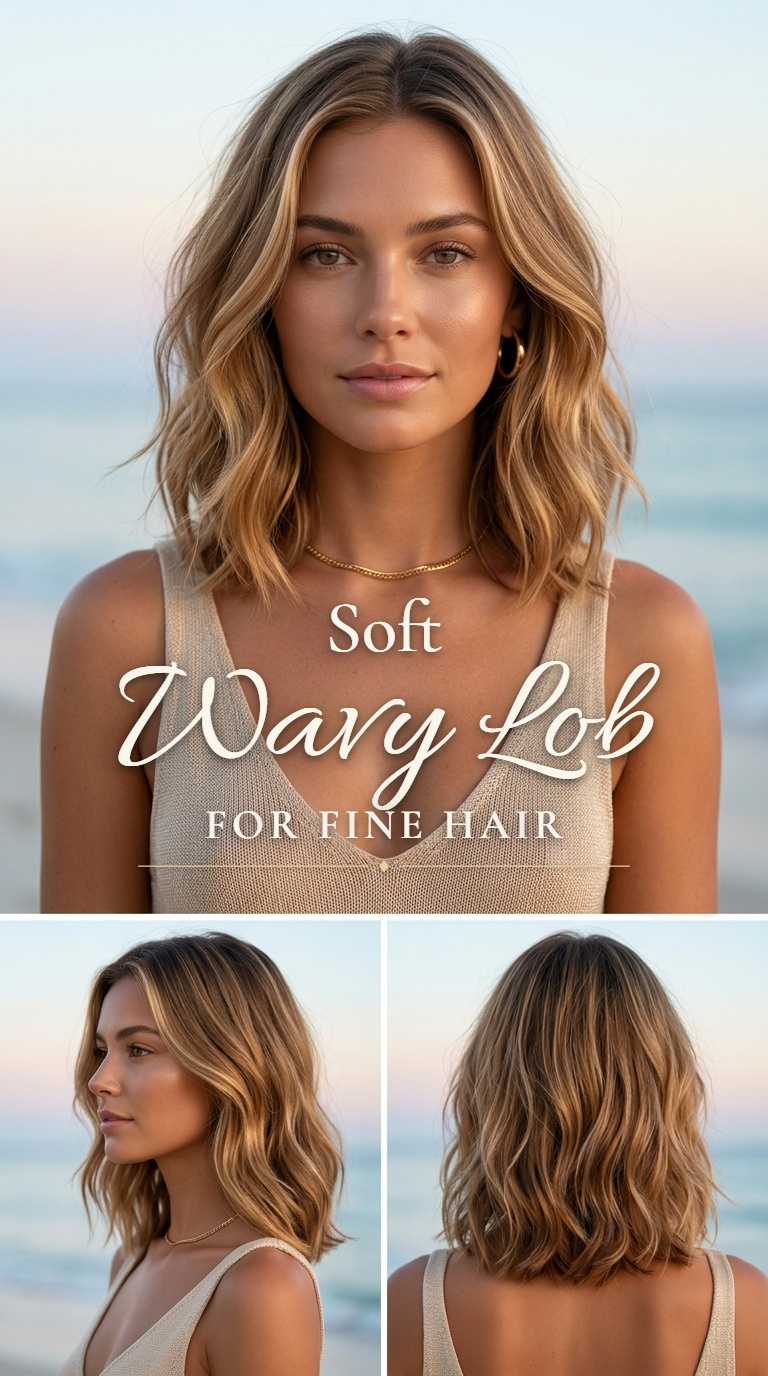
A “lob” or long bob typically sits at the collarbone, providing a bit more length for those not ready for a short cut. Soft waves are the secret weapon for making this length work for fine hair.
Waves add width to the hairstyle, which counteracts the vertical pull of longer strands. By creating bends in the hair, you fill more visual space and create a thicker appearance.
Using a large-barrel curling iron or a flat iron to create “S” waves works best. Finish with a flexible-hold hairspray to keep the waves bouncy and light throughout the day.
9. Choppy Ear Length Bob for Fine Hair
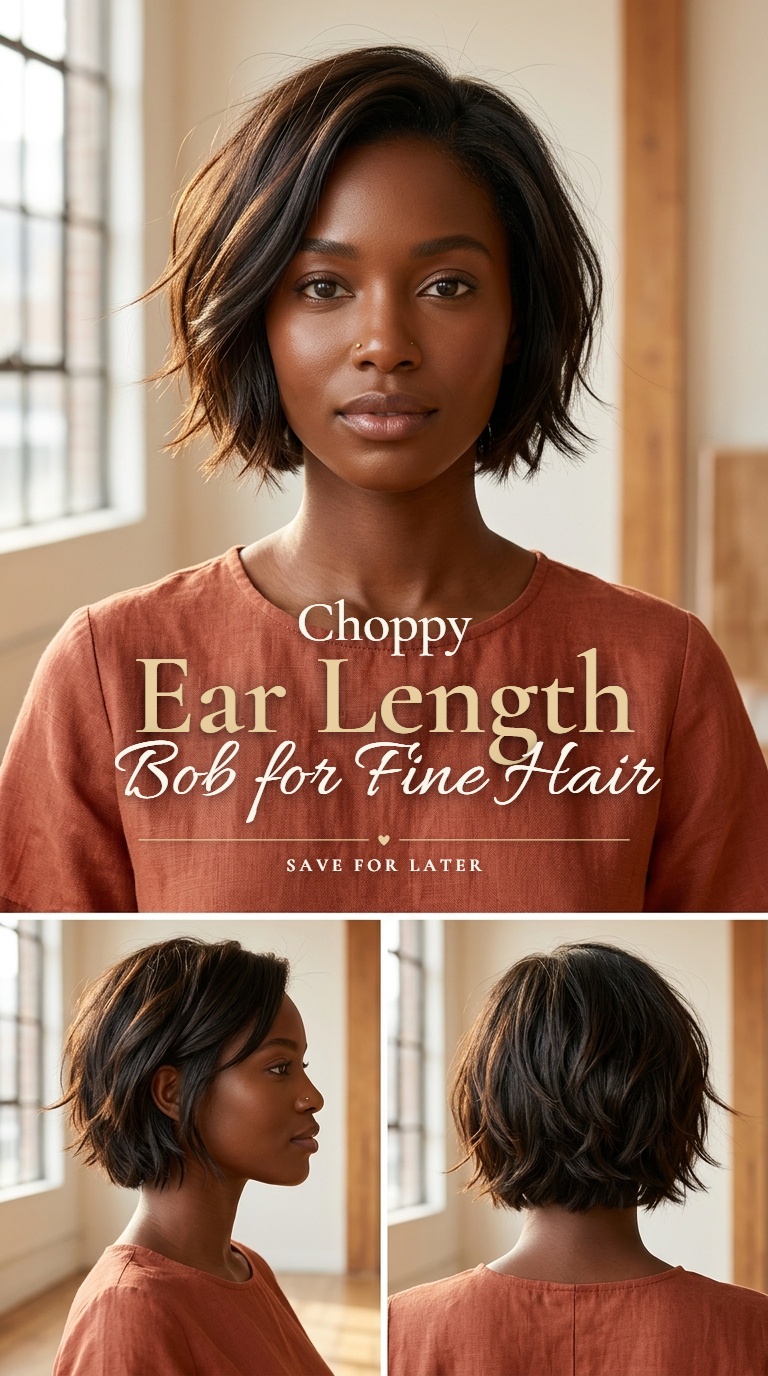
An ear-length cut is a bold choice that works exceptionally well for fine textures because it removes almost all the weight. The choppy ends add a sense of grit and “cool-girl” texture.
When hair is cut this short, it naturally springs up, losing the heaviness that makes it look flat. The choppy finish prevents the hair from looking like a helmet and instead provides a piecey look.
A small amount of styling wax or pomade is all you need to define the ends. It is an ideal wash-and-go style for someone who wants a high-impact look with minimal effort.
10. Rounded Bob Haircut for Fine Hair
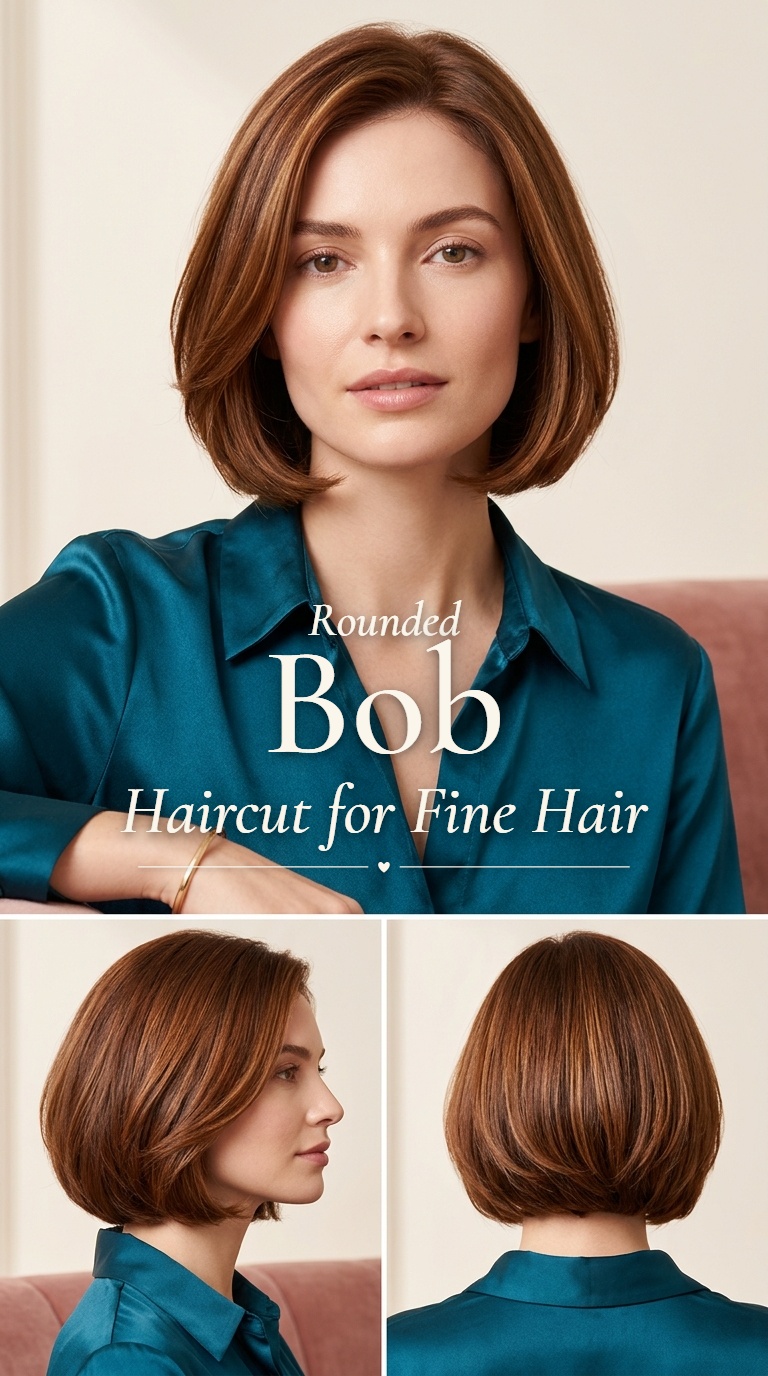
The rounded bob uses soft, curved ends to create a soft perimeter that frames the face. This shape helps to build a sense of “bloom” around the head, making the hair look full.
By curving the ends inward, you create a solid line that makes the hair look denser than it is. This classic silhouette is timeless and works well for professional or casual settings alike.
To get the perfect rounded finish, use a medium-sized round brush while blow-drying. This helps to tuck the ends under and creates a smooth, voluminous surface that catches the light.
11. Curtain Bangs Bob for Fine Hair
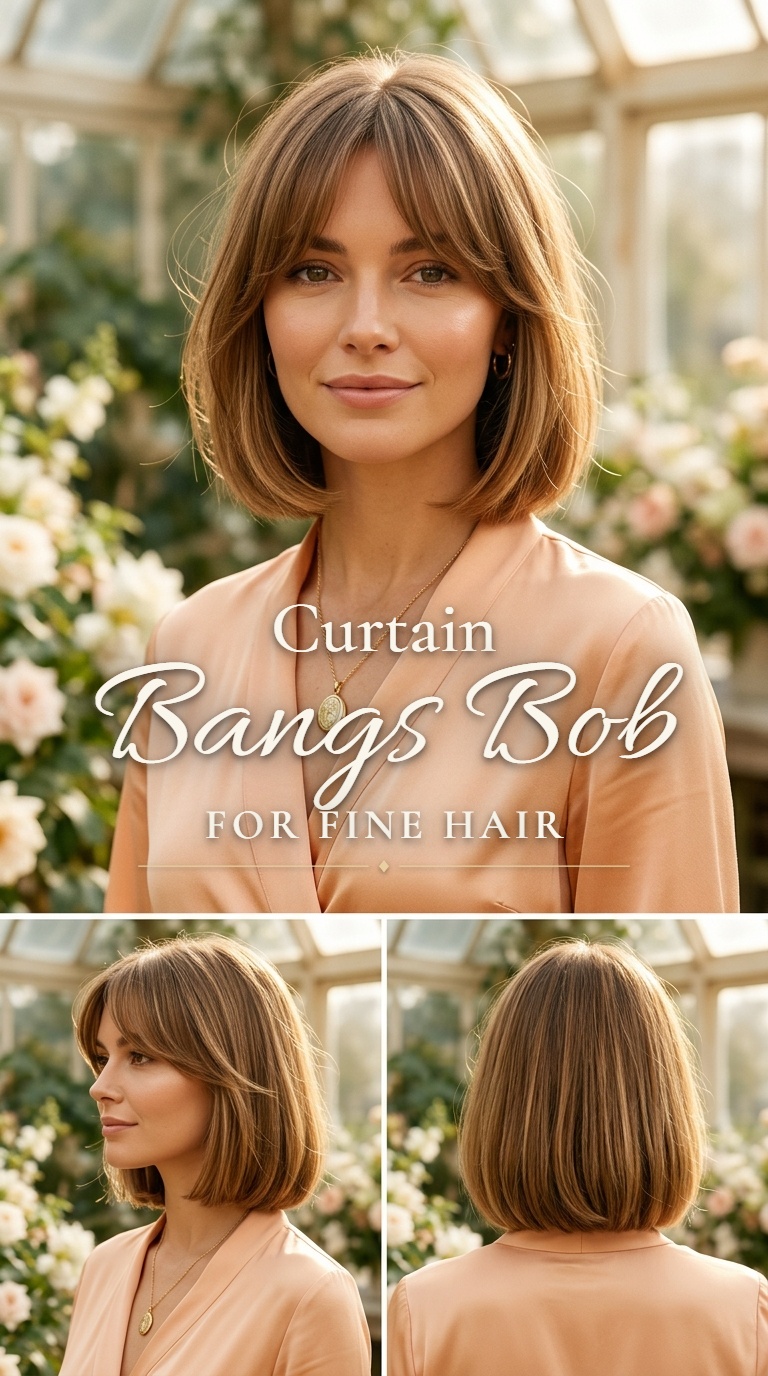
Curtain bangs are parted down the middle and sweep to the sides, perfectly integrating into a bob. They provide a layer of interest around the eyes and cheekbones without sacrificing thickness.
For fine hair, curtain bangs add a “face-framing” layer that gives the illusion of more hair near the front. They blend seamlessly into the rest of the bob, creating a cohesive and voluminous look.
These bangs are easy to style with a quick blow-dry away from the face. They offer versatility, as they can be tucked behind the ears or left forward to frame the face.
12. Deep Side Part Bob for Fine Hair
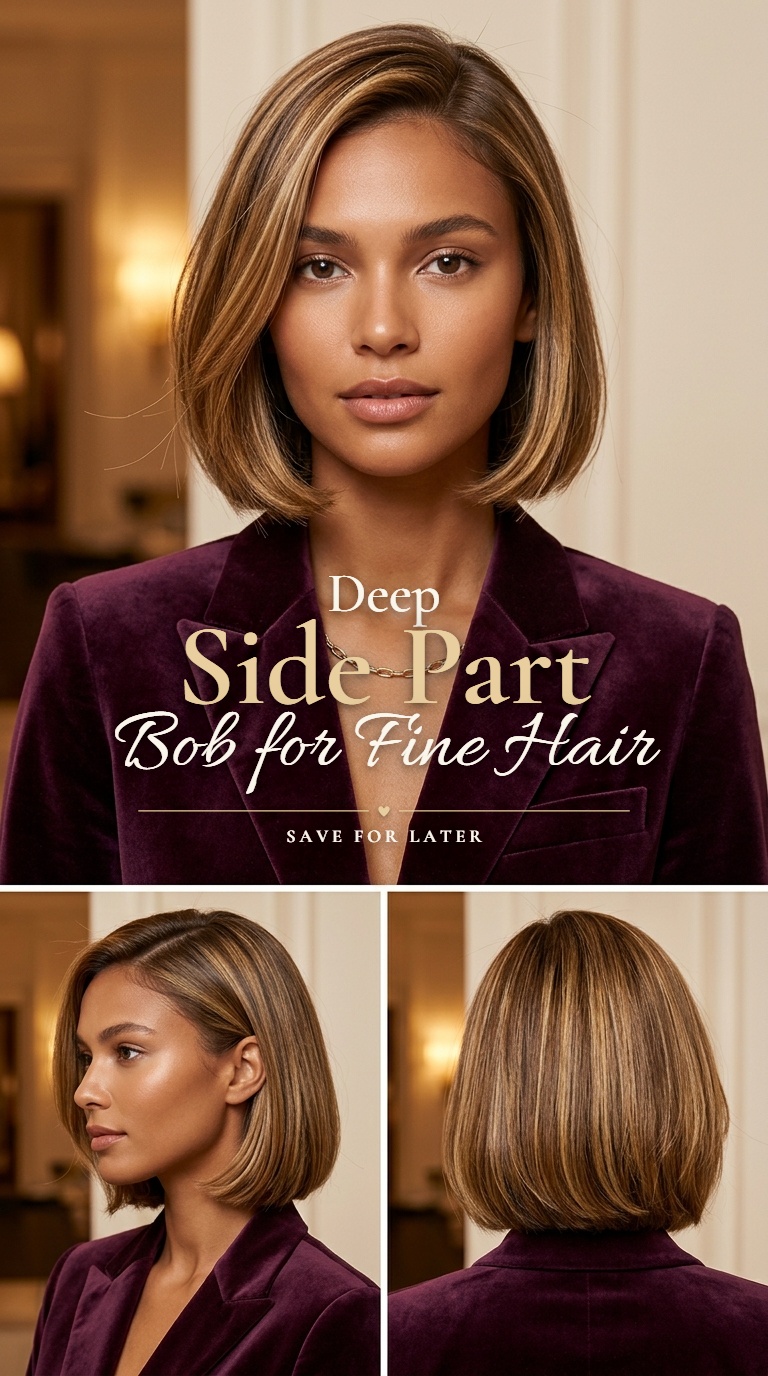
Changing your part is the fastest way to get instant volume without a pair of scissors. A deep side part forces the hair to stack on top of itself, creating a significant lift at the crown.
This look works with almost any bob length, from chin to shoulder. It creates a dramatic sweep that covers more of the forehead and adds a sense of mystery and sophistication.
To keep the part in place, apply a volumizing spray to damp roots before blow-drying. Drying the hair in the opposite direction of where it will eventually lay will help maintain that height.
13. Messy Bedhead Bob for Fine Hair
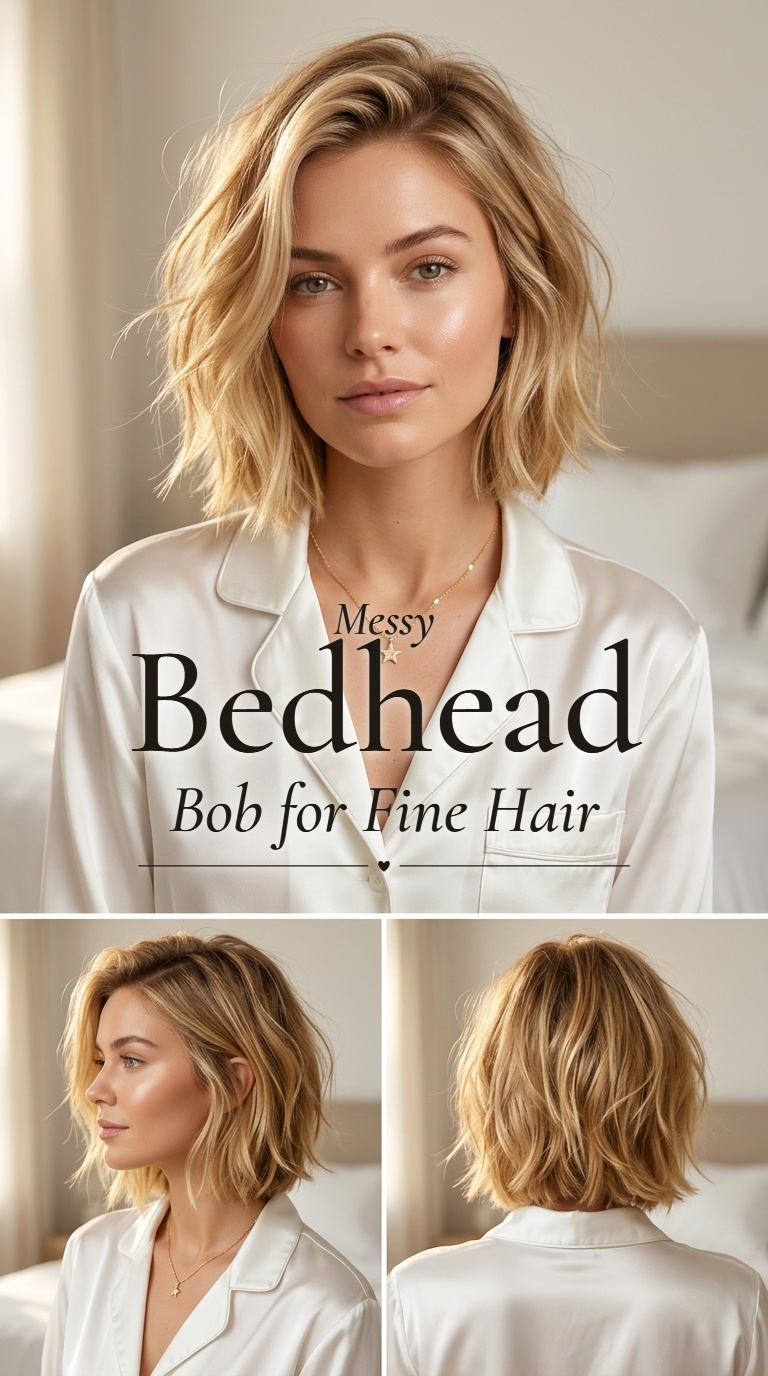
The “bedhead” look relies on intentional disarray to create volume and interest. For fine hair, this lived-in texture is perfect because it hides the scalp and creates a bushy, full effect.
By using texture sprays and dry shampoos, you can create a matte finish that provides grip. This grip allows the strands to stand away from each other rather than clumping together.
This style is best achieved by working with the hair’s natural movement. Use your fingers instead of a brush to style the hair, ensuring the look stays effortless and full of body.
14. Blunt Cut Lob for Fine Hair
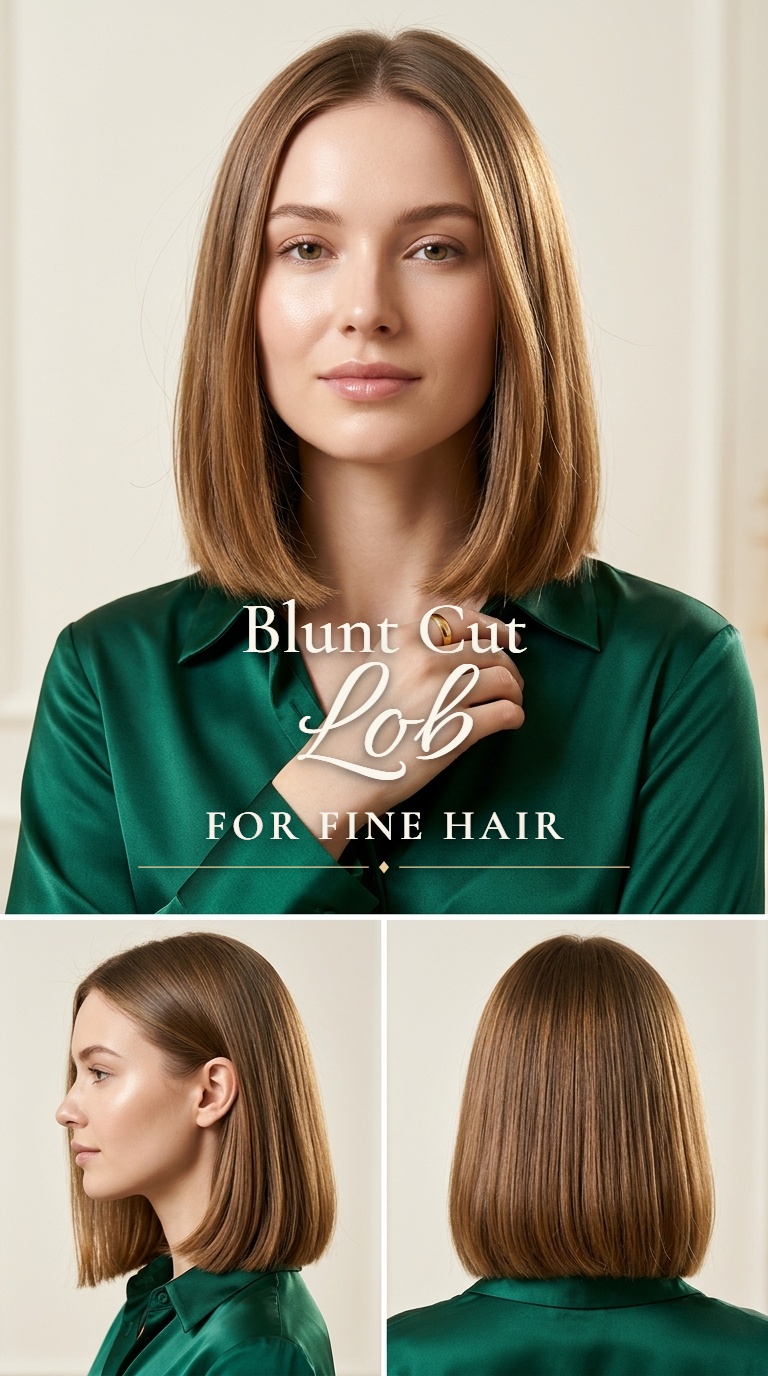
The blunt lob offers a longer version of the classic bob but maintains the thick, heavy baseline. This is a great middle-ground for those who want length but fear their hair looking too thin.
Keeping the ends perfectly straight and blunt gives the hair a very healthy, dense look. It prevents the “straggly” ends that often occur when fine hair is grown past the shoulders.
This cut looks best when styled pin-straight to emphasize the precision of the line. A shine spray can be used as a finishing touch to make the hair look glass-like and substantial.
15. Piecey Textured Bob for Fine Hair
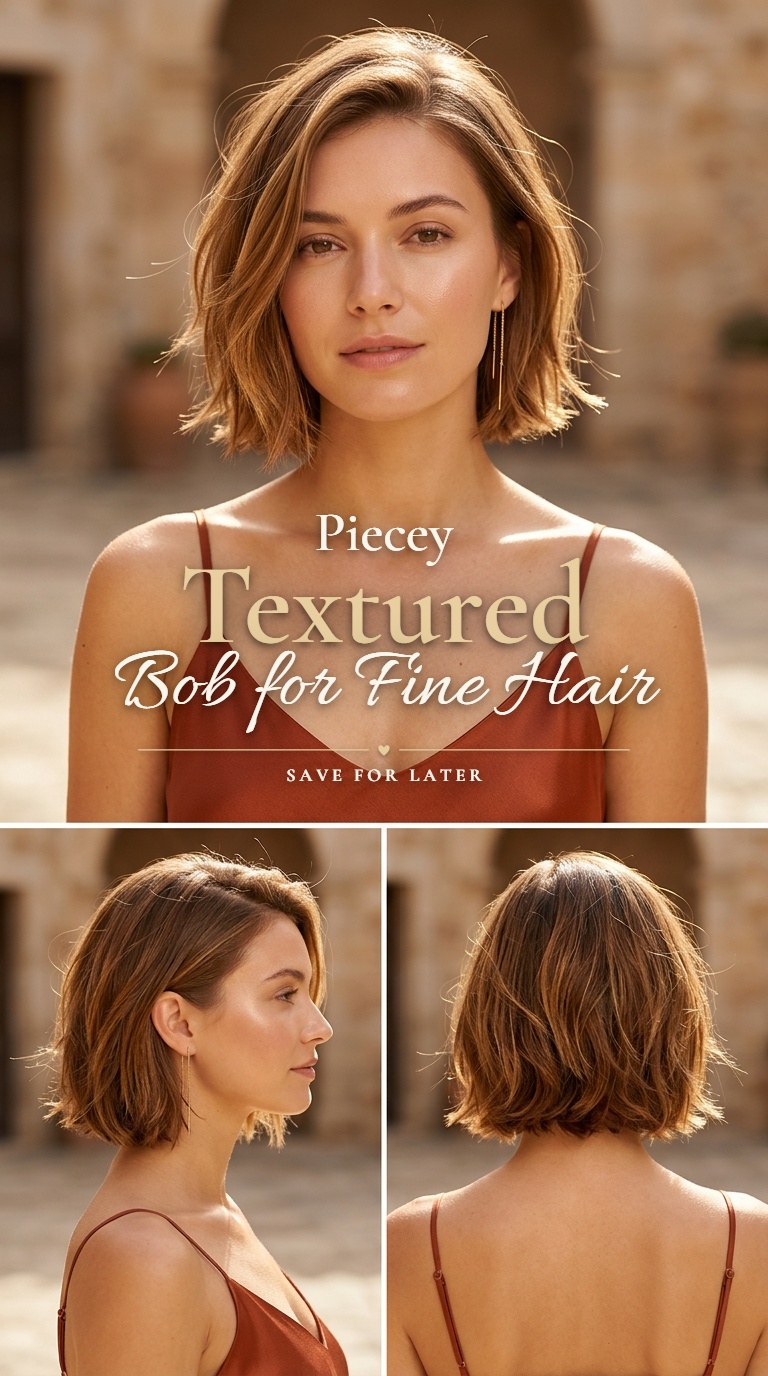
A piecey bob uses point-cutting techniques to create distinct sections of hair. This separates the strands, preventing them from laying flat against each other and creating a 3D effect.
For fine hair, this separation is vital for creating the appearance of depth. When the hair is broken up into pieces, the shadows between the sections make the overall mane look thicker.
Use a light styling cream to twist small sections of hair after drying. This defines the piecey nature of the cut and ensures the texture remains visible throughout the day.
16. Wispy Layered Bob for Fine Hair
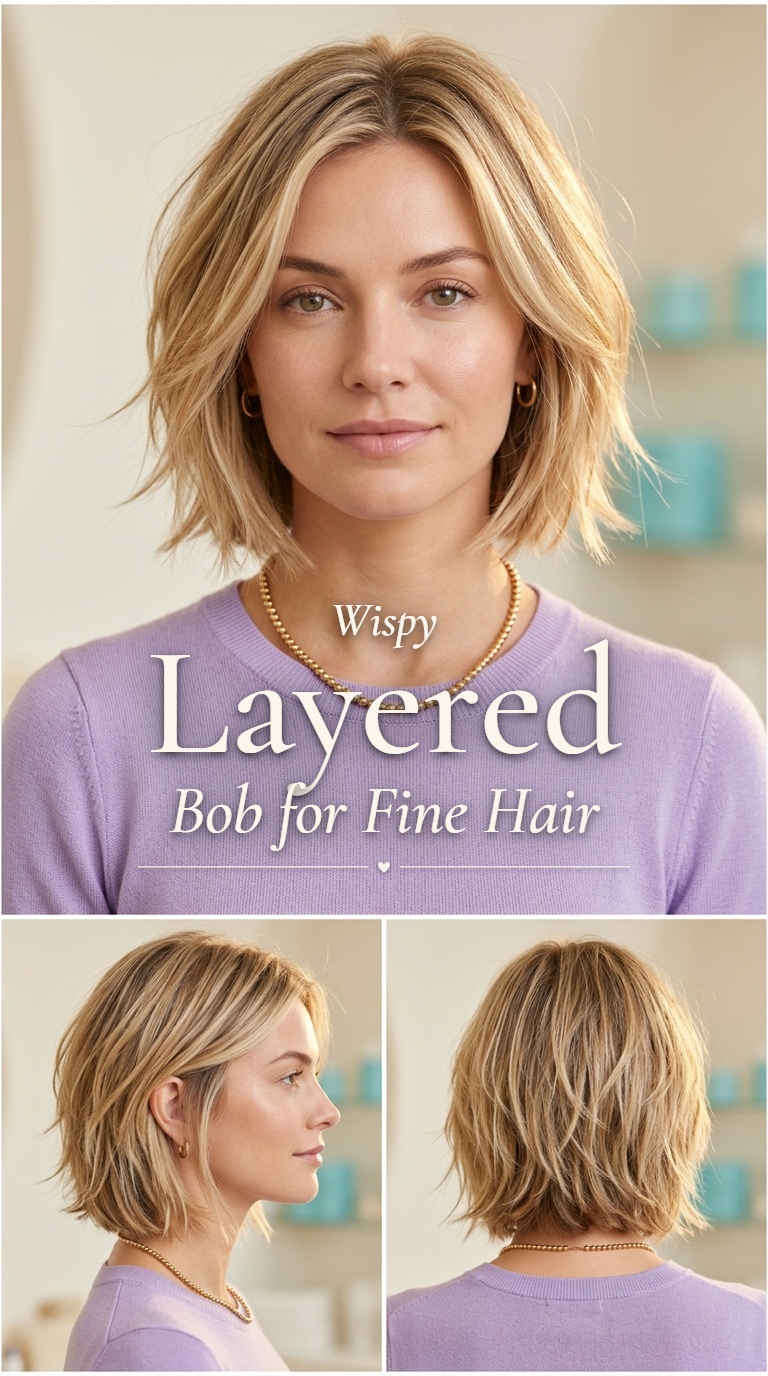
Wispy layers are very fine, thin layers that add a soft fluffiness to the hair. They are less structural than traditional layers, making them ideal for very fine or delicate strands.
These layers catch the air and move easily, which gives the hairstyle a sense of life and energy. They prevent the bob from looking too static or heavy, which can sometimes overwhelm fine hair.
A lightweight volumizing powder is great for this style. It adds “poof” to the wispy sections, allowing them to stay elevated and airy without feeling crunchy or stiff.
17. Tucked Behind Ear Bob for Fine Hair
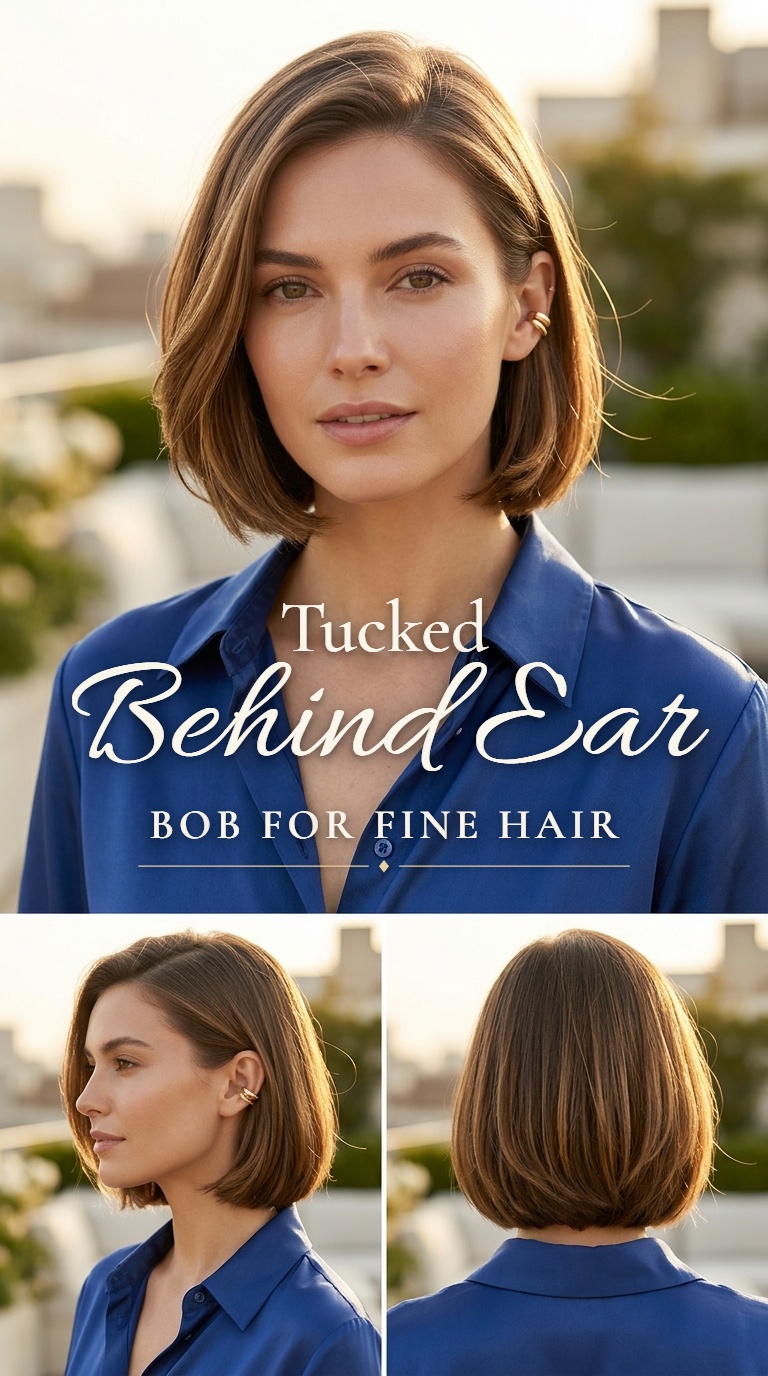
Tucking one or both sides of a bob behind the ears is a simple styling trick that changes the profile. It emphasizes the jawline and can make the hair on top look more voluminous by comparison.
This technique works well for fine hair because it keeps the hair out of the face while highlighting the density at the back. It creates a clean, polished look that is perfect for professional environments.
To ensure the hair stays tucked, a tiny bit of hairspray or a decorative hair pin can be used. It is a quick way to switch up your look without needing a new haircut.
18. Polished Under-Curled Bob for Fine Hair
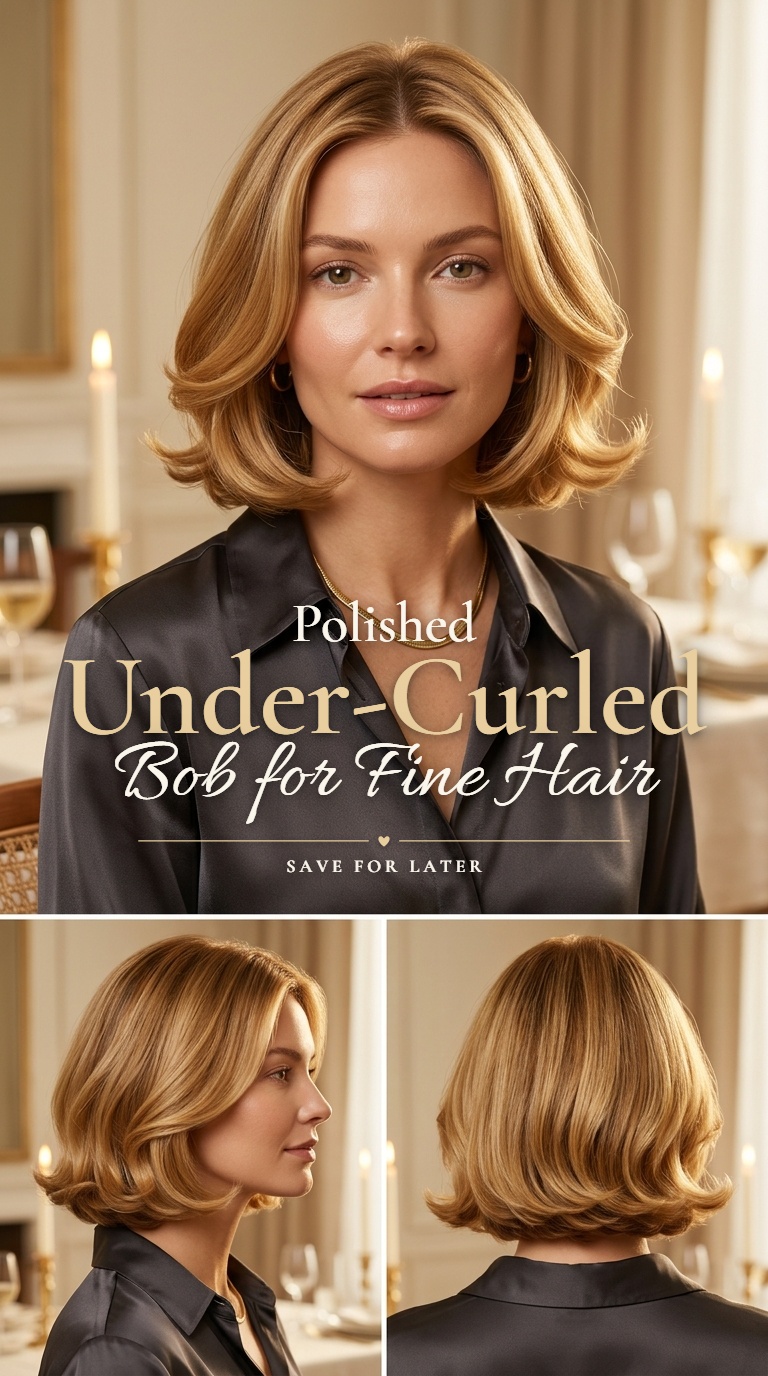
Under-curling the ends of a bob creates a “C” shape that hugs the chin. This inward curve creates a very thick-looking baseline that makes the hair appear healthy and full of bounce.
This style relies on a smooth surface, so blow-drying with a round brush is the primary styling method. The tension from the brush helps to stretch the hair for maximum shine and volume.
The result is a classic, “expensive” look that never goes out of style. It provides a solid silhouette that holds its shape well, making it a reliable choice for those with finer textures.
Why are bob hairstyles for fine hair popular?
Bob hairstyles for fine hair are popular because they remove excess weight that causes hair to fall flat. By shortening the length, the hair naturally gains more lift and appears significantly thicker.
Which bob hairstyles for fine hair add the most volume?
The inverted stacked bob and the blunt chin-length bob are generally considered the best for adding volume. Stacking creates height at the back, while blunt ends create the illusion of density at the perimeter.
How often should you trim bob hairstyles for fine hair?
To keep bob hairstyles for fine hair looking their best, a trim is recommended every six to eight weeks. Regular maintenance prevents split ends from making the hair look thin and helps maintain the intended shape.
Can you have bangs with bob hairstyles for fine hair?
Yes, bangs can work beautifully with bob hairstyles for fine hair. Options like curtain bangs or wispy fringes add layers and interest to the front of the face without taking too much density away from the rest of the cut.
What products work for bob hairstyles for fine hair?
Lightweight products such as volumizing mousses, root lift sprays, and dry shampoos are ideal. Avoid heavy oils or thick waxes, as these can weigh down the hair and make it appear greasy or flat.
Are layered bob hairstyles for fine hair hard to style?
Layered bob hairstyles for fine hair are actually quite easy to style because the cut does most of the work. A quick blow-dry or a bit of texture spray is often all that is needed to highlight the movement created by the layers.