Freehand hairstyles for natural hair offer a unique way to express creativity without using complex tools. These looks celebrate organic texture and personal style effortlessly.
Finding the right design allows you to showcase your natural patterns. This guide explores versatile options that prioritize hair health and artistic expression.
Whether you prefer intricate partings or soft shapes, these ideas provide endless inspiration. Discover how to transform your curls with these creative techniques.
1. Zigzag Parted Freehand Natural Hair
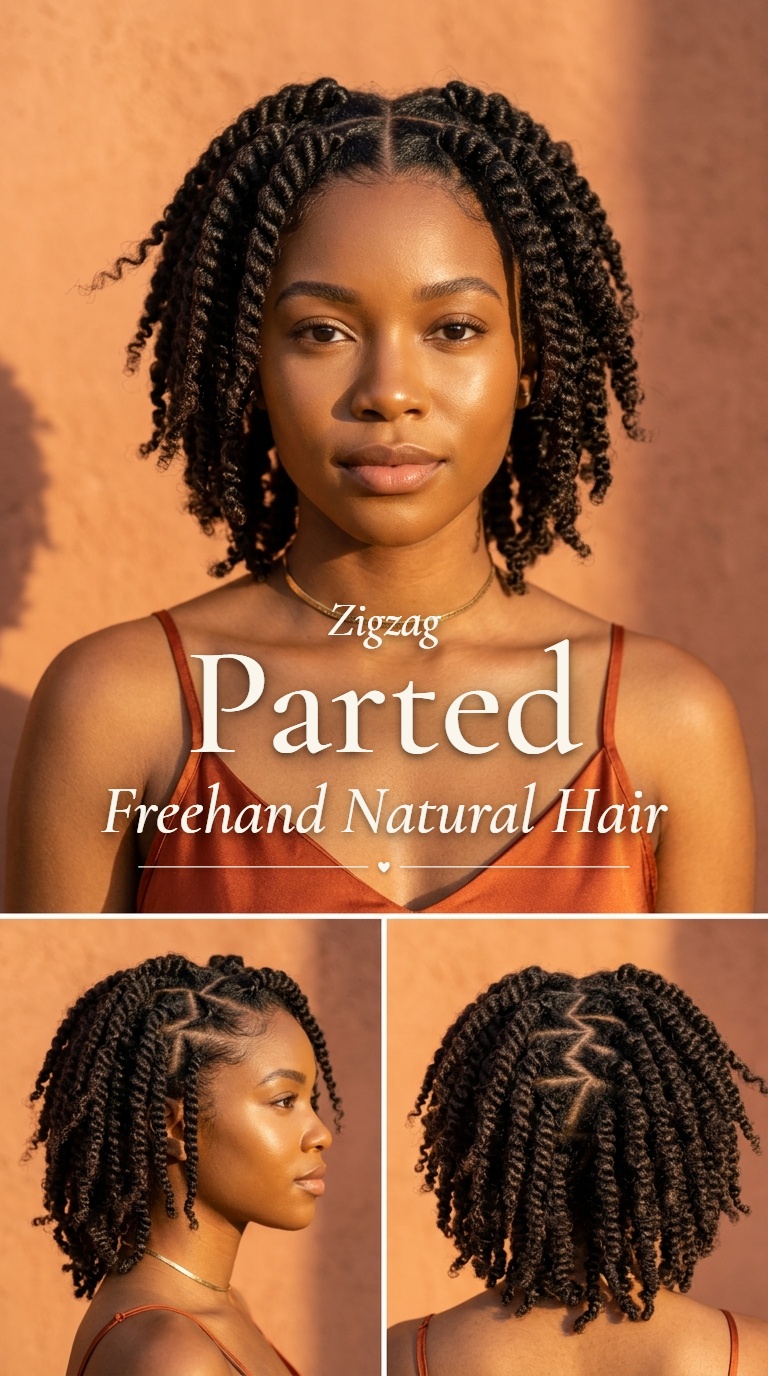
This technique uses a sharp zigzag motion to create visual interest across the scalp. It breaks up traditional straight lines for a more dynamic and modern aesthetic.
You can achieve this look by using the tail of a comb to guide the hair into alternating angles. It works exceptionally well for dense textures that benefit from clear definition.
The resulting sections can be twisted or braided to secure the style. This approach keeps the hair organized while adding a playful, artistic element to your daily routine.
2. Geometric Pattern Freehand Natural Hair
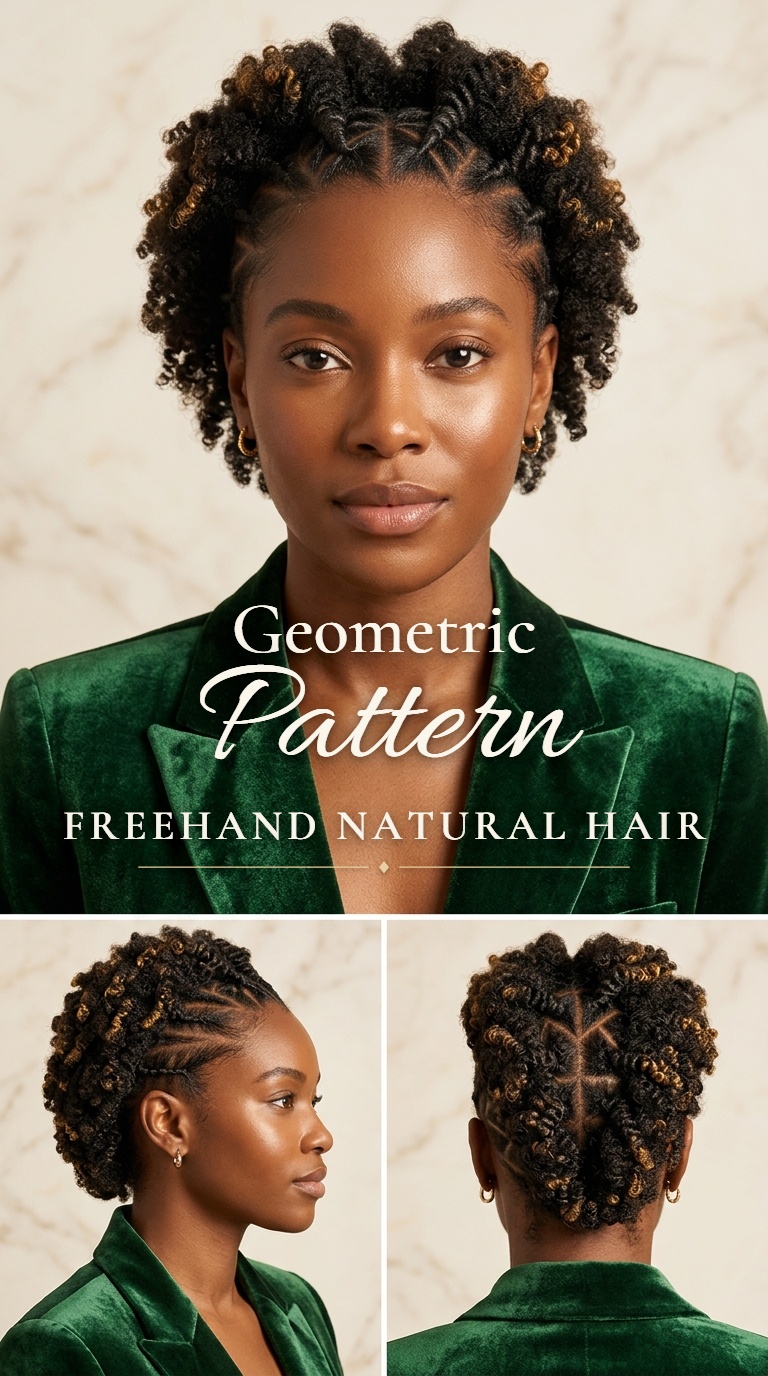
Geometric shapes involve creating squares, triangles, or diamonds across the head without a fixed template. This method relies on the natural flow of the hair to determine shape placement.
By varying the size of each shape, you create a mosaic effect that looks complex but feels organic. It is a great way to manage high-volume hair while showcasing precision.
These sections serve as the foundation for individual twists or bantu knots. The contrast between the sharp parts and the soft hair texture creates a striking visual balance.
3. Curved Line Freehand Natural Hair
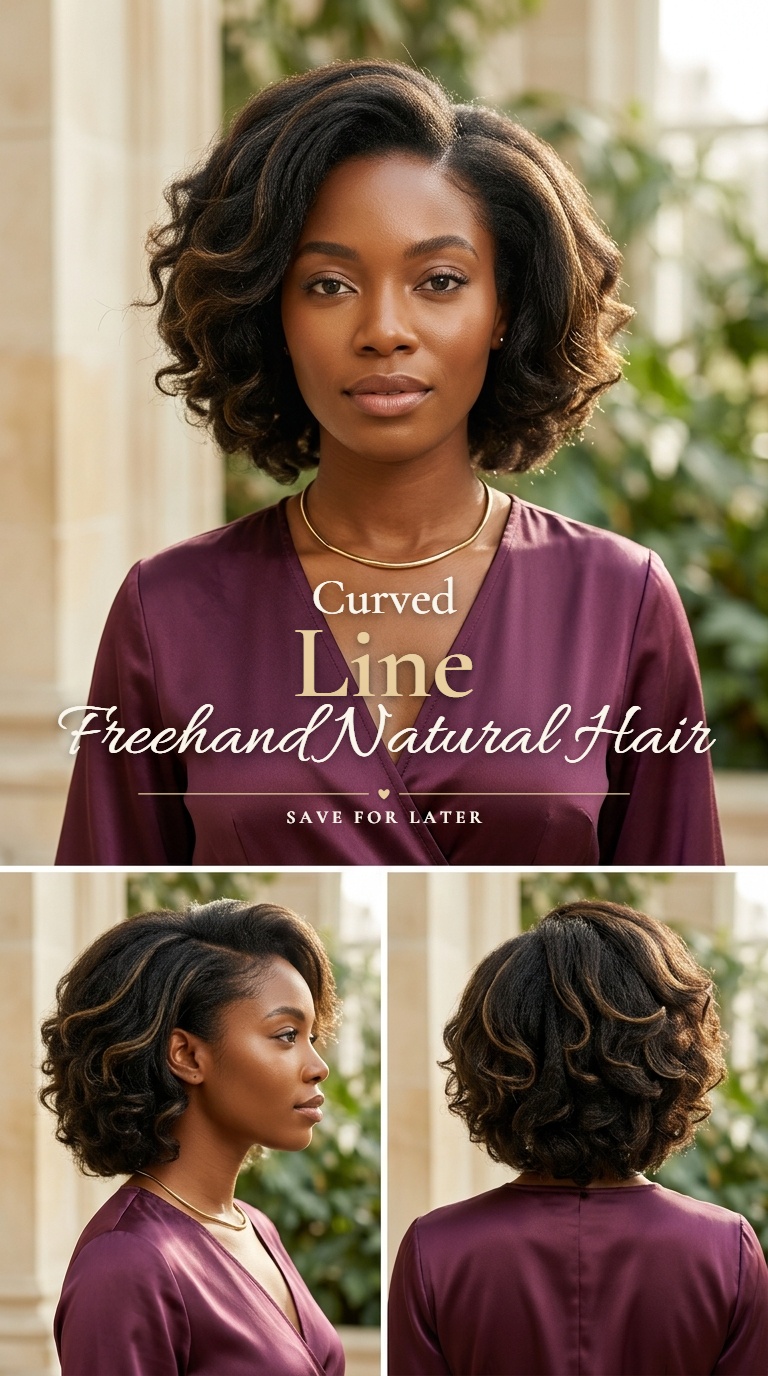
Curved lines mimic the natural roundness of the head for a softer, more flowing appearance. These paths can wind from the forehead to the nape in smooth arcs.
This style is ideal for those who find straight parts too harsh or difficult to maintain. The curves allow for more flexibility in how the hair sits and moves.
Working with curves also helps in distributing tension evenly across the scalp. It results in a comfortable, low-stress hairstyle that remains visually captivating for days.
4. Swirl Design Freehand Natural Hair
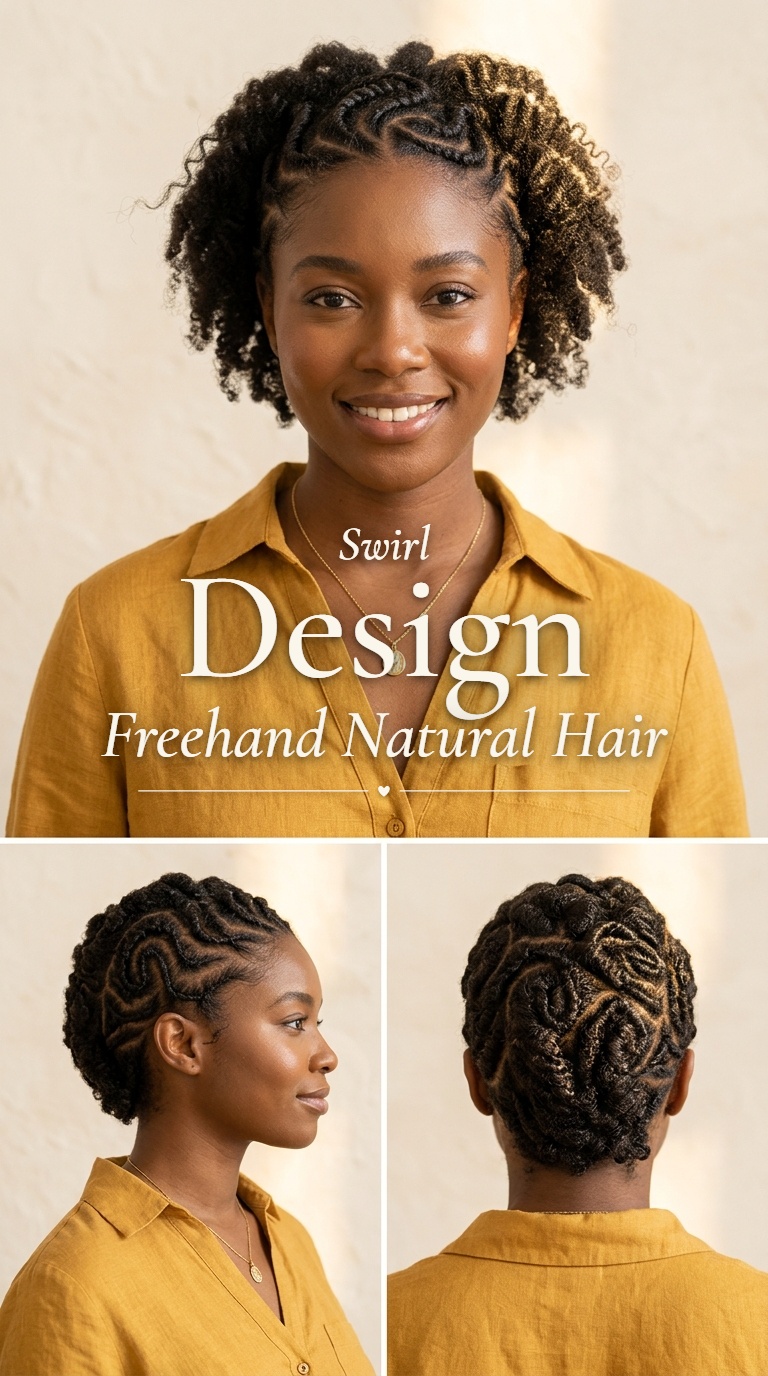
A swirl design starts from a central point and radiates outward in a circular motion. This creates a focal point that draws the eye to specific areas of the head.
The technique requires a steady hand to maintain consistent spacing between the concentric circles. It is a highly decorative option for special occasions or creative expression.
Securing the hair in small coils or flat braids along the swirl keeps the pattern crisp. This style highlights the natural luster of the hair as light hits the curves.
5. Asymmetrical Freehand Natural Hair Style
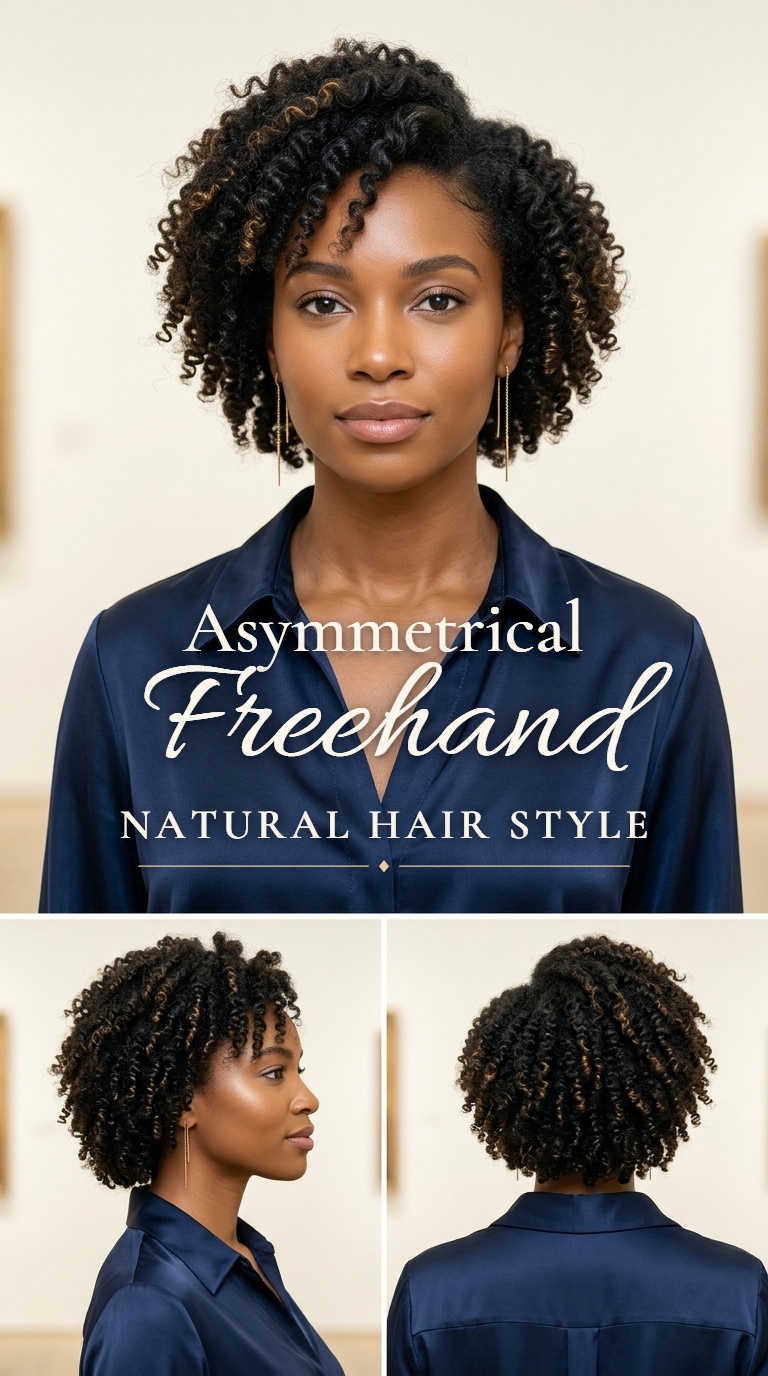
Asymmetry offers a modern edge by focusing more volume or intricate detail on one side of the head. This breaks the traditional rules of balance for a custom look.
You might choose to have tight freehand braids on one side while leaving the other side full and textured. This contrast emphasizes the versatility of natural hair fibers.
This approach is perfect for those who want to experiment with different silhouettes. It allows for a personalized style that adapts to your specific face shape and hair length.
6. Tapered Freehand Natural Hair Look
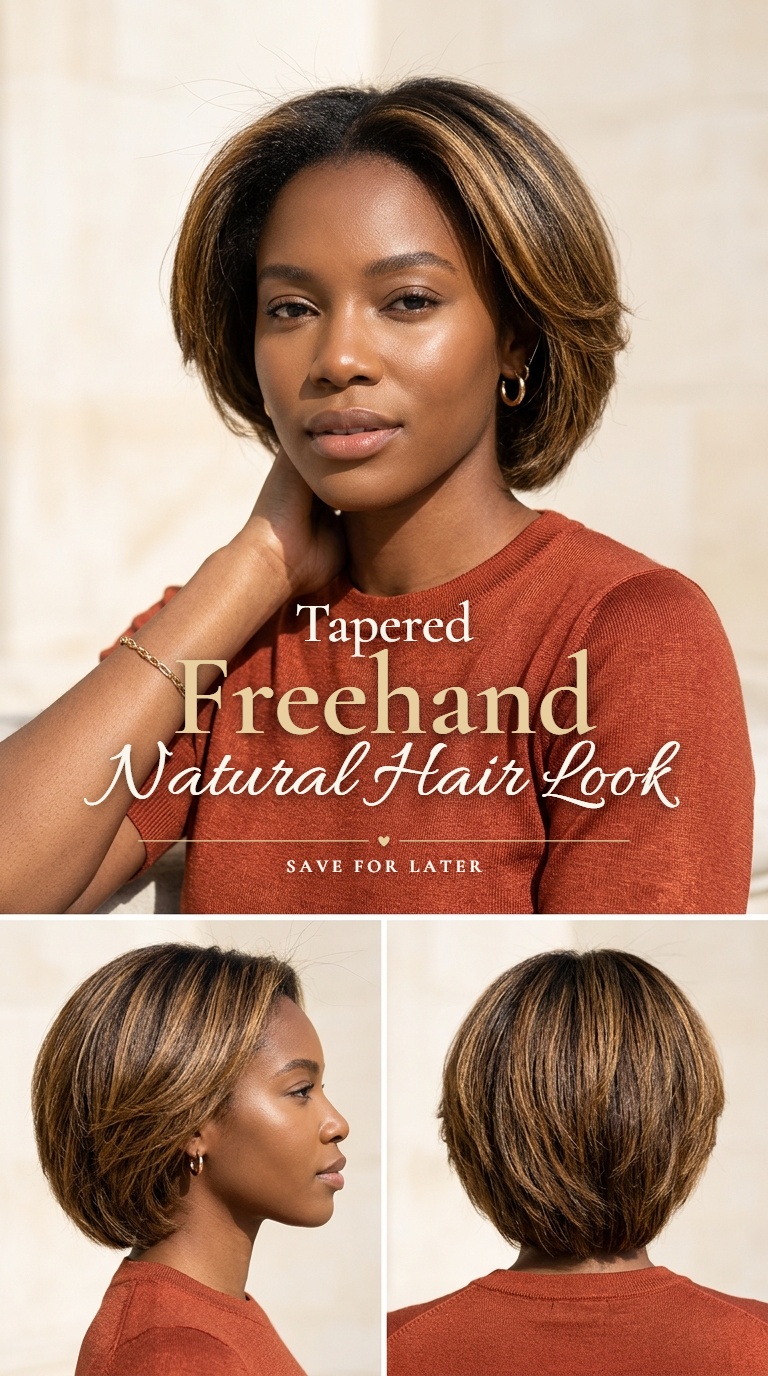
A tapered look focuses on creating shorter, more controlled sections near the neck and ears. The hair gradually increases in length or volume toward the crown of the head.
Using freehand techniques to define the edges ensures a seamless transition between lengths. This creates a clean silhouette that frames the face beautifully without being overly rigid.
This style is often paired with wash-and-go textures or small twists at the top. It provides a structured appearance that remains easy to maintain during a busy week.
7. Heart Shape Freehand Natural Hair
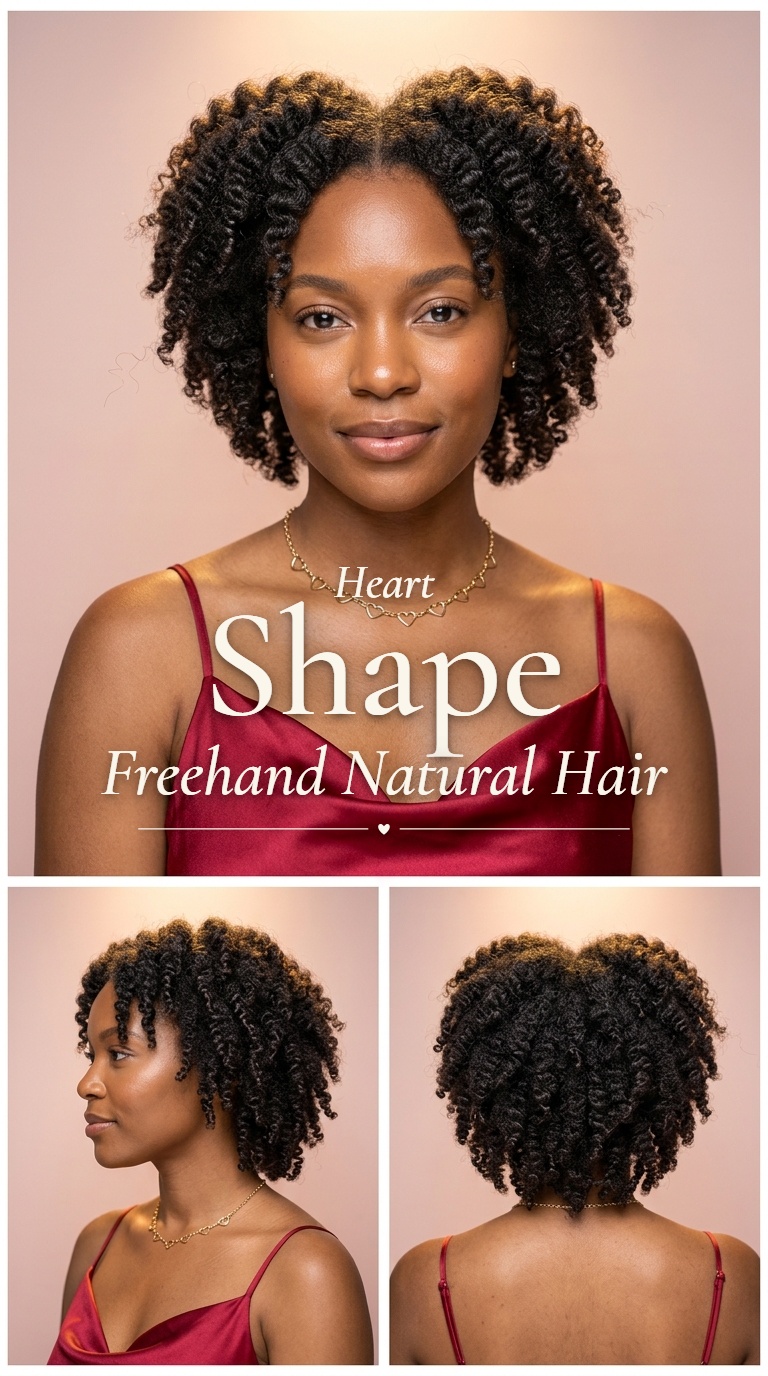
Creating a heart shape with partings adds a sentimental and artistic touch to the hair. This design is usually placed on the side or back of the head as a statement.
The curves of the heart require careful sectioning to ensure the shape is recognizable. Once the outline is formed, the hair inside can be styled differently than the hair outside.
This freehand element works well with cornrows or flat twists to hold the shape in place. It is a popular choice for those wanting to add a unique detail to a standard style.
8. Abstract Line Freehand Natural Hair
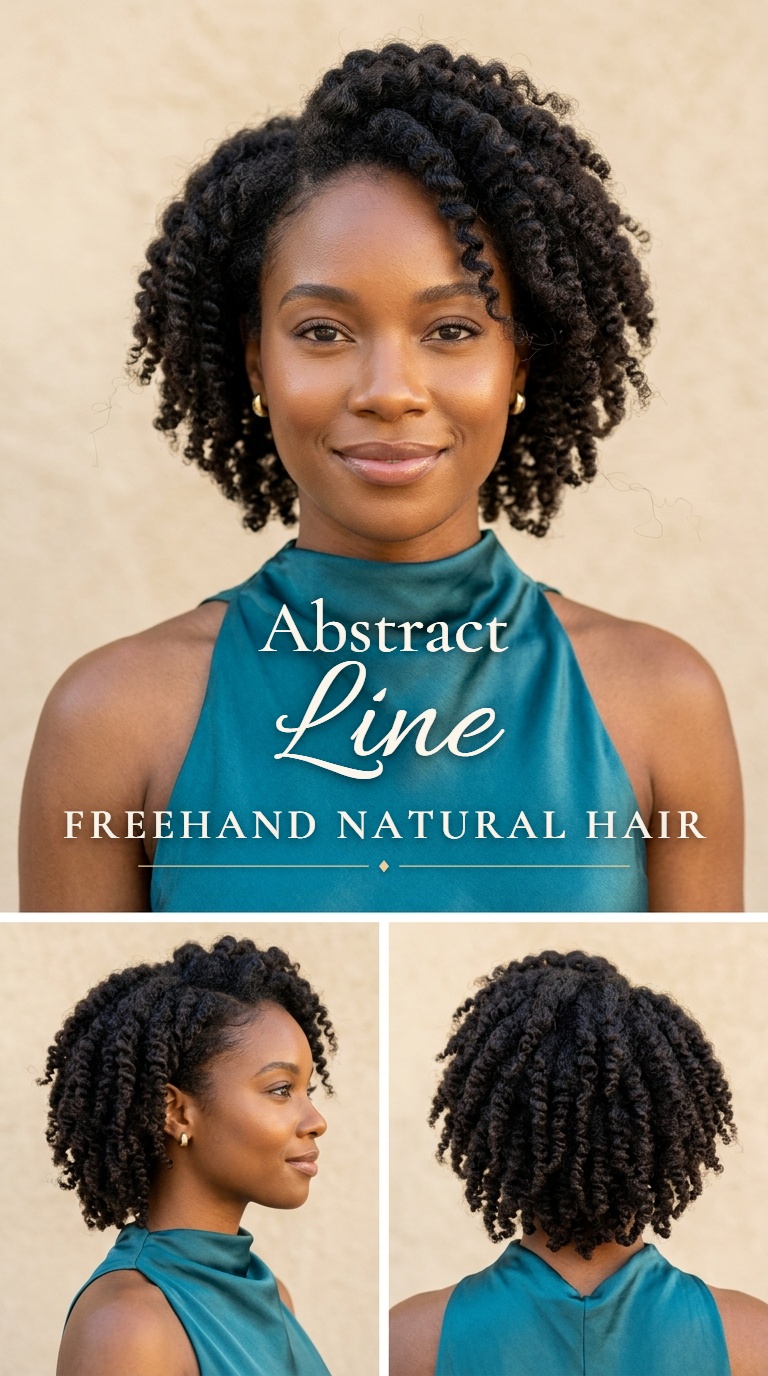
Abstract lines involve random, non-repeating paths that traverse the scalp in various directions. This style is entirely unique to the individual and the moment of creation.
The beauty of abstract sectioning is that there are no mistakes, only creative choices. It allows the stylist to follow the natural cowlicks and growth patterns of the hair.
This look is best finished with simple twists or braids to keep the focus on the intricate parting map. It provides a high-fashion aesthetic that feels deeply personal and original.
9. Spiral Freehand Natural Hair Braids
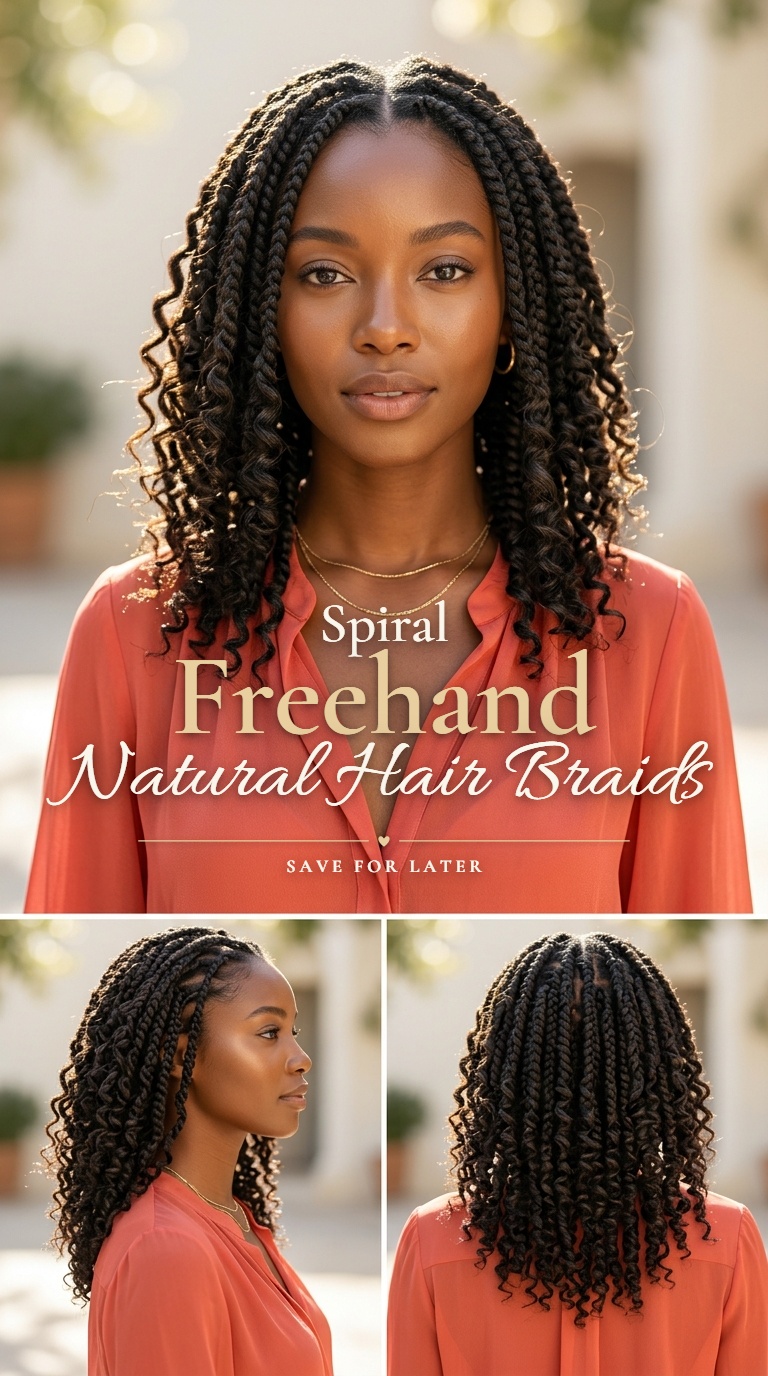
Spiral braids move in a continuous loop, often starting from the ear or crown and circling the head. This technique creates a sense of constant movement and rhythm.
The freehand nature of these spirals means they can be as tight or as loose as desired. They are effective for keeping hair tucked away securely while maintaining a sophisticated look.
Spirals help in protecting the ends of the hair by incorporating them into the circular path. This is an excellent choice for those focused on hair growth and retention.
10. Petal Design Freehand Natural Hair
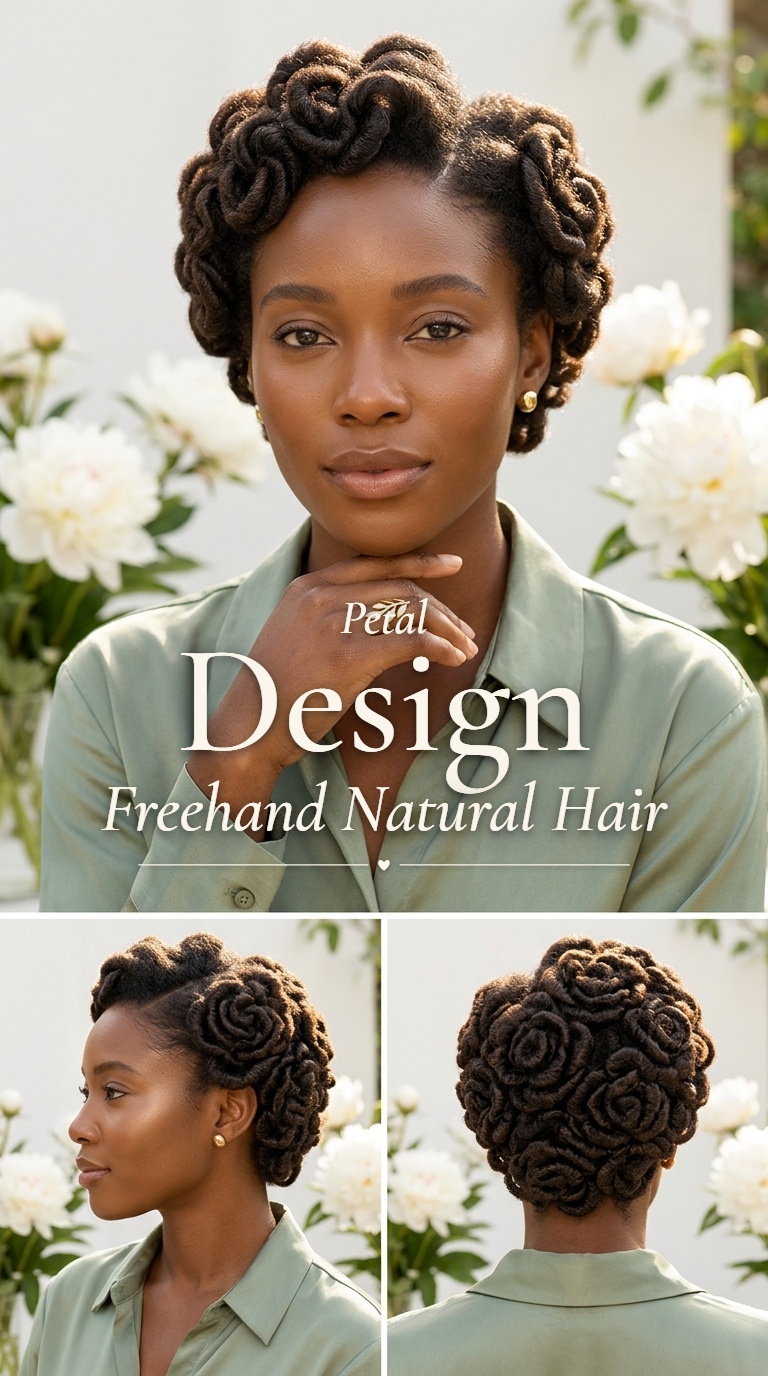
A petal design mimics the look of a blooming flower through strategic sectioning. Each “petal” is a curved section that meets at a common center point on the scalp.
This style creates a soft, organic appearance that celebrates nature-inspired shapes. It is particularly effective on hair with a lot of volume, as the sections stand out clearly.
Filling the petal sections with two-strand twists adds texture and dimension. This design is perfect for those who enjoy botanical themes and delicate details.
11. Wave Patterned Freehand Natural Hair
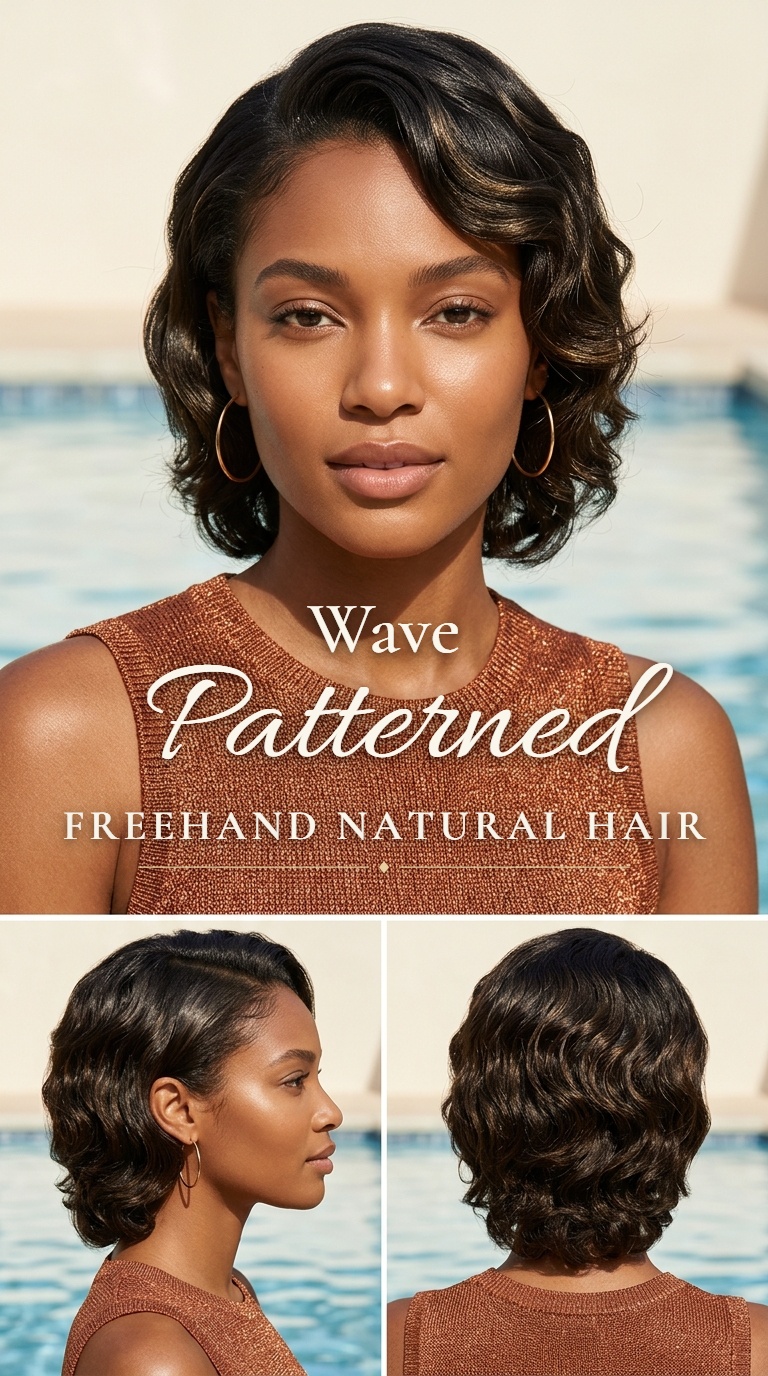
Wave patterns use gentle, undulating lines that move across the head like water. This freehand style avoids sharp angles in favor of fluid, flowing transitions.
Achieving a consistent wave requires following the natural horizontal or vertical planes of the scalp. It creates a calming visual effect that is both professional and stylish.
The waves can be enhanced by using a light styling cream to smooth the hair as you part it. This ensures the pattern remains visible even as the hair begins to age.
12. Minimalist Freehand Natural Hair Parts
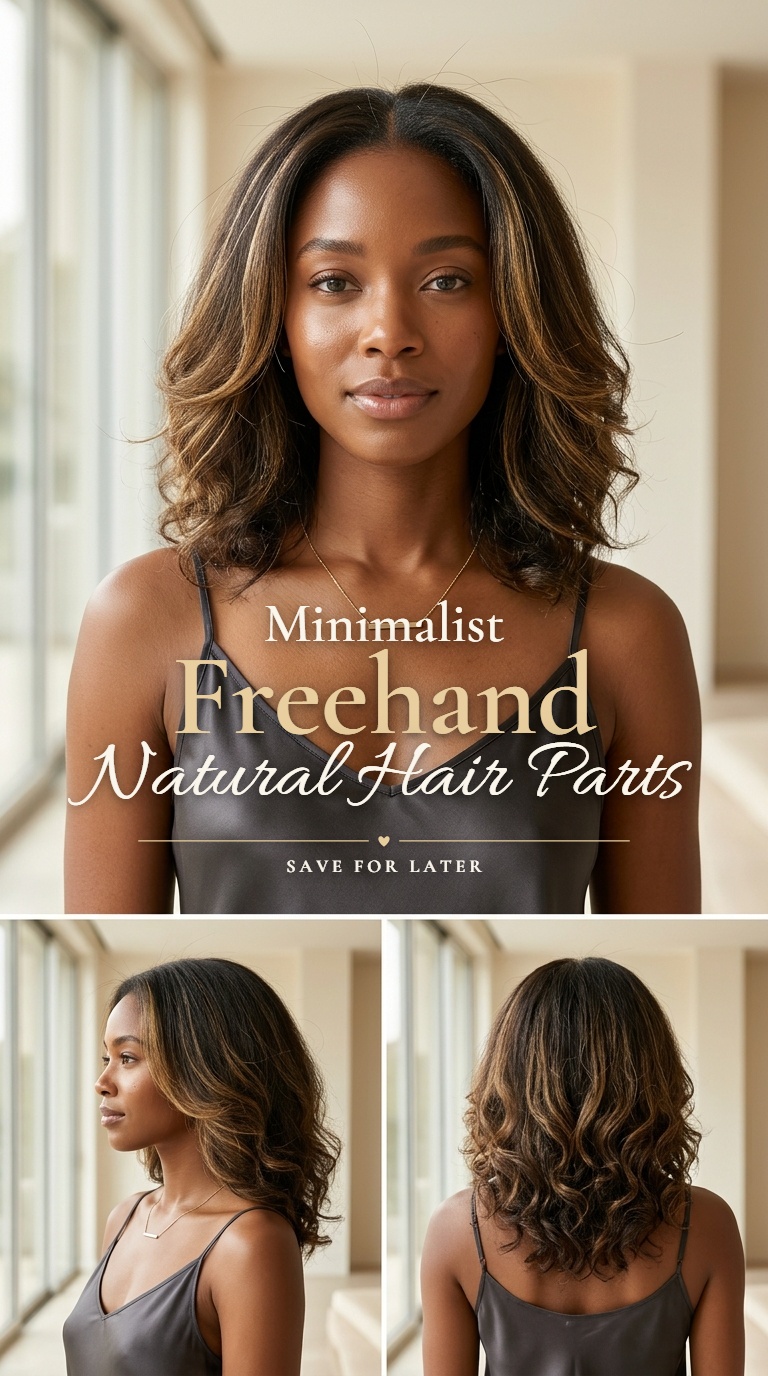
Minimalism in freehand styling focuses on a few purposeful lines rather than a full head of patterns. A single, well-placed curved or diagonal part can redefine a whole look.
This approach is ideal for those who prefer a subtle aesthetic with a hint of creativity. It takes less time to execute but still offers a customized feel.
By keeping the rest of the hair in its natural state, the freehand part becomes a bold focal point. This style is easy to refresh and transition into different looks.
13. Interlocking Freehand Natural Hair Styles
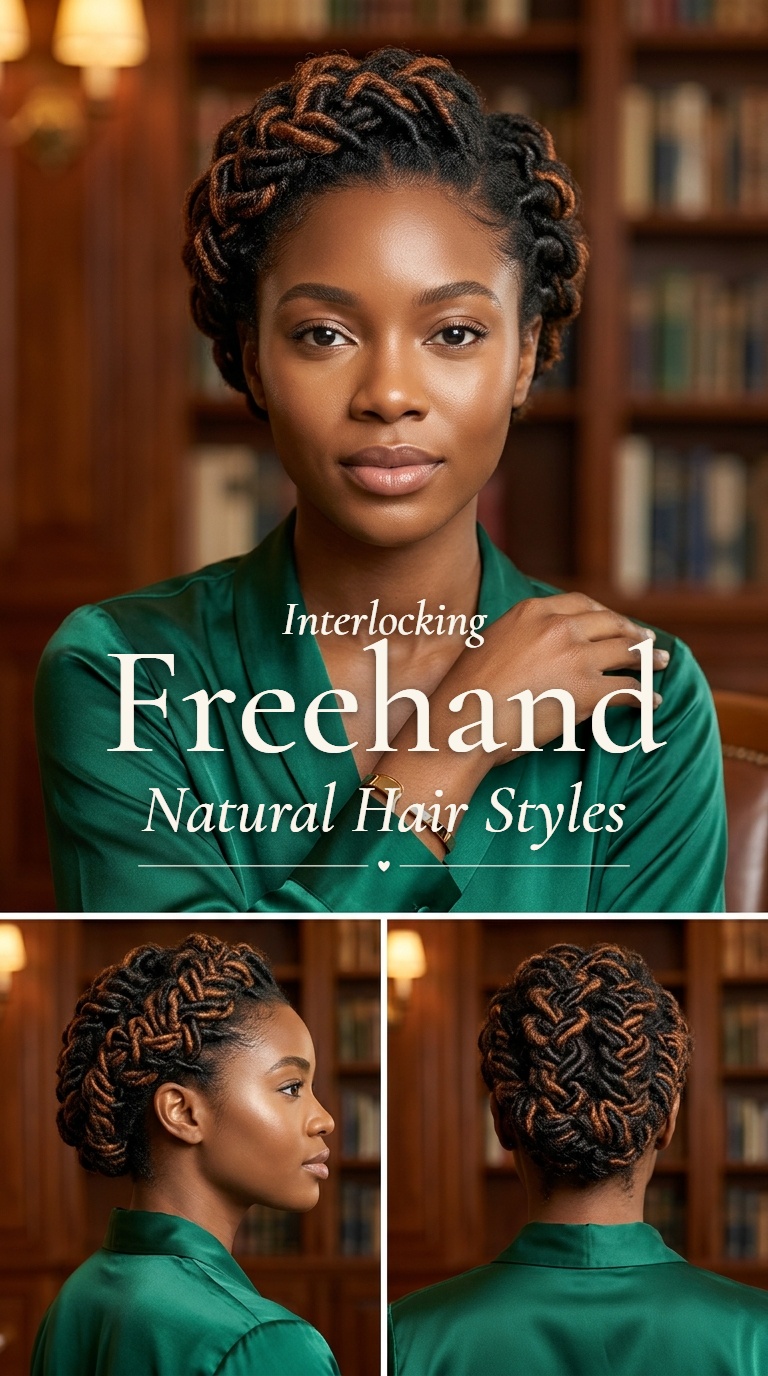
Interlocking involves sections that appear to weave over and under one another. While the hair isn’t literally woven, the parting lines create the illusion of a fabric-like texture.
This technique requires planning where each line will cross to maintain the visual puzzle. It is a great way to showcase skill and attention to detail.
Using this method for small braids or twists results in a sturdy style that stays neat. It is particularly useful for active lifestyles where hair needs to stay in place.
14. Vertical Freehand Natural Hair Braids
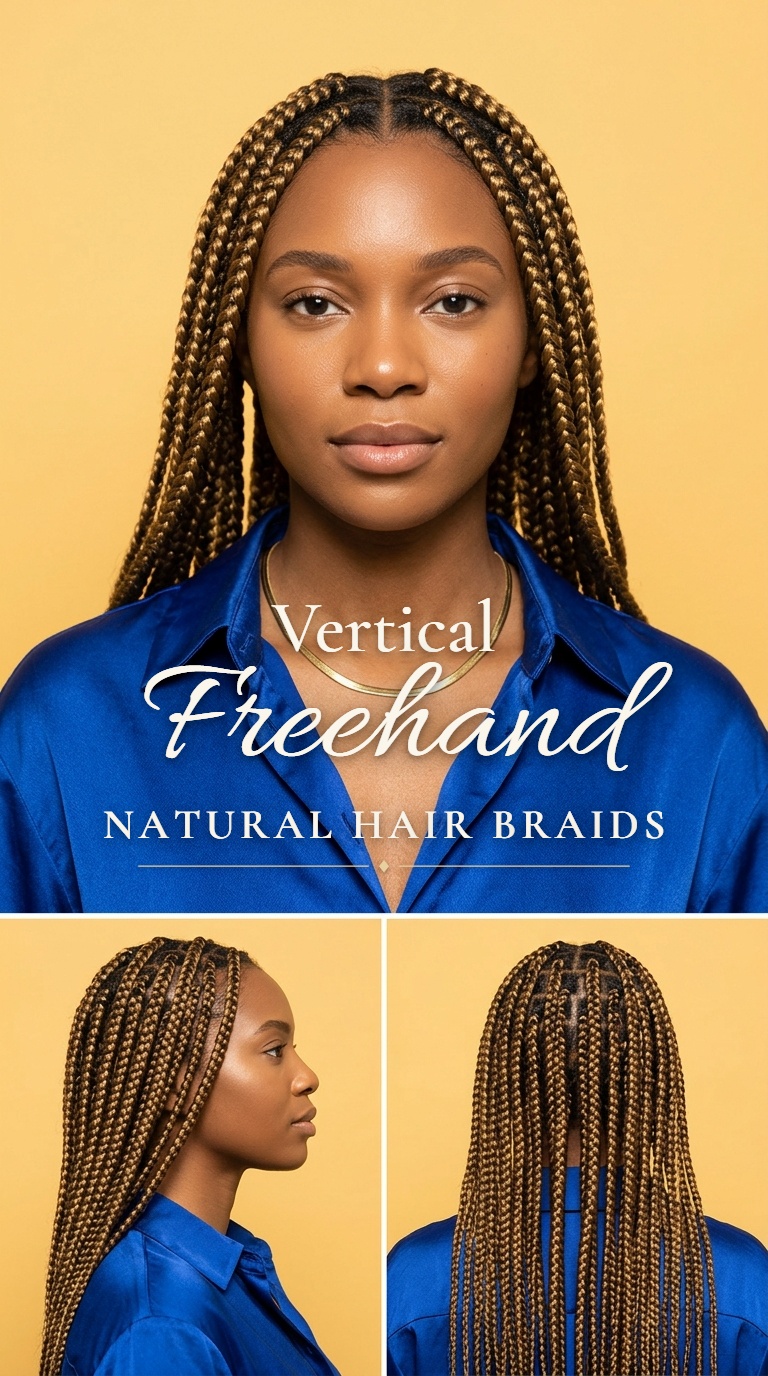
Vertical sections run from the front hairline straight back to the nape, but with freehand variations in width. This adds a customized twist to the standard “all-back” style.
By varying the thickness of each vertical row, you create a rhythmic pattern that elongates the appearance of the head. It is a clean, classic look with a modern update.
These vertical rows can be braided or twisted tightly to the scalp. This style is excellent for keeping hair out of the face while maintaining a polished appearance.
15. Diagonal Freehand Natural Hair Flow
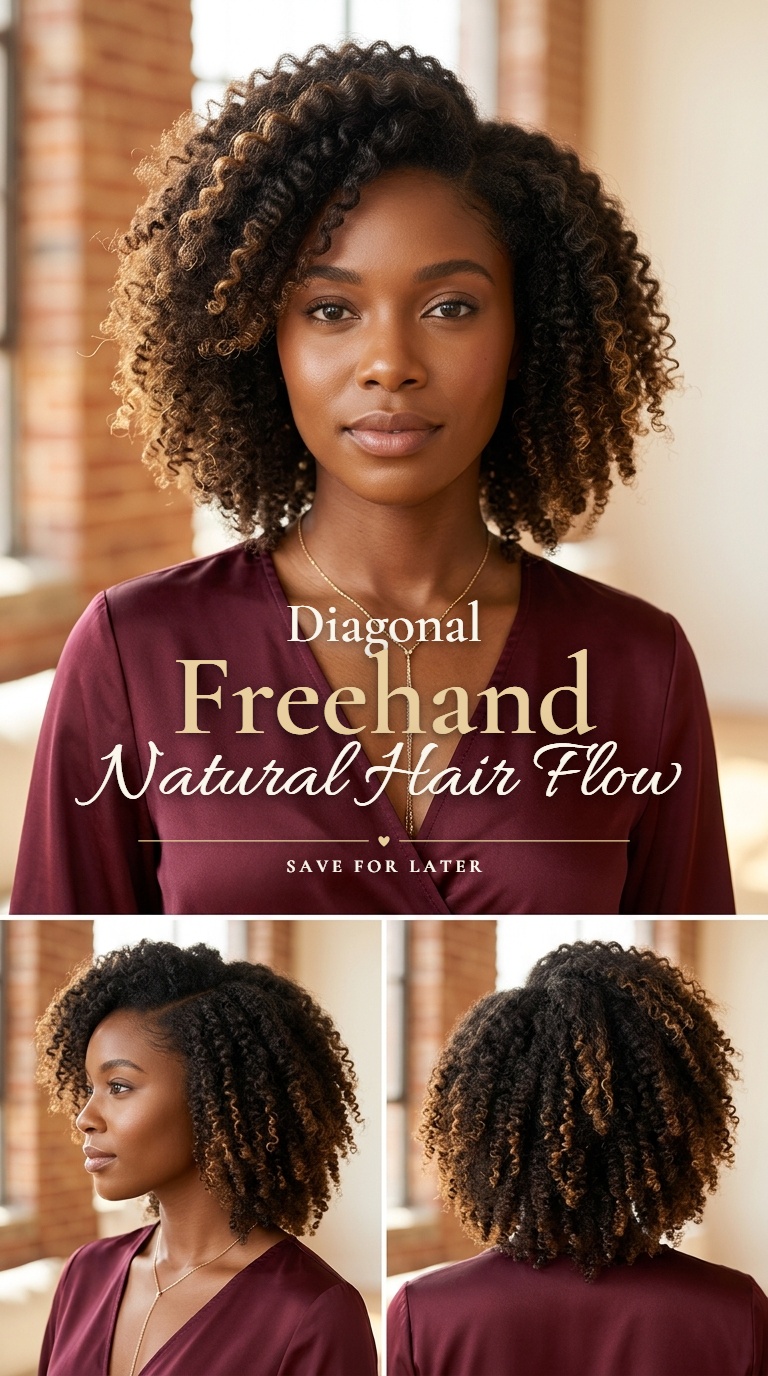
Diagonal lines create a sense of speed and energy by cutting across the natural planes of the head. This freehand flow often moves from one temple toward the opposite nape.
This direction is naturally flattering for many face shapes as it draws the eye upward and outward. It provides a dynamic silhouette that looks different from every angle.
Combining diagonal parts with varied textures, like puffs or knots, adds even more interest. It is a versatile foundation for many creative natural hair experiments.
16. Circular Freehand Natural Hair Sections
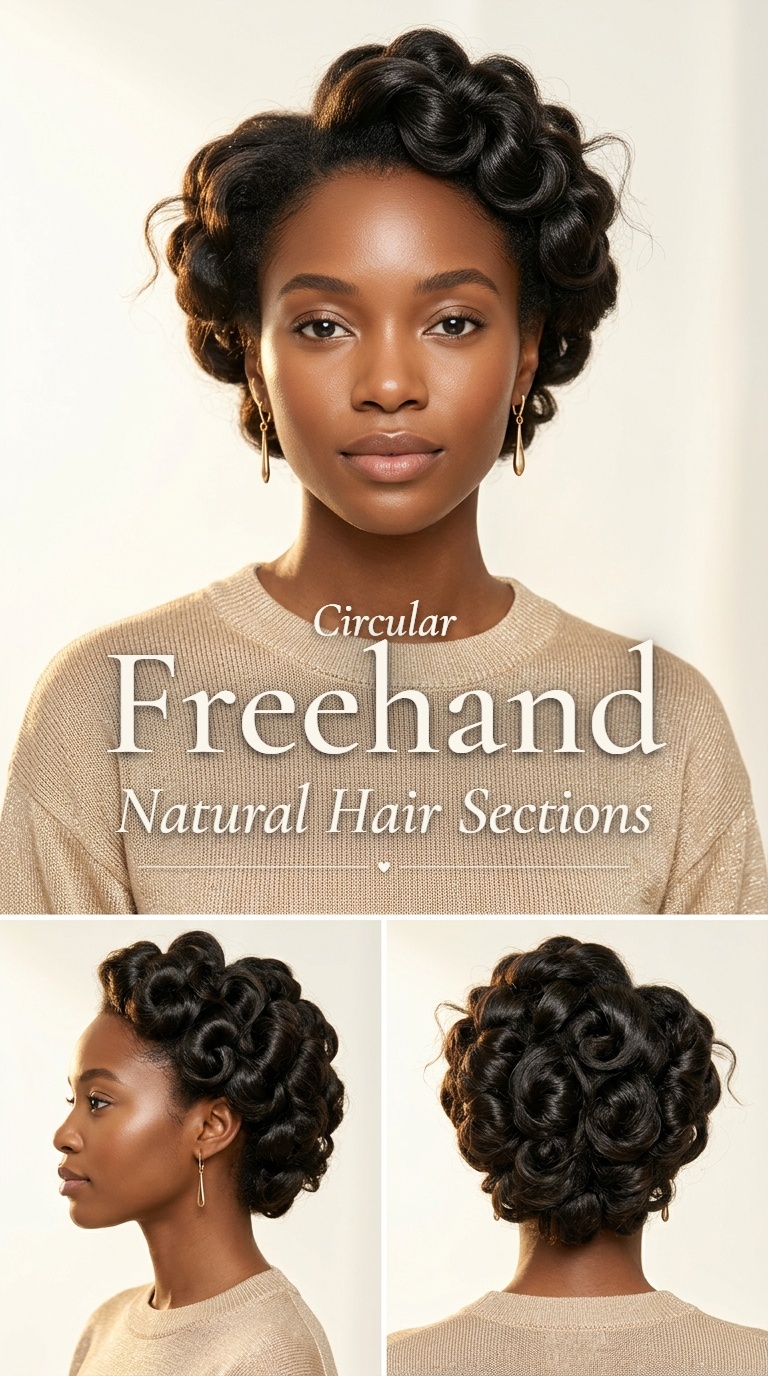
Circular sections involve creating rounded “islands” of hair across the scalp. Unlike swirls, these are distinct, separate circles that can vary in size and placement.
This style allows for a lot of playfulness, as the circles can be arranged in rows or scattered randomly. It is a great way to section hair for bantu knots or small puffs.
The rounded edges of each section reduce the tension typically found at the corners of square parts. This makes the style comfortable to wear for extended periods.
How do you start freehand hairstyles for natural hair?
Begin by detangling the hair thoroughly and applying a light moisturizer or parting wax. Use a rat-tail comb to sketch light lines on the scalp to visualize the design before making firm parts.
Which freehand hairstyles for natural hair last longest?
Braided patterns, such as freehand cornrows or small interlocking twists, tend to last the longest. These styles secure the hair close to the scalp, preventing frizz and maintaining the design for several weeks.
Can beginners do freehand hairstyles for natural hair?
Yes, beginners can start with simple curved parts or asymmetrical sections. Practicing on the sides of the head where visibility is high helps in building the hand-eye coordination needed for more complex back designs.
Are freehand hairstyles for natural hair protective?
Most freehand styles act as protective styles because they tuck away the ends of the hair and reduce daily manipulation. Ensure that the parts are not too tight to prevent unnecessary tension on the hair follicles.
What tools help with freehand hairstyles for natural hair?
A high-quality rat-tail comb is essential for precision parting. Additionally, edge control or styling pomade helps to keep the lines crisp, while sectioning clips keep the surrounding hair out of the way.
How to maintain freehand hairstyles for natural hair?
To maintain the look, sleep with a silk or satin scarf to keep the parts flat and reduce friction. Use a light oil or braid spray to keep the scalp hydrated and the hair looking fresh without buildup.