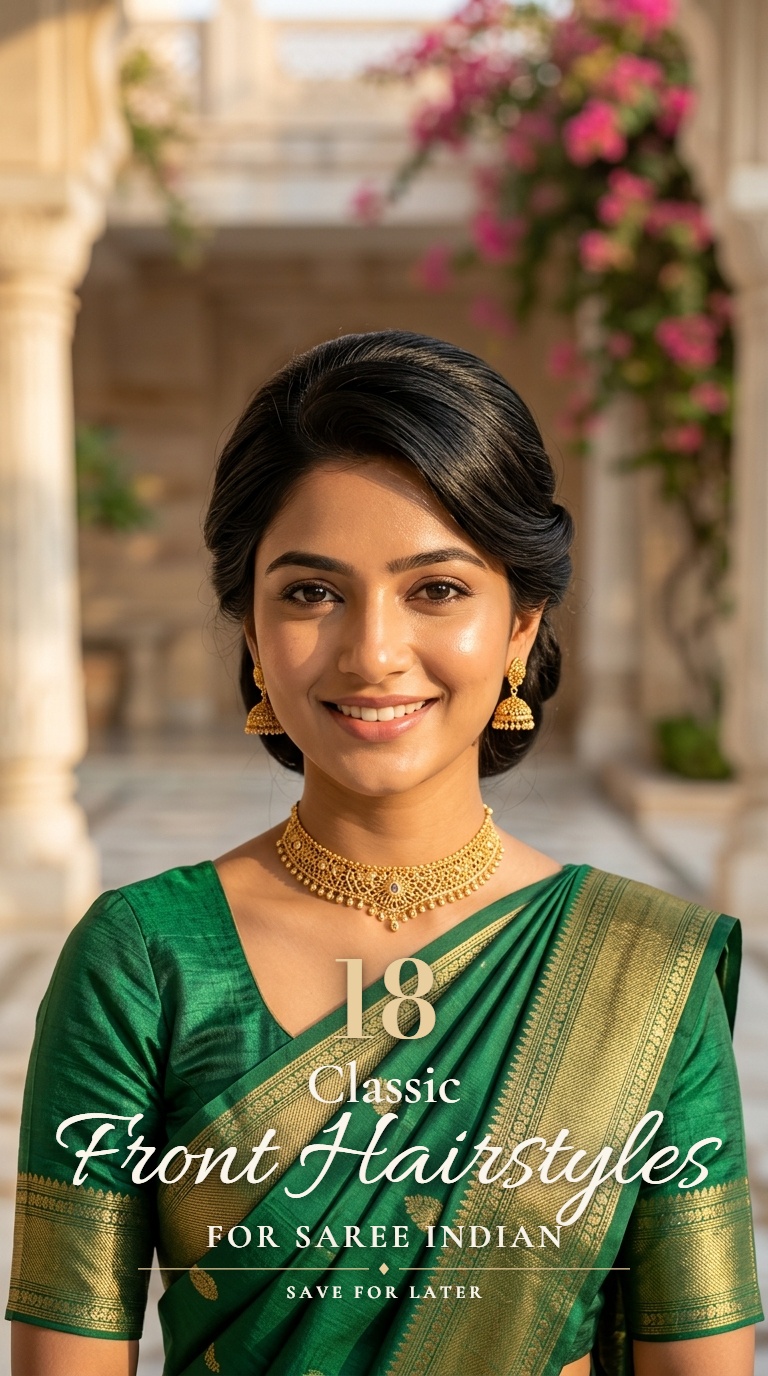
Selecting the perfect front hairstyles for saree indian looks can transform your entire ethnic ensemble from simple to sophisticated. The right style balances your facial features while complementing the drape.
South Asian hair textures are often thick and lustrous, providing a versatile base for various traditional techniques. These styles are designed specifically to enhance the grace of an Indian woman.
Whether you are attending a wedding or a festive gathering, the front section of your hair dictates the overall mood. Explore these classic variations to find your signature look for the season.
1. Mid Parted Sleek Front Saree Indian
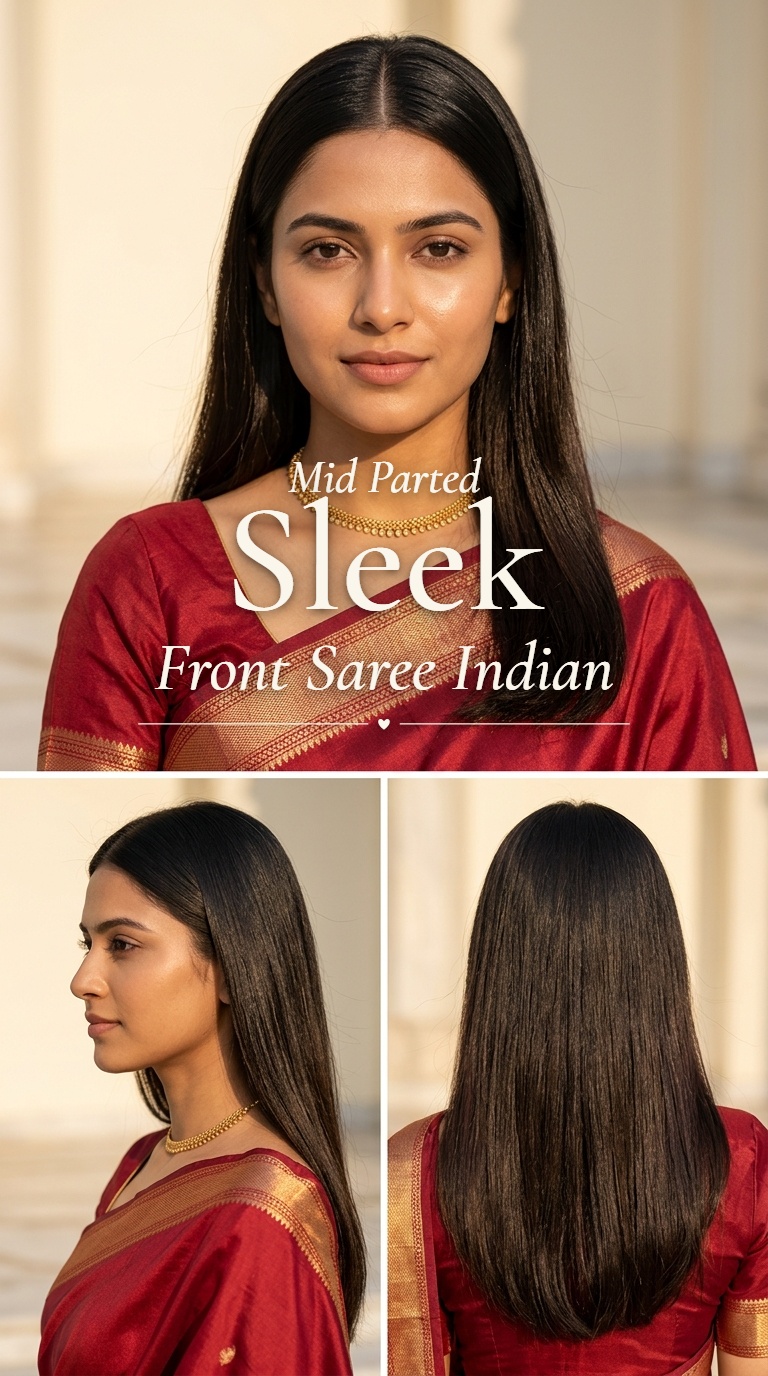
This look is a hallmark of elegance for South Asian women attending formal weddings or religious ceremonies. It frames the forehead perfectly, allowing a traditional Maang Tikka to sit centrally and securely.
The sleek finish works exceptionally well on thick, dark Indian hair textures common in the subcontinent. It provides a clean canvas that directs all attention to your facial features and the intricate embroidery of your saree.
To achieve this, use a fine-tooth comb to create a razor-sharp center parting. Apply a small amount of anti-frizz serum to tame any flyaways and ensure a glass-like shine that lasts throughout the event.
2. Side Swept Front Saree Indian Hairstyle
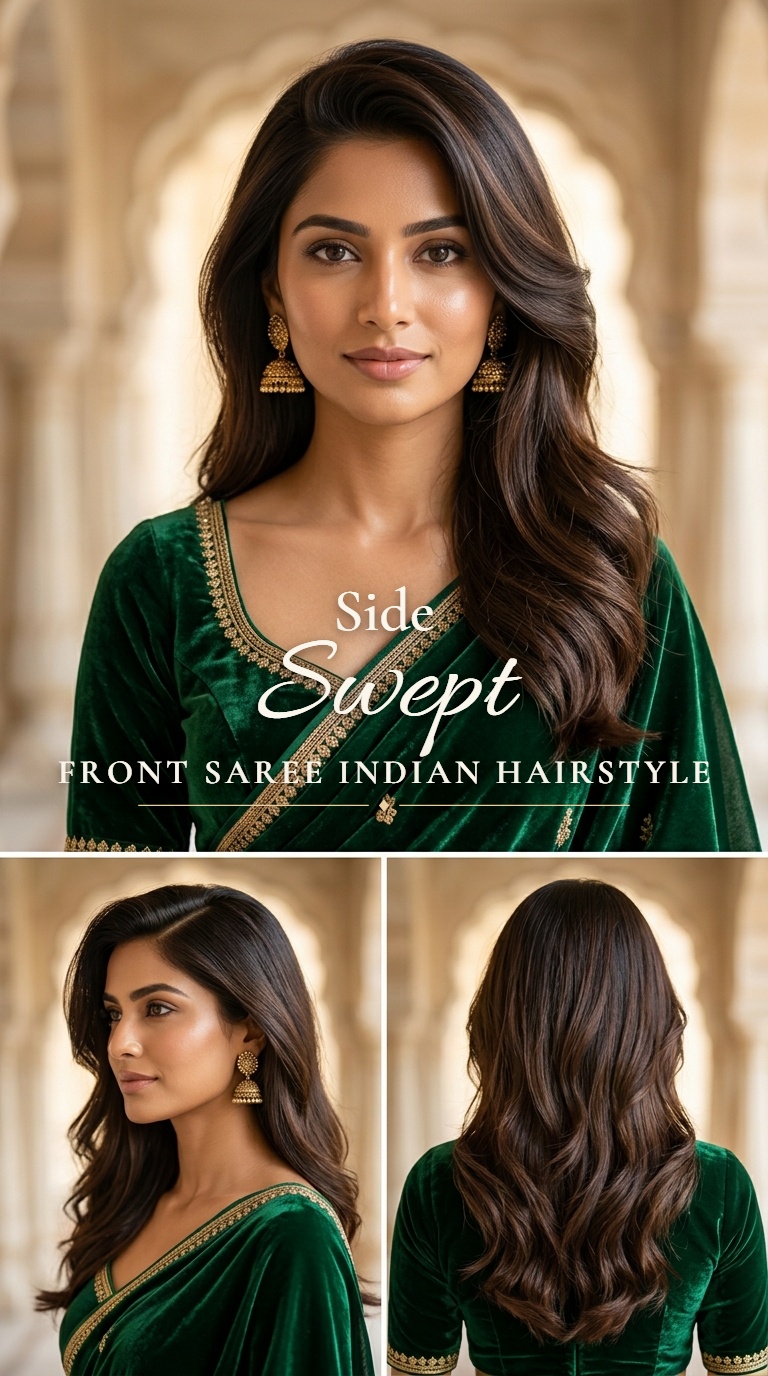
Choosing a side swept front offers a softer, more romantic approach to traditional styling. This variation adds volume to one side of the face, which beautifully balances out broader jawlines or rounder facial structures.
The gentle flow of this style mimics the elegant drapes of a silk or georgette saree. It is an ideal choice for reception parties where a blend of modern aesthetics and traditional roots is desired by the wearer.
Set the hair with a medium-hold spray to maintain the silhouette without losing natural movement. This style complements heavy jhumkas by keeping one side of the face clear and accessible for jewelry visibility.
3. Front Puff Saree Indian Hairstyle
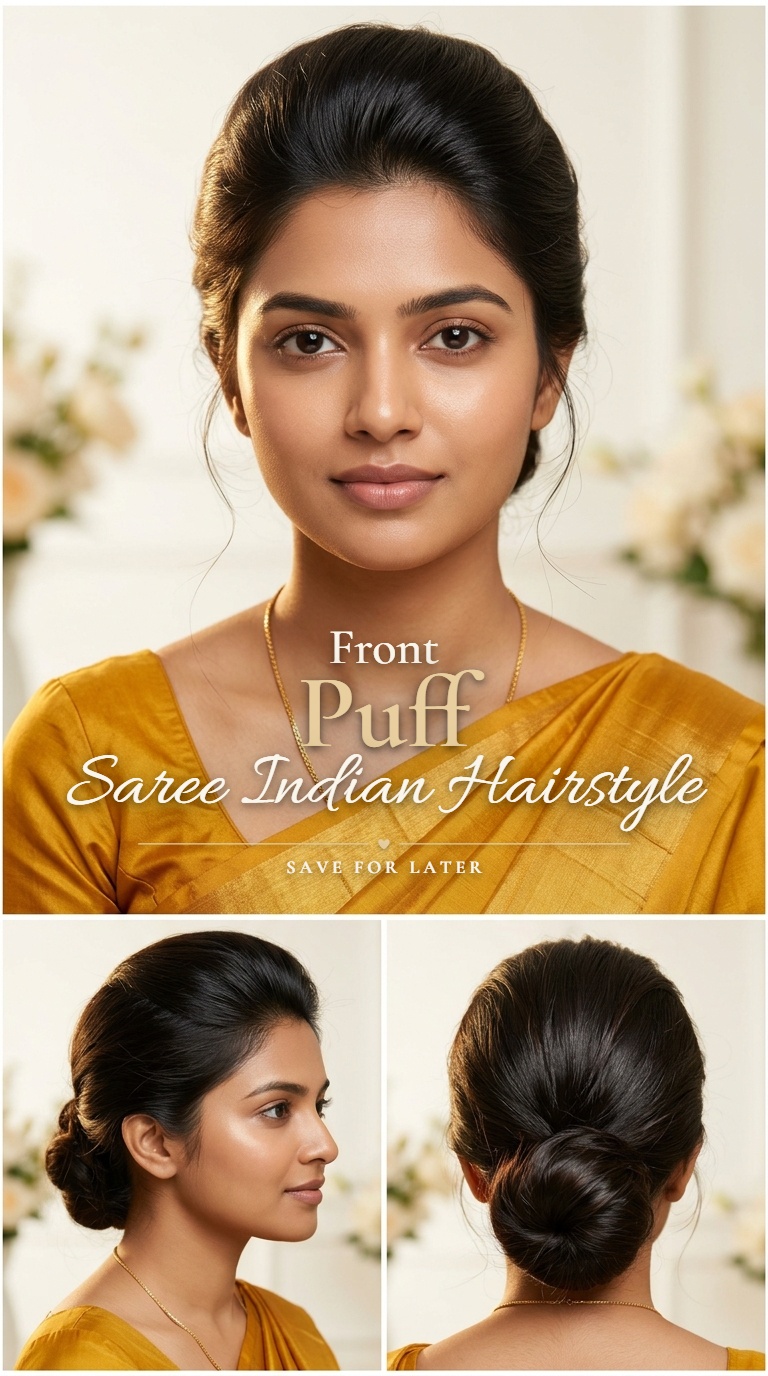
The classic puff remains a favorite because it adds necessary height to the crown, making the wearer appear taller and more poised. It is particularly effective for women with smaller face shapes who want to create an elongated look.
This front hairstyle for saree indian outfits works seamlessly with both open hair and elaborate buns. It provides a sturdy base for pinning a dupatta if you are dressing for a bridal or heavy festive occasion.
Lightly backcomb the inner sections of the front hair to create the desired volume. Smooth over the top layer with a soft brush to maintain a polished appearance that looks professional and intentional.
4. Twisted Side Front Saree Indian Hairstyle
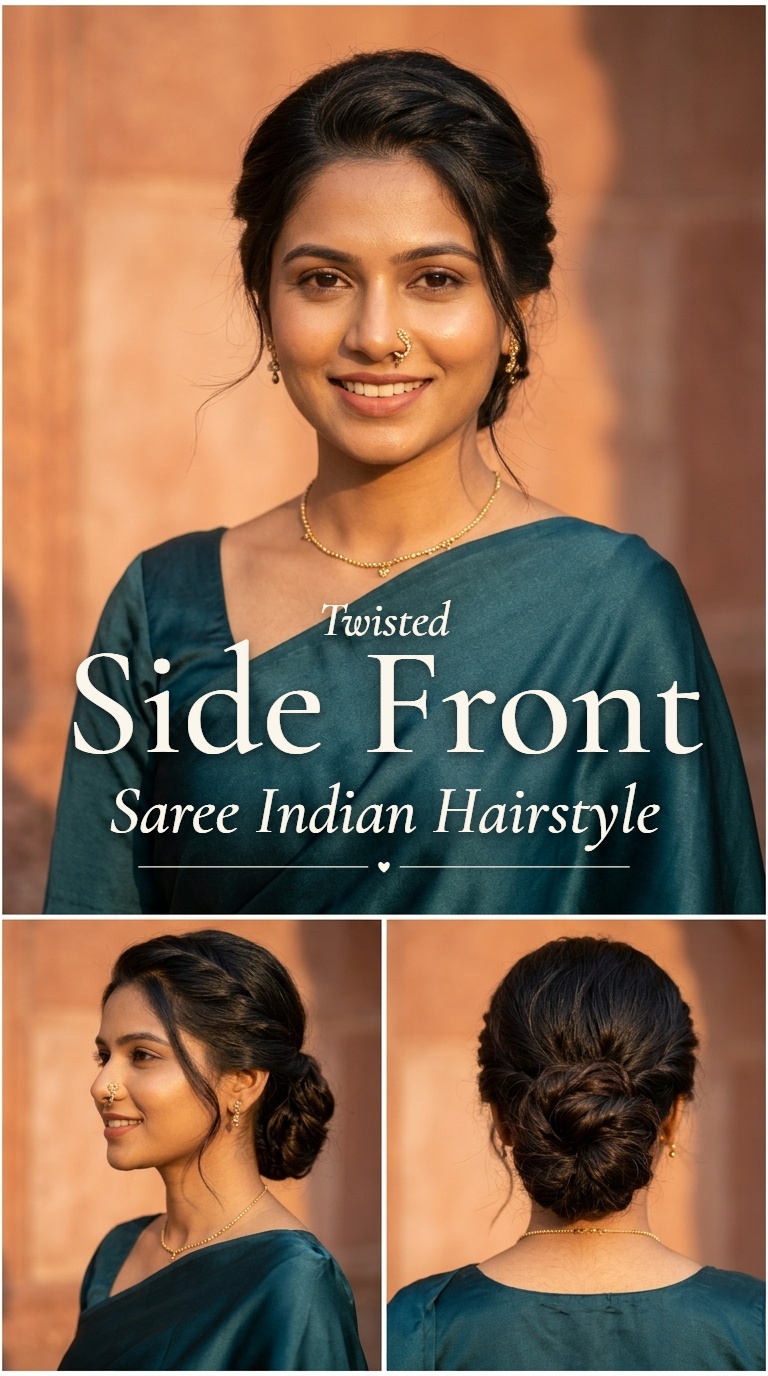
Twisted sections offer a contemporary twist to the classic saree look, providing texture and visual interest. This style involves taking small sections of hair from the front and twisting them back away from the face.
It is a practical choice for outdoor Indian weddings where you want to keep hair out of your eyes while still looking stylish. The twists can be secured with decorative gold pins to match your saree borders.
This technique works well for medium to long hair lengths and accommodates natural waves beautifully. It creates a semi-formal vibe that is perfect for sangeet ceremonies or family gatherings.
5. Front Dutch Braid Saree Indian Hairstyle
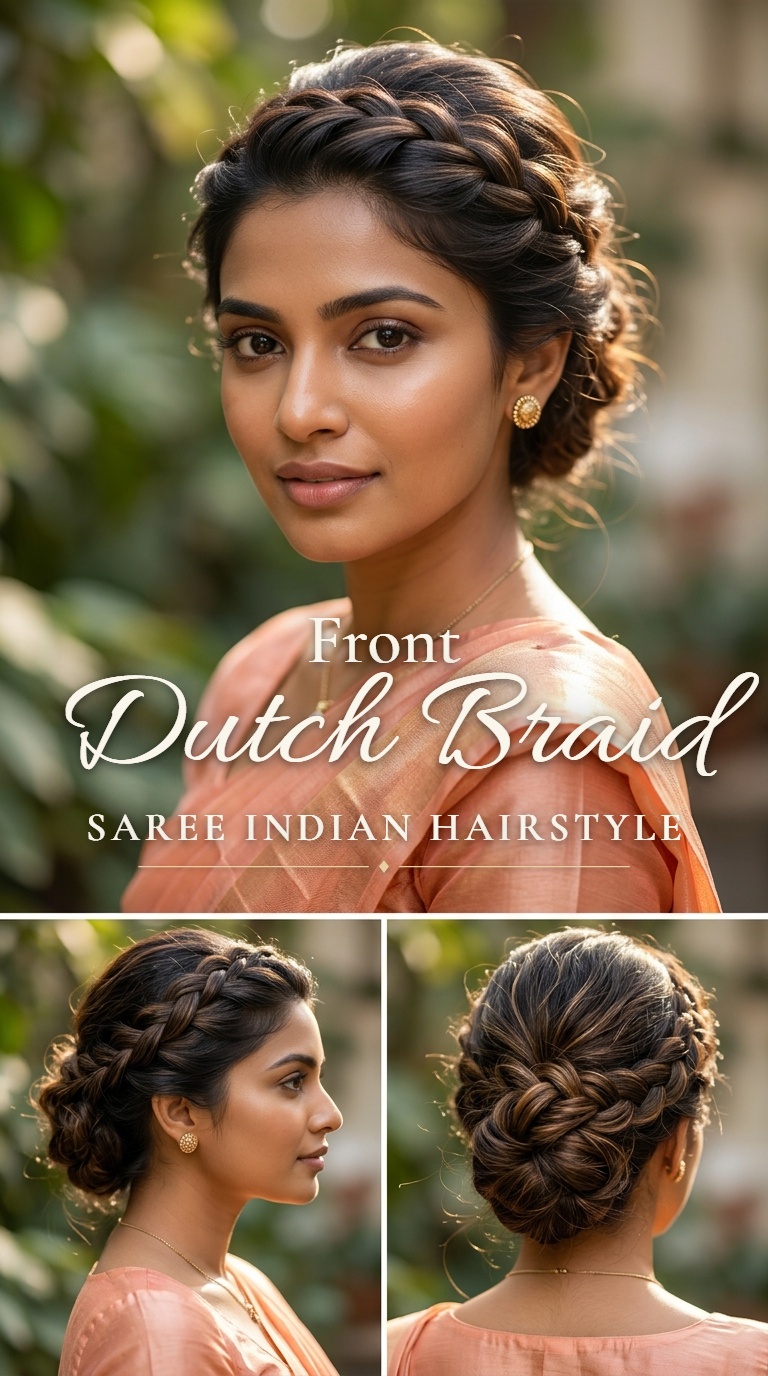
A Dutch braid across the front acts as a natural hairband, framing the face with intricate detail. This style is highly popular among younger women who want a secure yet fashionable look for long festive days.
The 3D effect of the Dutch braid stands out against dark South Asian hair, especially when paired with a vibrant silk saree. It keeps the hair neatly tucked away while showcasing the skill of the styling.
Weave the braid tightly along the hairline and gradually loosen the loops for a fuller, more voluminous effect. This prevents the style from looking too flat against the forehead.
6. Messy Front Curls Saree Indian Hairstyle
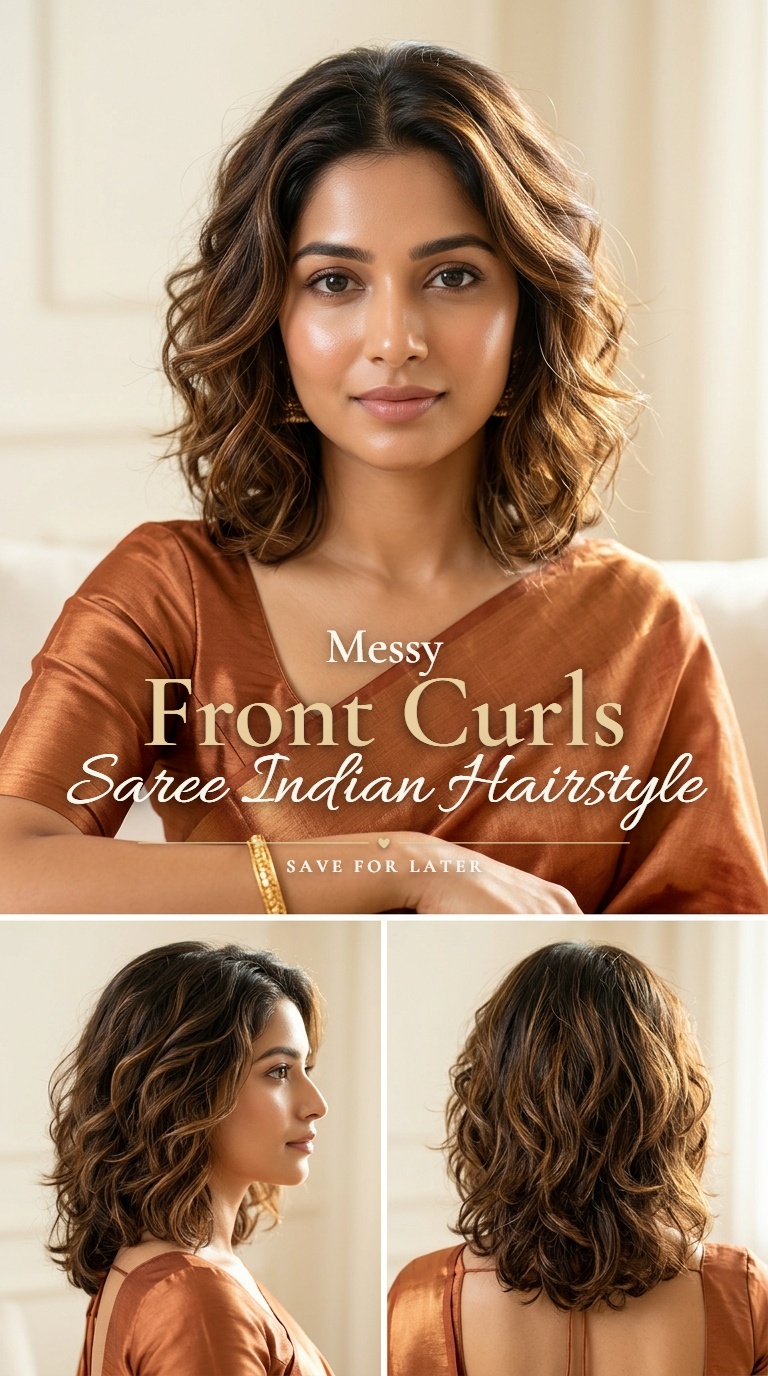
Embrace your natural texture with messy front curls that provide a relaxed and youthful aesthetic. This style is perfect for modern saree drapes like the pant-style or dhoti-style saree often seen at cocktail parties.
The soft curls soften the facial features and provide a beautiful contrast to the structured pleats of a traditional saree. It is particularly flattering for women with heart-shaped faces or high cheekbones.
Use a small curling wand on the front tendrils and finger-comb them to avoid a stiff look. A touch of sea salt spray can help maintain the “perfectly undone” texture throughout the evening.
7. Deep Side Part Front Saree Indian
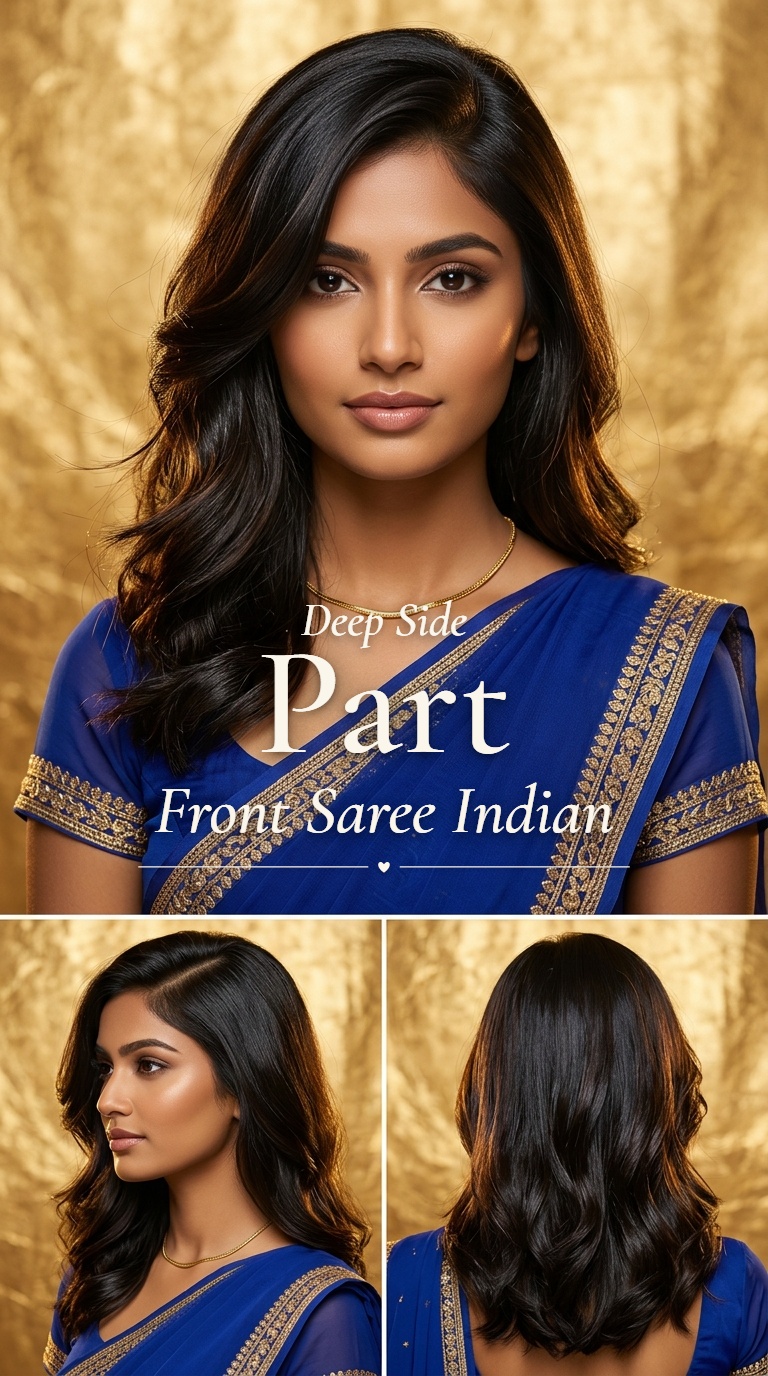
A deep side part creates a dramatic and sophisticated look that is reminiscent of classic Bollywood glamour. It shifts the volume of the hair to one side, creating an asymmetrical balance that is visually striking.
This front hairstyle for saree indian looks is ideal for highlighting a statement ear cuff or a heavy nath. The depth of the parting adds a layer of maturity and confidence to the wearer’s overall persona.
Ensure the hair is blown out smoothly before parting to achieve the best results. Use a bobby pin hidden behind the ear to keep the heavier side from falling over the face.
8. Front Fringe Saree Indian Hairstyle
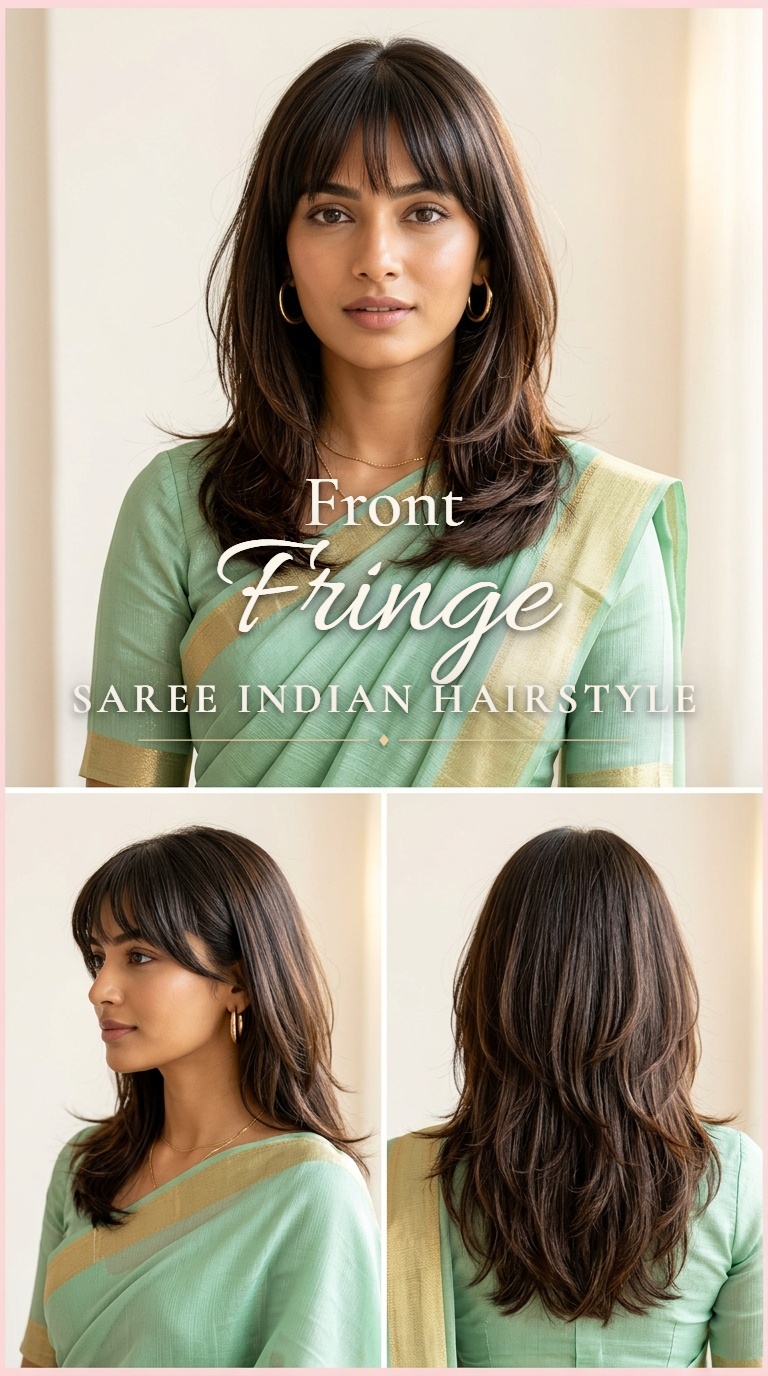
While often considered modern, a well-styled fringe can look incredibly chic when paired with an Indian saree. It covers the forehead and draws immediate attention to the eyes and kohl-lined lids.
This style is a bold choice for women who want to break away from traditional middle or side partings. It works best with lighter saree fabrics like chiffon or net that share a similarly airy feel.
Keep the fringe trimmed just above the eyebrows to ensure it doesn’t interfere with your vision or your bindi. Use a flat iron to keep the bangs straight and cohesive with the rest of the hair.
9. Vintage Wave Front Saree Indian Hairstyle
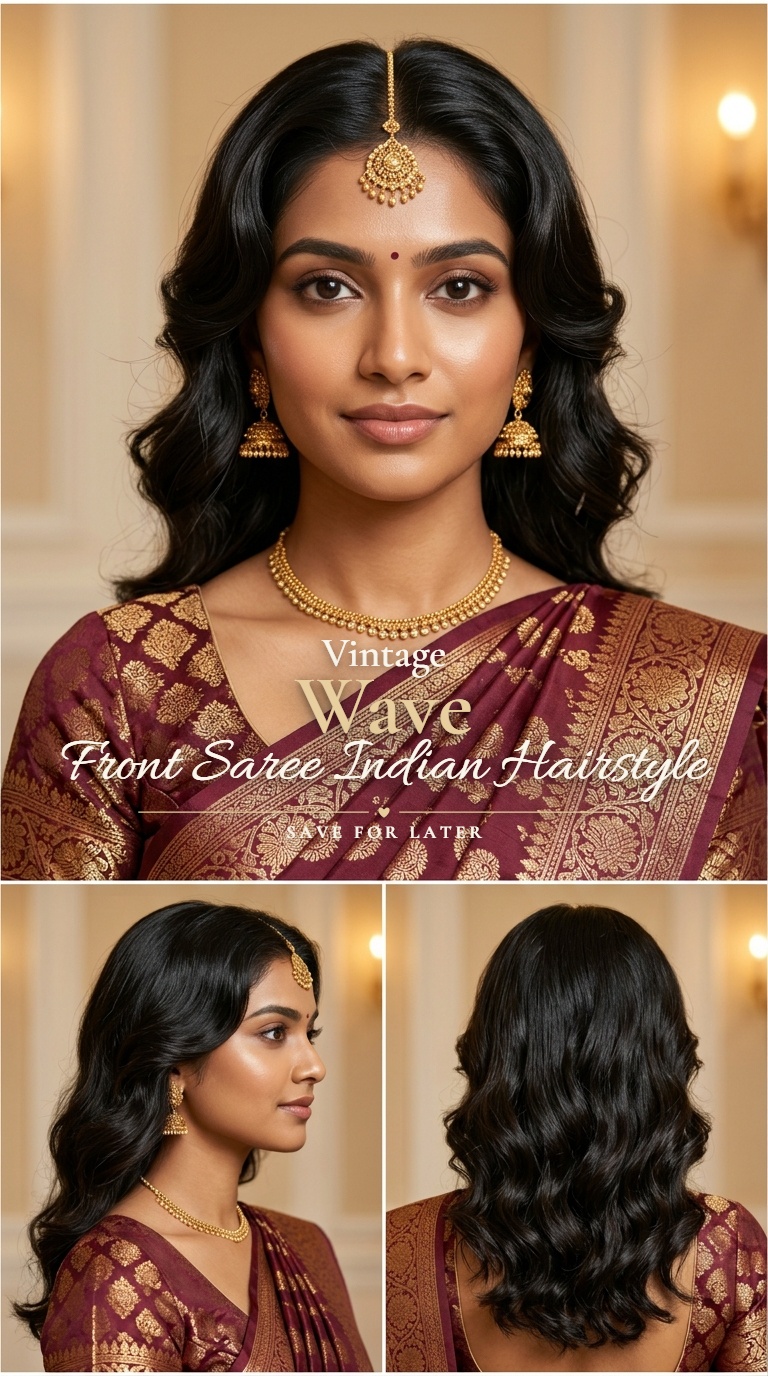
Drawing inspiration from the 1950s, the vintage wave is a timeless front style that exudes regal charm. It involves creating a structured ‘S’ wave that sits flat against the temple or forehead.
This look pairs exceptionally well with heavy Kanjeevaram or Banarasi sarees, adding a touch of old-world royalty to the ensemble. It is a preferred choice for high-profile weddings and formal galas.
Set the wave using setting clips and a strong-hold gel to ensure the shape remains defined. This style is highly durable and remains intact even during long hours of traditional ceremonies.
10. Braided Band Front Saree Indian Hairstyle
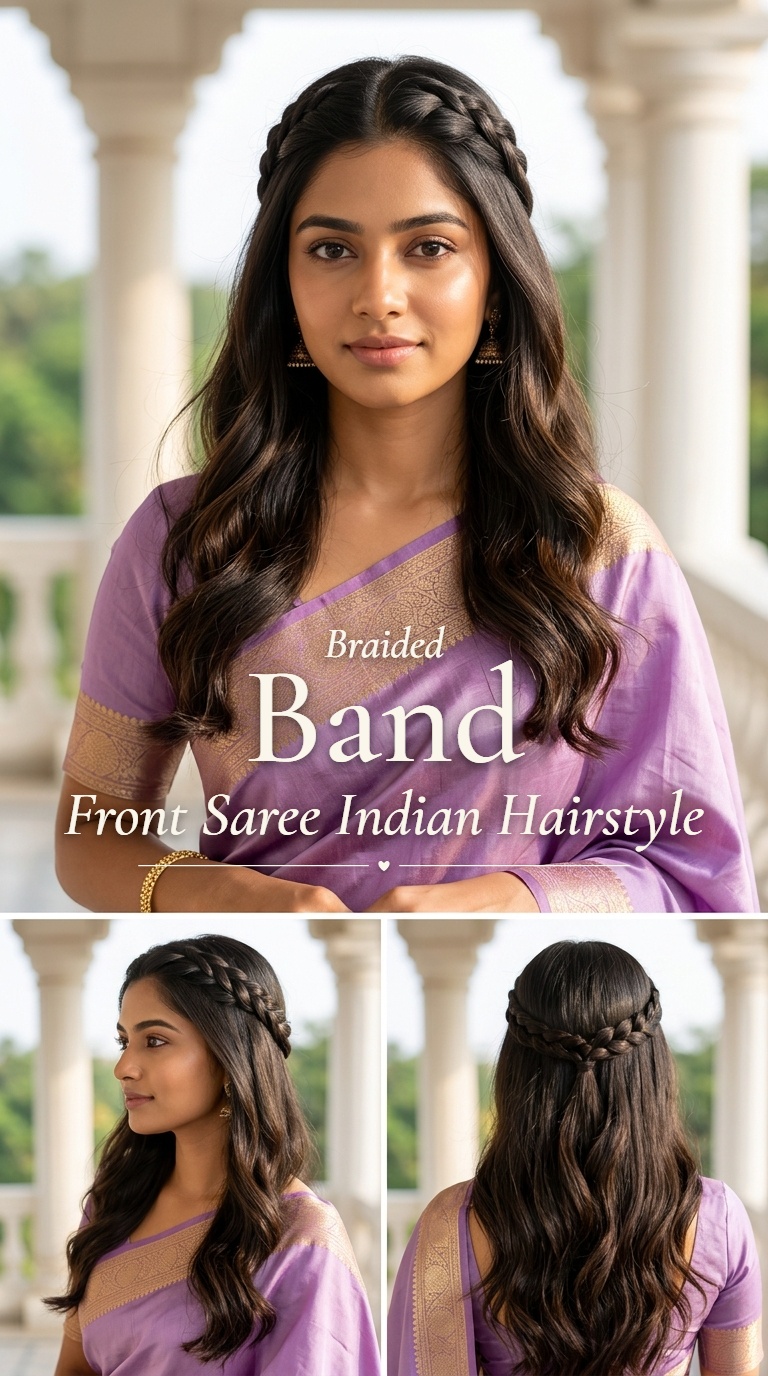
A thin, delicate braid used as a headband is a subtle way to incorporate detail into your front hairstyle. It keeps the hair flat at the roots while allowing the rest of the length to flow freely.
This style is perfect for South Asian women with fine hair who want to add an element of design without needing excessive volume. It creates a neat border between the face and the hair.
You can weave a thin gold thread or “parandi” into the braid to match the metallic accents of your saree. This small detail elevates the look from simple to curated and festive.
11. Voluminous Front Quiff Saree Indian Hairstyle
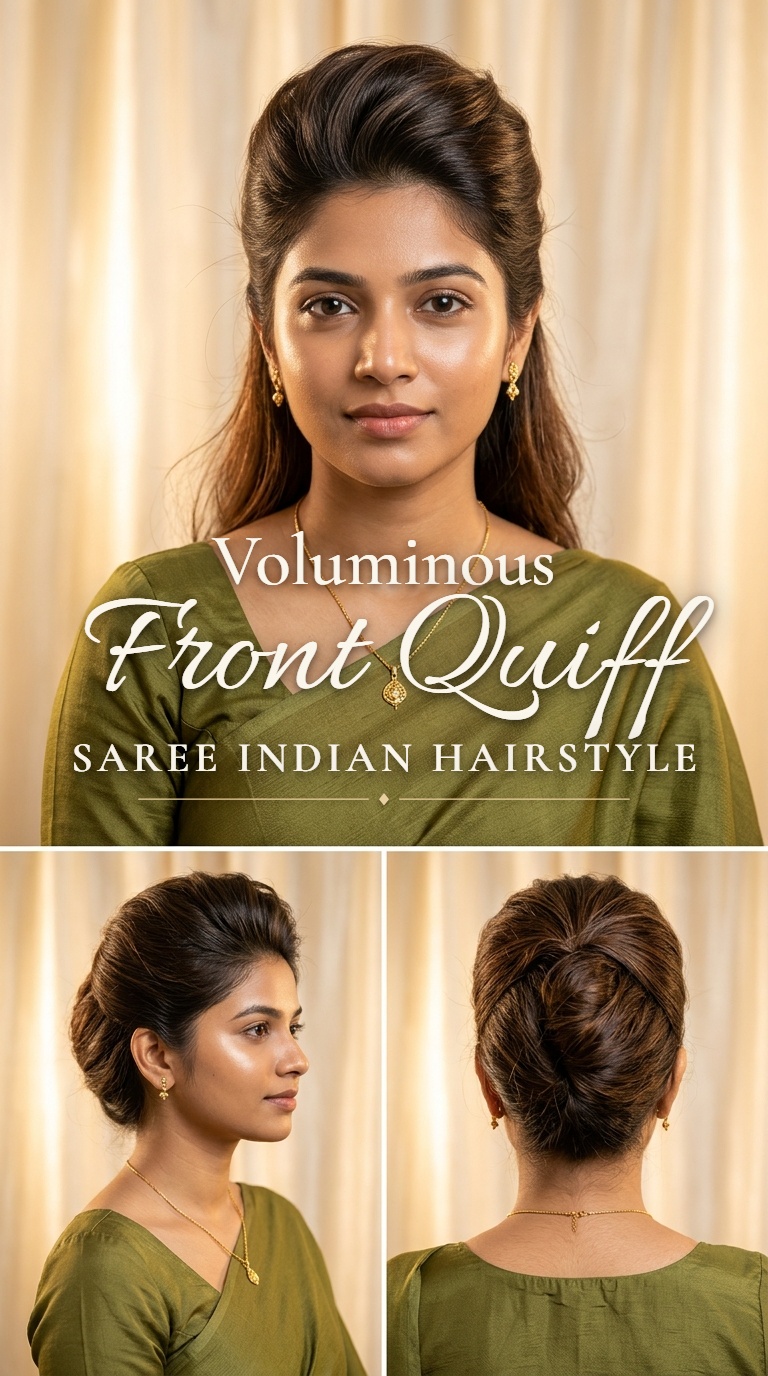
The quiff is a bolder version of the puff, offering more structure and a sharper angle. It provides an edgy yet traditional look that works well for women with oval face shapes.
This front hairstyle for saree indian settings is excellent for showcasing a heavy necklace or choker, as it keeps all hair directed upwards and away from the neck. It projects an image of power and grace.
Use a high-quality hair wax to sculpt the quiff and keep it from collapsing. This style is particularly effective for shorter hair lengths that still want to achieve a formal ethnic look.
12. Slicked Back Front Saree Indian Hairstyle
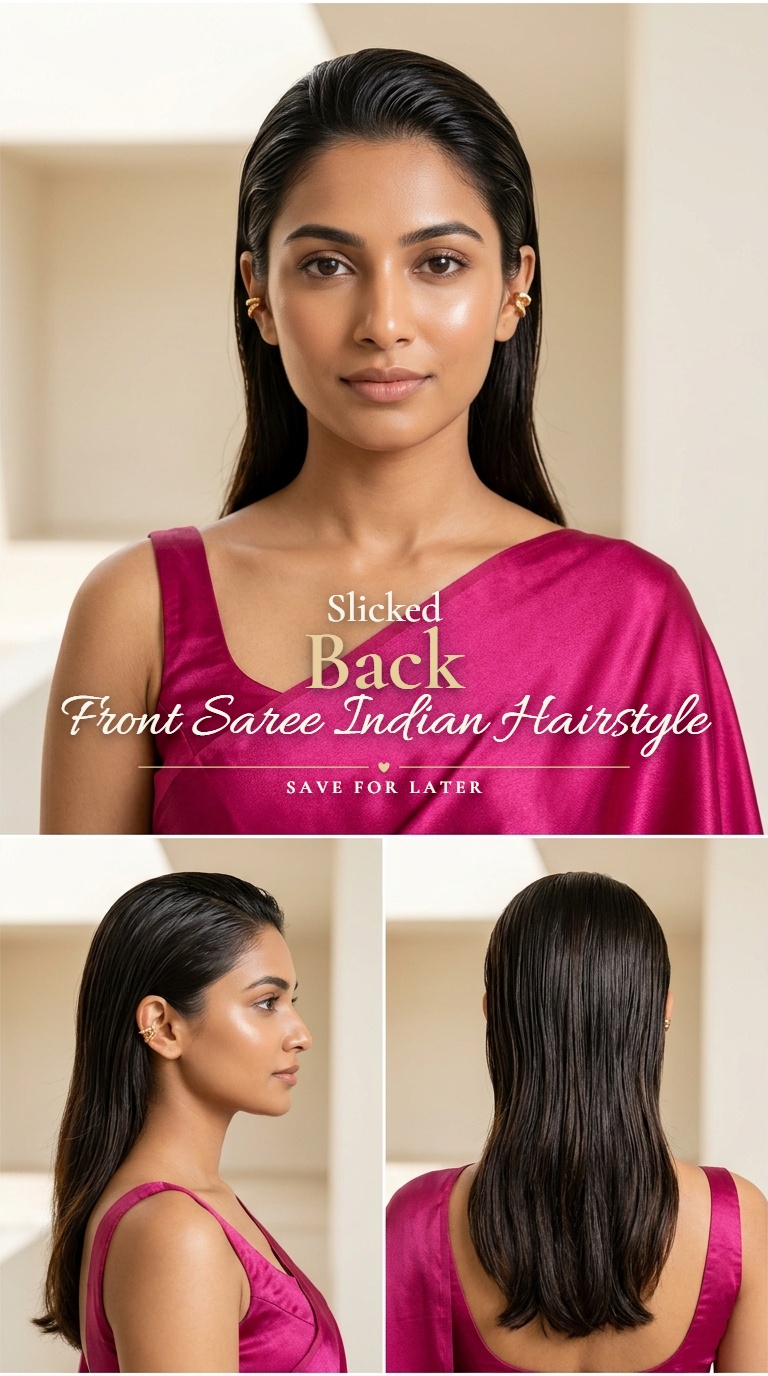
The slicked-back look is the epitome of modern South Asian fashion, frequently seen on red carpets and high-fashion editorials. It involves combing the hair straight back from the forehead with a wet-look finish.
This style emphasizes the bone structure and allows for heavy makeup looks, such as bold lips or winged eyeliner, to take center stage. It is a minimalist approach to traditional saree styling.
Apply a generous amount of hair gel and use a fine-bristled brush to pull the hair back without leaving any bumps. This look is best suited for evening events and contemporary saree silhouettes.
13. Front Bangs Saree Indian Hairstyle
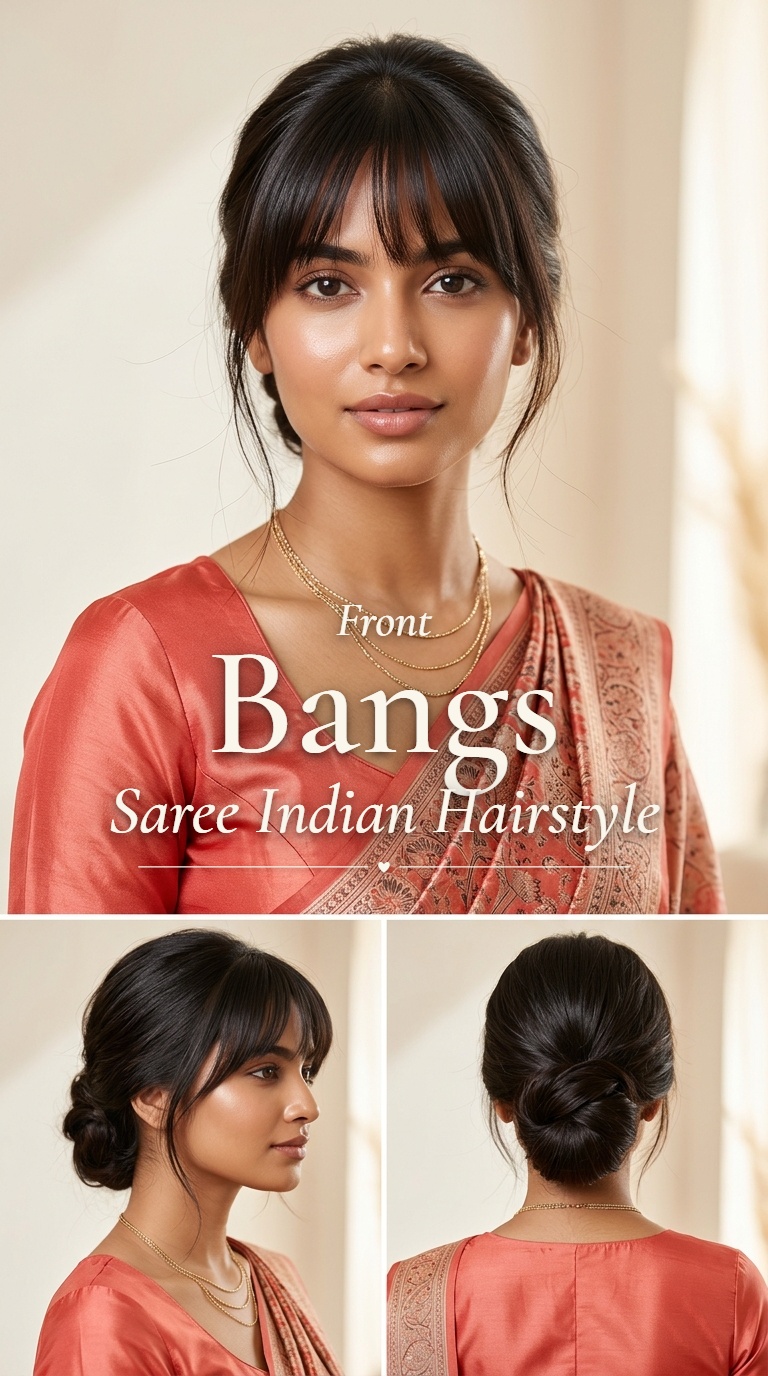
Side-swept bangs offer a playful and youthful vibe to the traditional saree attire. They soften the forehead and can be used to hide a larger forehead while adding movement to the front.
This style is very versatile and can be transitioned from a morning puja to an evening party with minimal effort. It suits most South Asian face types and hair textures, especially when blow-dried.
Ensure the bangs are cut at an angle that follows the line of your cheekbones. This creates a natural frame that enhances your facial symmetry when you are wearing a saree.
14. Face Framing Front Saree Indian Hairstyle
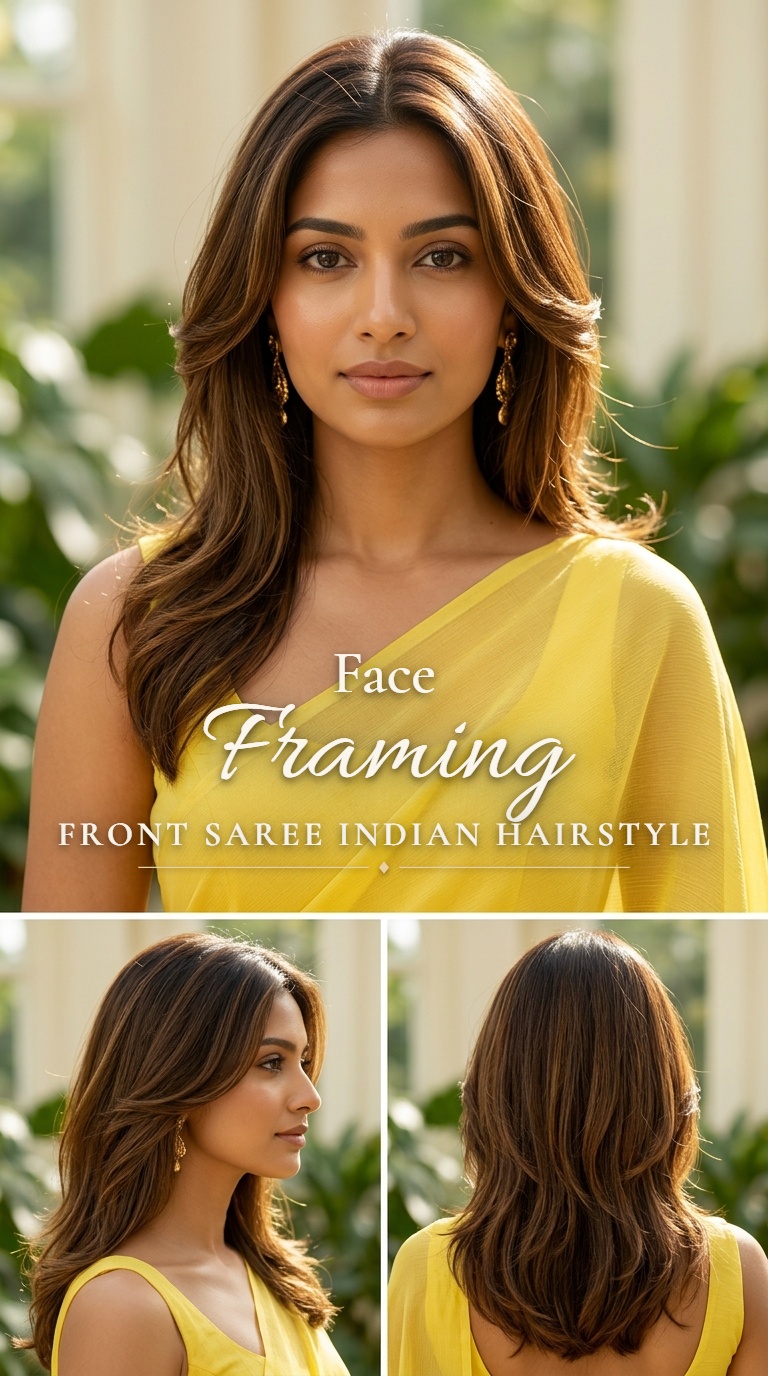
This style involves leaving thin, delicate strands of hair loose at the front while the rest is tied back. These “tendrils” frame the face and provide a soft, feminine touch to a structured saree look.
It is a great way to transition a formal bun into something more approachable and relaxed. These strands can be lightly curled or left straight depending on the texture of your saree.
Be careful not to leave too much hair out, as it can look messy rather than intentional. Two or three thin sections on each side are usually sufficient to create the desired face-framing effect.
15. Front Fishtail Braid Saree Indian Hairstyle
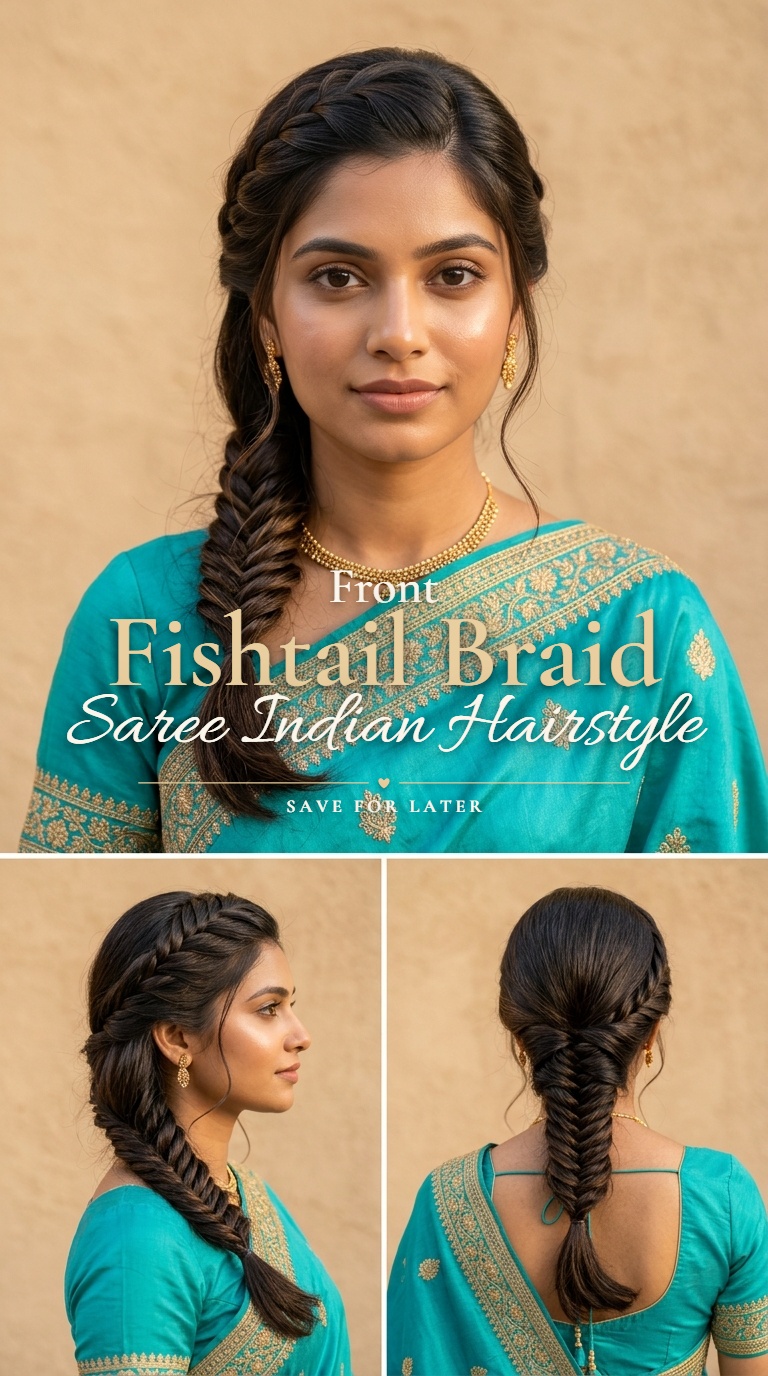
The fishtail braid offers a more intricate and textured look than the standard three-strand braid. When done at the front, it creates a beautiful, bohemian aesthetic that pairs well with floral print sarees.
This style is perfect for daytime events like Mehendi or Haldi ceremonies where the mood is light and festive. It keeps the hair secure while looking detailed and high-effort.
Use a texturizing spray before braiding to give the hair more “grip,” making the fishtail pattern more visible. This is especially helpful for the smooth, silky hair types common in many Indian regions.
16. Middle Parted Low Front Saree Hairstyle
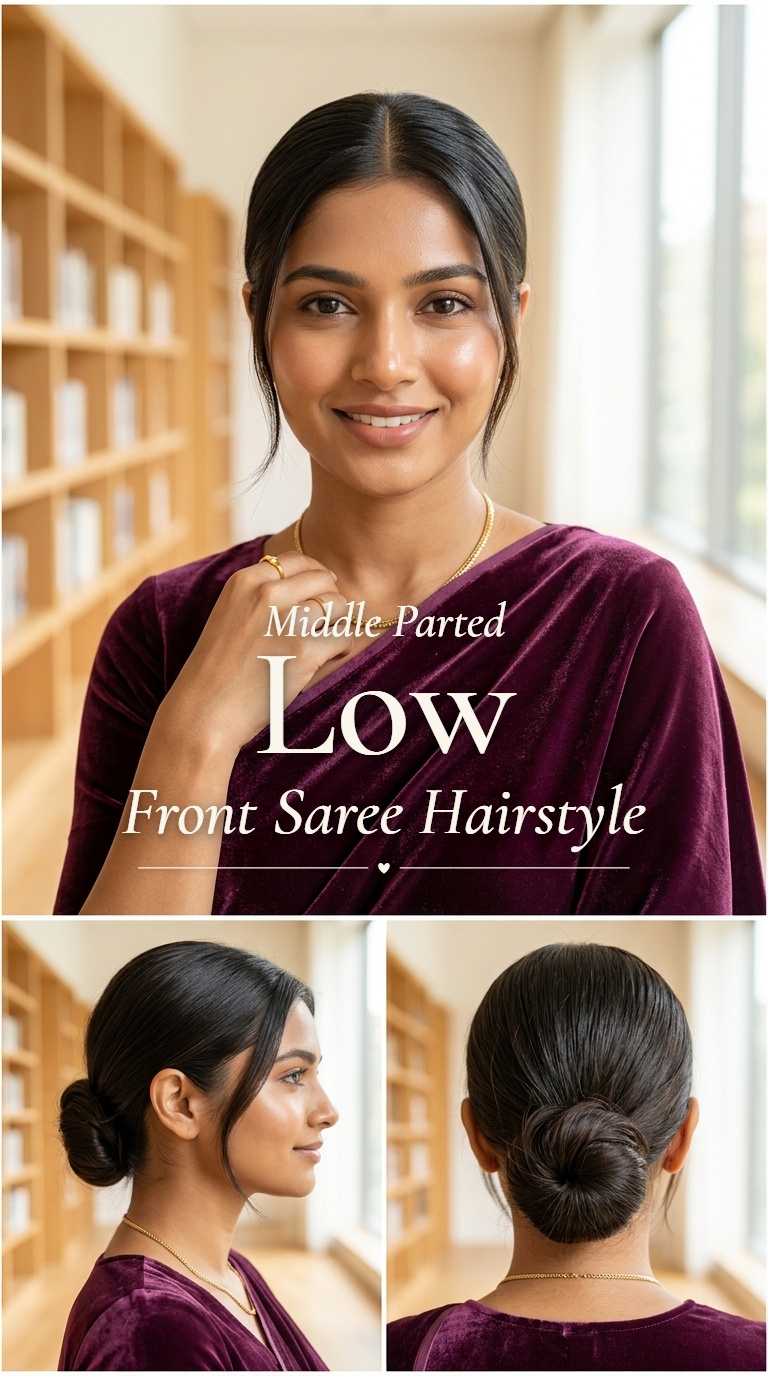
A middle parting that sits lower and flatter against the head offers a more modest and traditional appearance. This style is often favored by older women or for very traditional religious rituals.
It provides a serene and grounded look that complements handloom sarees like cotton or linen. The simplicity of the front allows the natural beauty of the fabric and the wearer to shine.
This look requires very little product, making it a healthy choice for the hair. Simply ensure the parting is straight and the hair is brushed smooth to avoid a neglected appearance.
17. Crimped Front Saree Indian Hairstyle
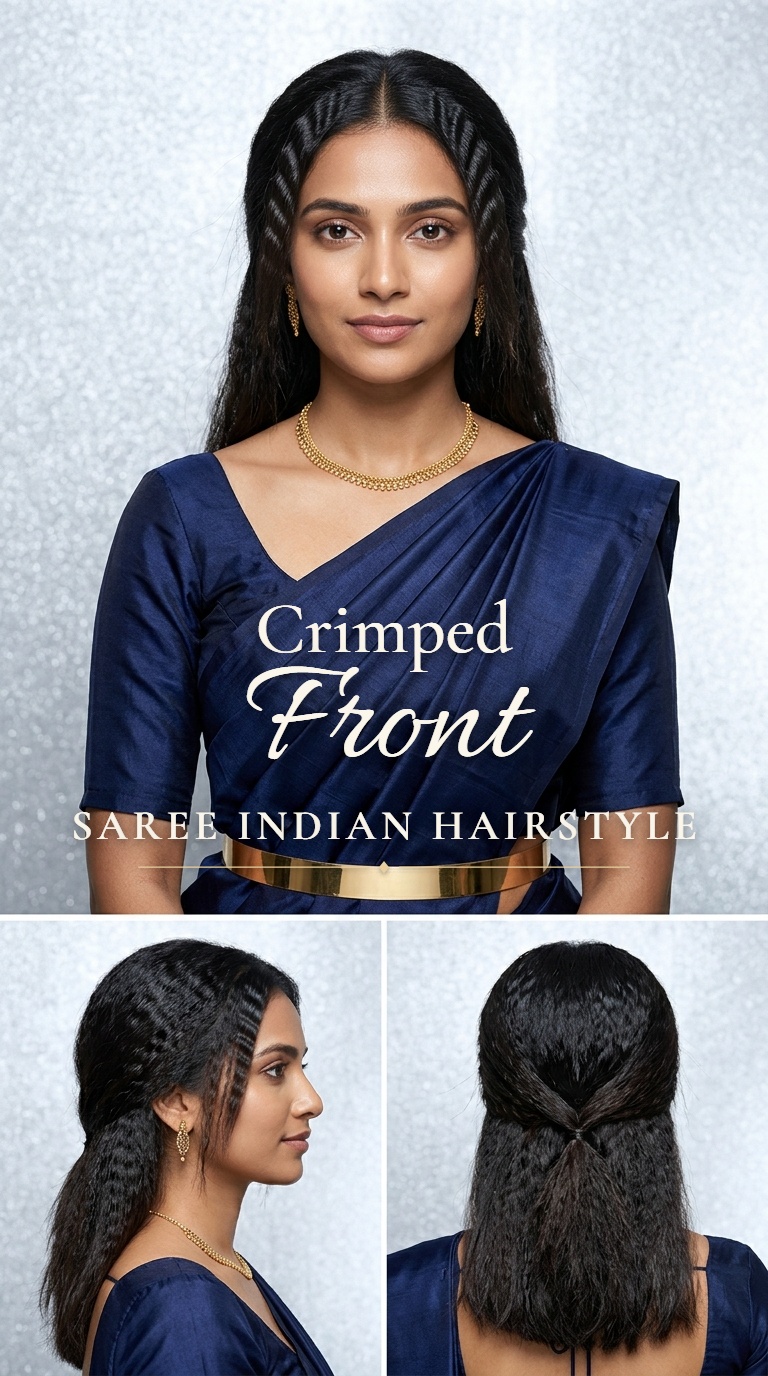
Crimping the front section adds a unique 90s-inspired texture that is making a significant comeback in Indian fashion. It creates immense volume and a zigzag pattern that catches the light beautifully.
This front hairstyle for saree indian looks is ideal for festive parties where you want to stand out from the crowd. It adds a high-fashion edge to even the most traditional silk saree.
Crimp only the front sections or the hair underneath the top layer to add “hidden” volume. This technique keeps the look modern rather than overwhelming the entire hairstyle with texture.
18. Wispy Front Saree Indian Hairstyle
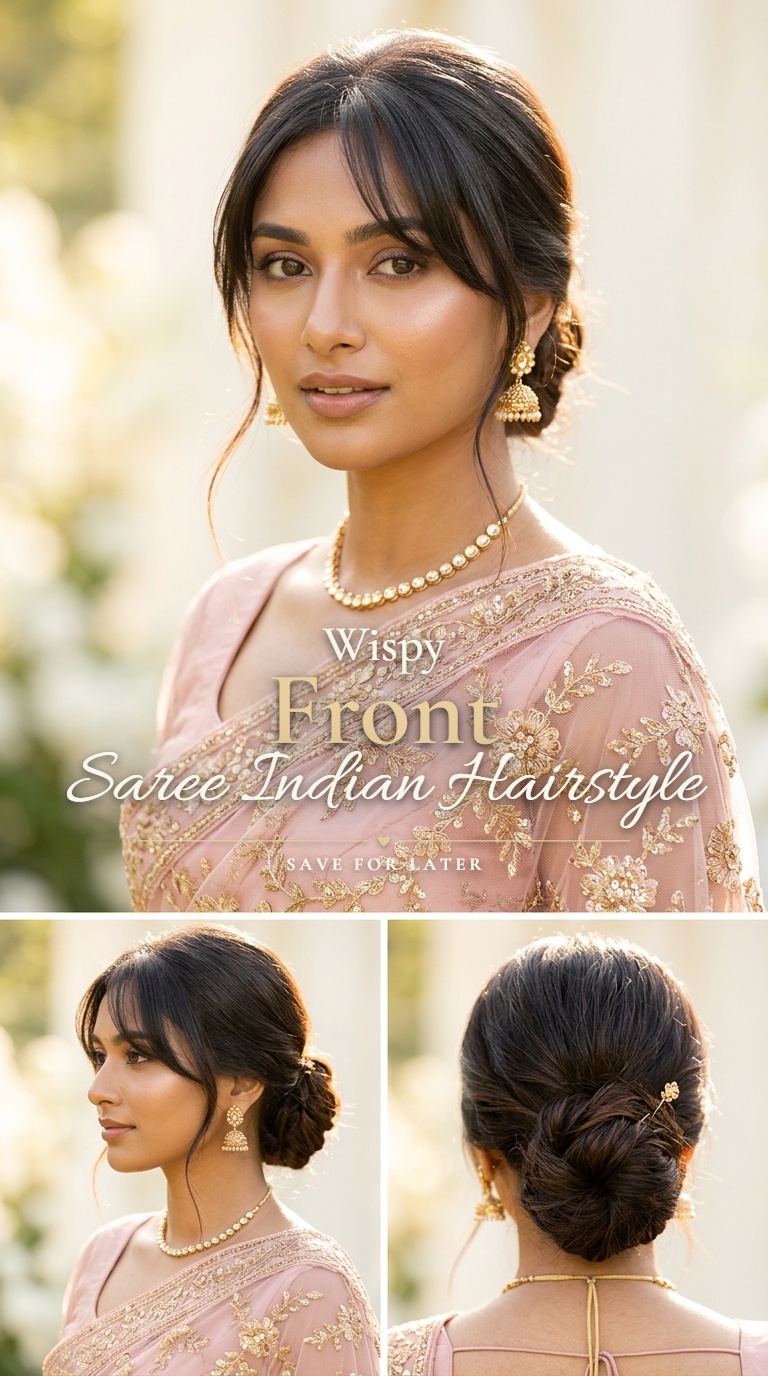
Wispy front styles involve very light, airy sections of hair that barely graze the forehead. This creates a dreamlike, ethereal quality that is perfect for summer weddings or outdoor festivities.
It is an excellent choice for women with fine hair who want to avoid the heavy look of thick braids or puffs. The lightness of the hair complements lightweight sarees like organza or net.
Use a light-hold hairspray to keep the wisps in place without making them crunchy. This ensures the hair looks natural and soft, enhancing the delicate nature of your ethnic ensemble.
What are the best front hairstyles for saree indian faces?
The best styles usually involve mid-partings for oval faces and side-swept waves for rounder faces. Both techniques help in framing the South Asian facial structure while highlighting traditional jewelry like maang tikkas or jhumkas.
How to choose front hairstyles for saree indian weddings?
Consider the weight of your saree and the type of jewelry you plan to wear. Heavier silk sarees often pair well with structured puffs or sleek middle parts, while lighter chiffon sarees look beautiful with soft curls or wispy tendrils.
Are front hairstyles for saree indian suitable for short hair?
Yes, short hair can be styled with front twists, side-swept bangs, or a sleek slicked-back look. These styles work effectively to create a formal ethnic appearance regardless of the overall length of your hair.
Which front hairstyles for saree indian suit round faces?
Deep side parts and high puffs are excellent for round faces as they create an illusion of length. These styles help in contouring the face naturally without the need for heavy makeup, providing a balanced look with a saree.
Can I do front hairstyles for saree indian at home?
Many classic styles like the middle parting, basic puff, and simple twists are very easy to achieve at home with a comb and some pins. For more intricate braids, you might need a little practice or a simple tutorial to master the tension.
Do front hairstyles for saree indian need heavy styling products?
Not necessarily, as many traditional looks rely on the natural thickness of Indian hair. However, a light serum for shine and a medium-hold spray can help keep the style intact throughout long wedding ceremonies or dance performances.