Finding the right south indian hairstyles for saree can transform your entire ethnic look from simple to spectacular for any festive occasion.
These timeless styles are designed to celebrate the thick, dark textures common in South Asian hair while complementing the heavy drapes of traditional silk.
Whether you are attending a wedding or a temple ceremony, choosing a style that respects your heritage ensures a cohesive and elegant appearance.
1. Traditional Long Braid South Indian Saree Hairstyles
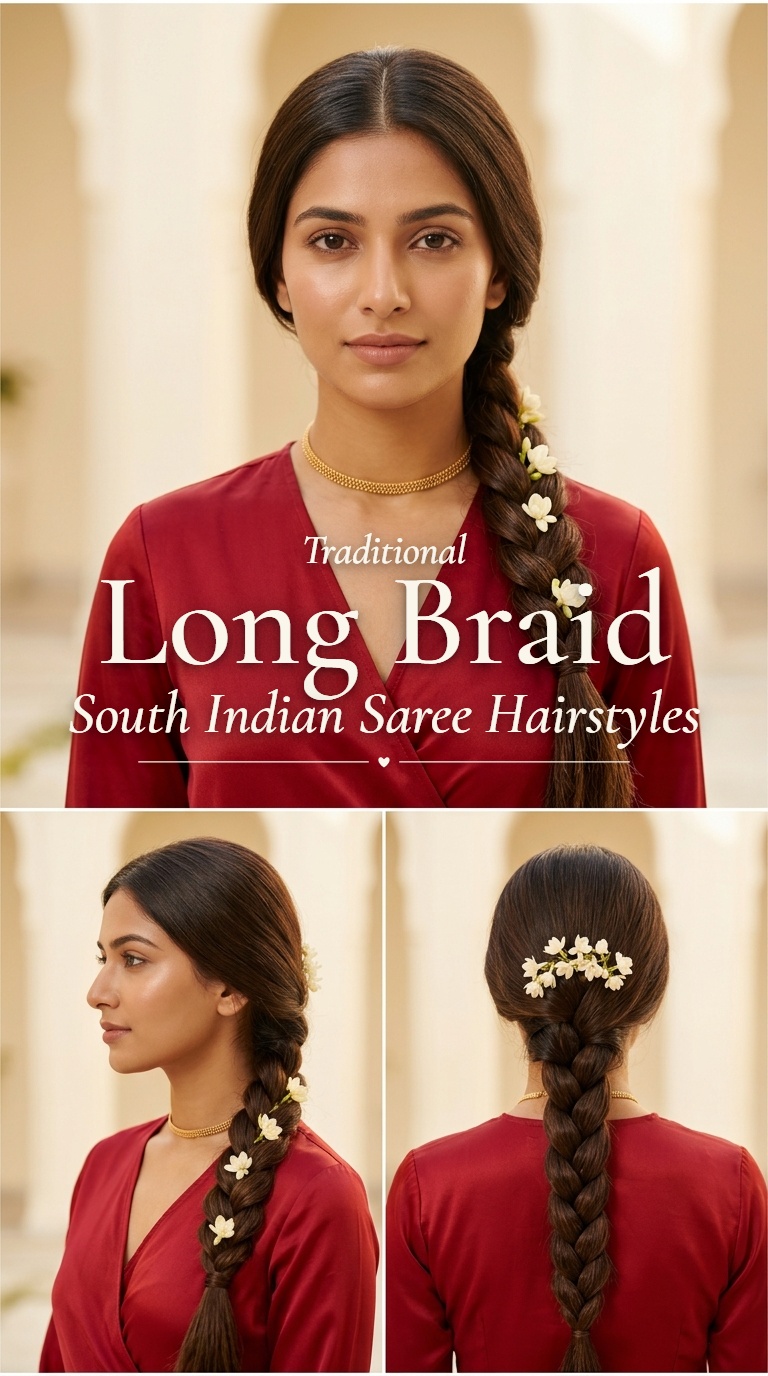
This quintessential look is a staple for South Asian women during major life milestones and religious ceremonies. It works best on long, thick hair that can support the weight of traditional ornaments and heavy silk sarees.
The style involves a neat three-strand braid that extends down the back, often reaching the waist or below. It is traditionally finished with a Kunjalam at the tips, which are decorative black tassels.
To elevate this classic choice, ensure the hair is well-oiled or serum-treated for a glass-like shine. This reflects the light beautifully against the vibrant gold borders of a Kanjivaram saree.
2. Classic Floral Bun South Indian Saree Hairstyles
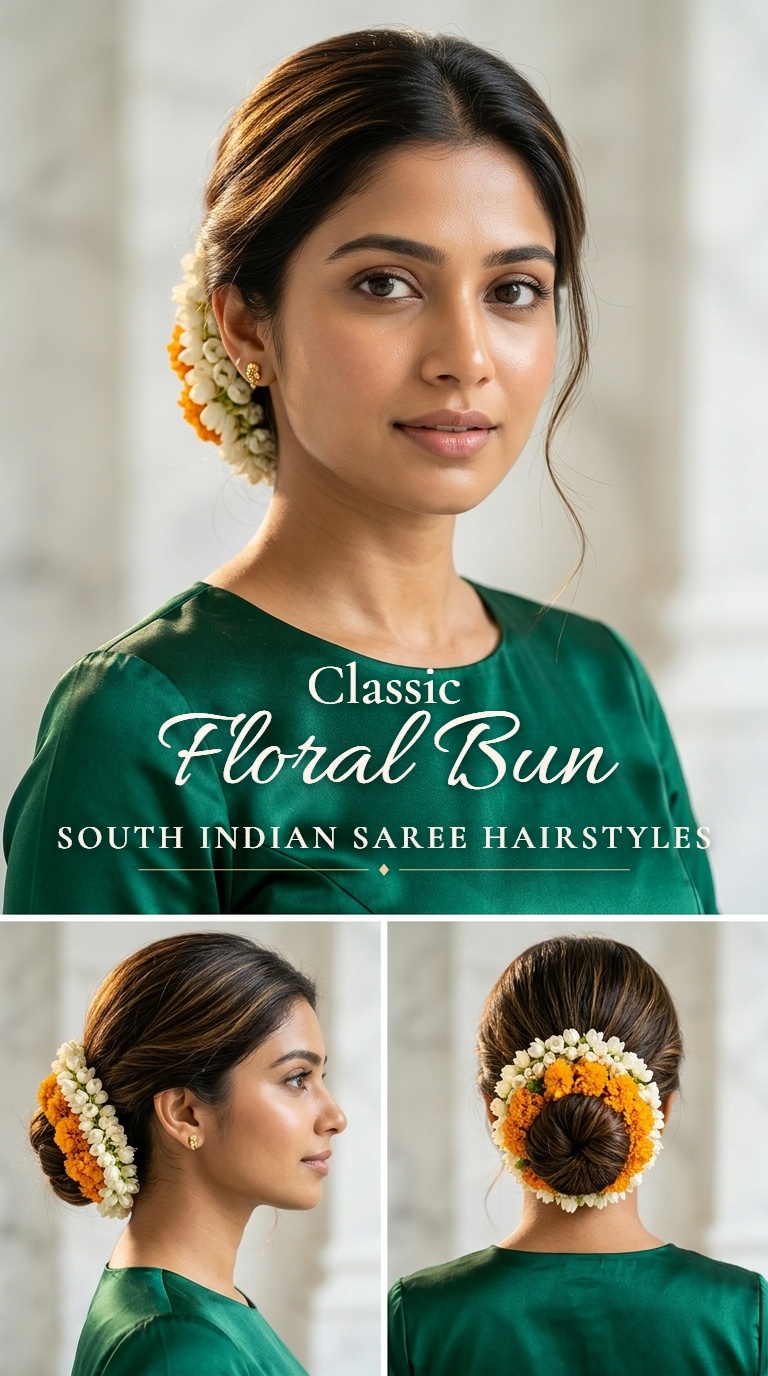
A low bun adorned with fresh flowers is a sophisticated choice for those with medium to long hair. It provides a clean silhouette that allows your necklace and earrings to be the focal point.
The bun should be positioned at the nape of the neck and secured firmly with pins to withstand long event hours. It is an ideal option for humid climates where loose hair might become frizzy.
Wrap strands of jasmine or orange marigolds around the base of the bun for a fragrant and authentic touch. This contrast of white flowers against dark hair is a hallmark of South Indian beauty.
3. Half Up South Indian Hairstyles for Saree
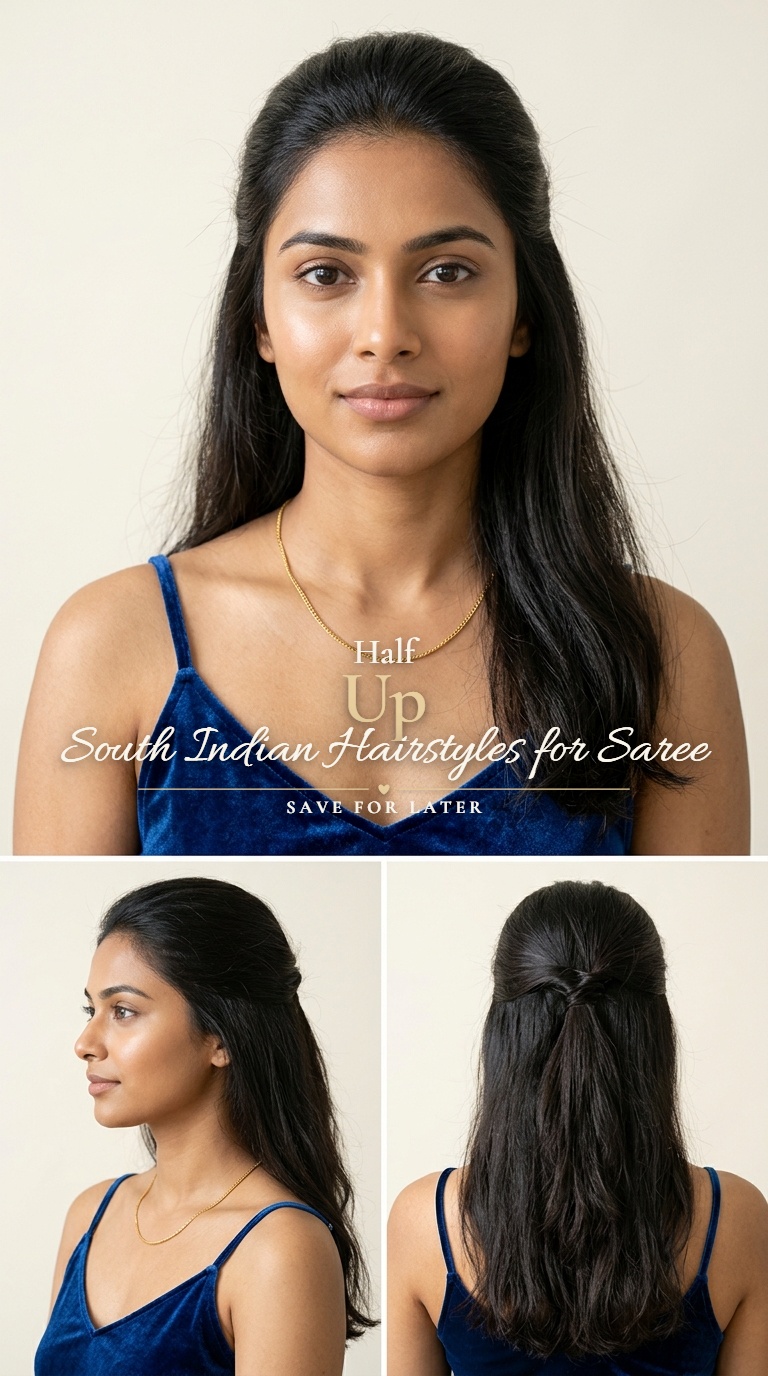
This versatile style offers the best of both worlds by keeping hair away from the face while showcasing length. It is particularly popular among younger South Asian women for pre-wedding functions or family gatherings.
Secure the top half of your hair with a decorative gold clip or a small clutch of flowers at the back. The remaining hair can be left straight or styled into gentle waves for added volume.
This approach balances the heavy look of a silk saree with a more youthful and airy feel. It works exceptionally well for those with high cheekbones and rounder facial features typical of the demographic.
4. Temple Jewelry Braid South Indian Saree Hairstyles
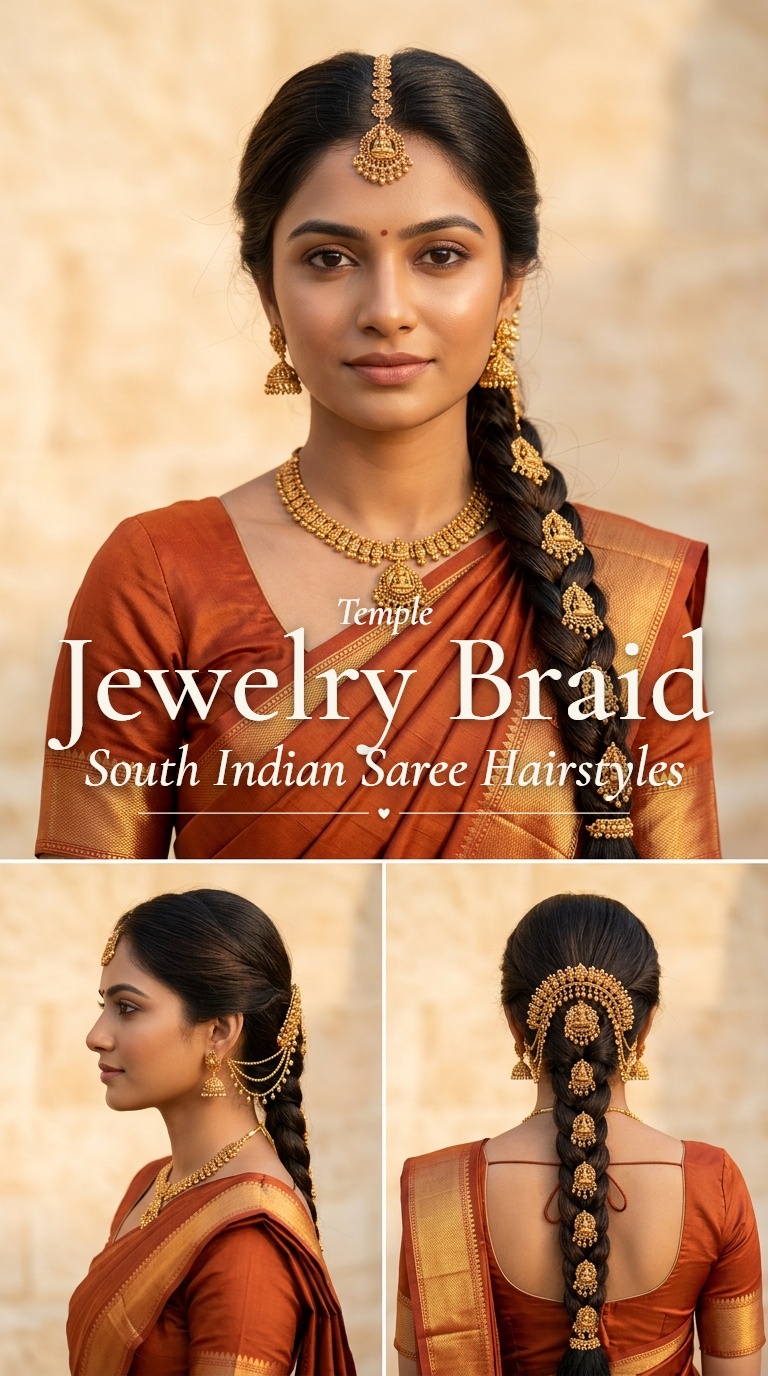
Integrating temple jewelry into your braid creates a royal aesthetic that is deeply rooted in South Indian culture. These gold-toned pieces, known as Jada Billalu, are pinned along the length of the braid.
The hairstyle requires a firm braid to ensure the heavy metallic ornaments stay in place throughout the day. It is a favorite for brides who want to display traditional craftsmanship in their hair.
Pair this style with a heavy zari border saree to create a balanced, luxurious look. The golden hues of the jewelry against deep hair tones create a striking visual harmony.
5. Loose Curls South Indian Hairstyles for Saree
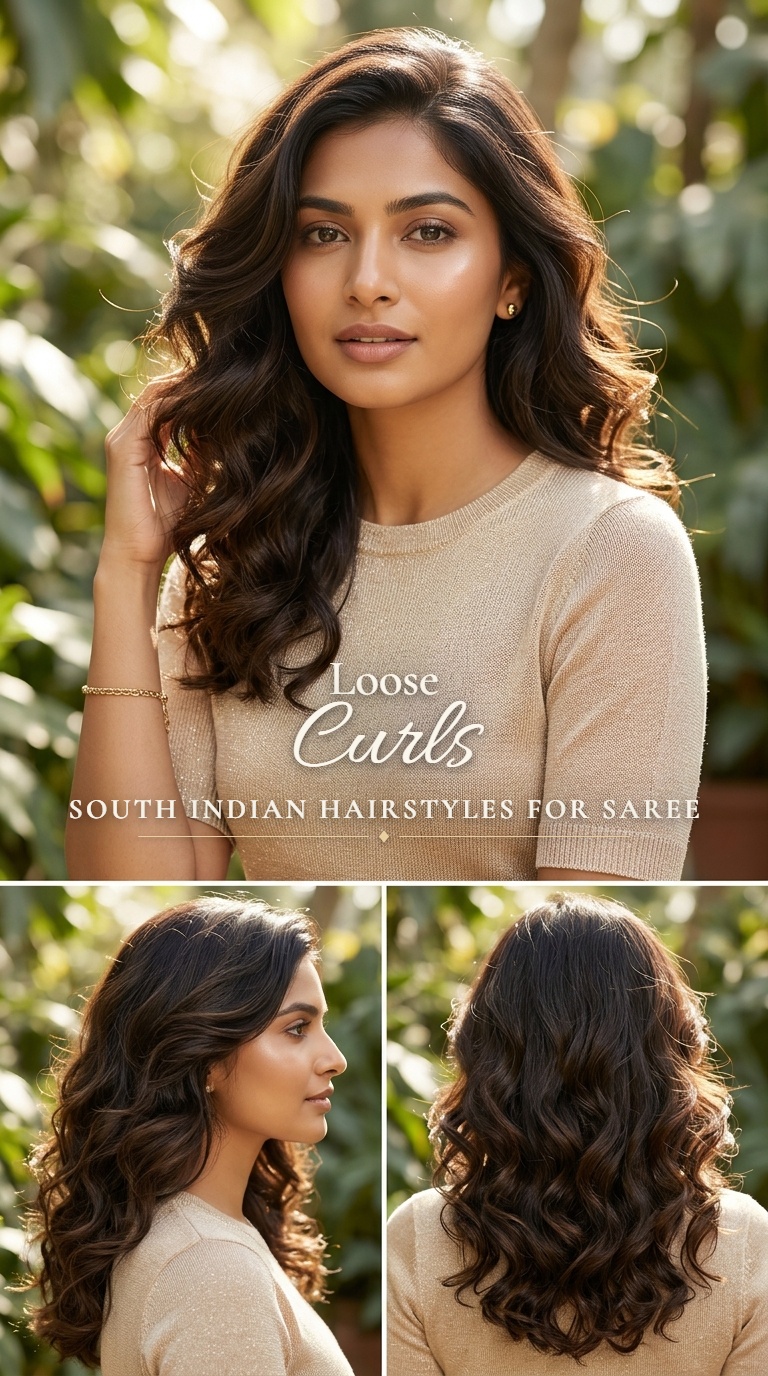
For a softer and more contemporary take on tradition, loose curls provide a romantic feel that softens the angular lines of a saree. This style is perfect for reception parties or evening events.
Use a wide-barrel curling iron to create large, bouncy sections that flow over the shoulders. Applying a shine spray helps manage the natural coarseness often found in South Asian hair textures.
Keep the parting simple—either a clean middle part or a deep side sweep—to maintain an elegant profile. This look pairs beautifully with modern silk blends or lightweight designer sarees.
6. Messy Bun South Indian Hairstyles for Saree
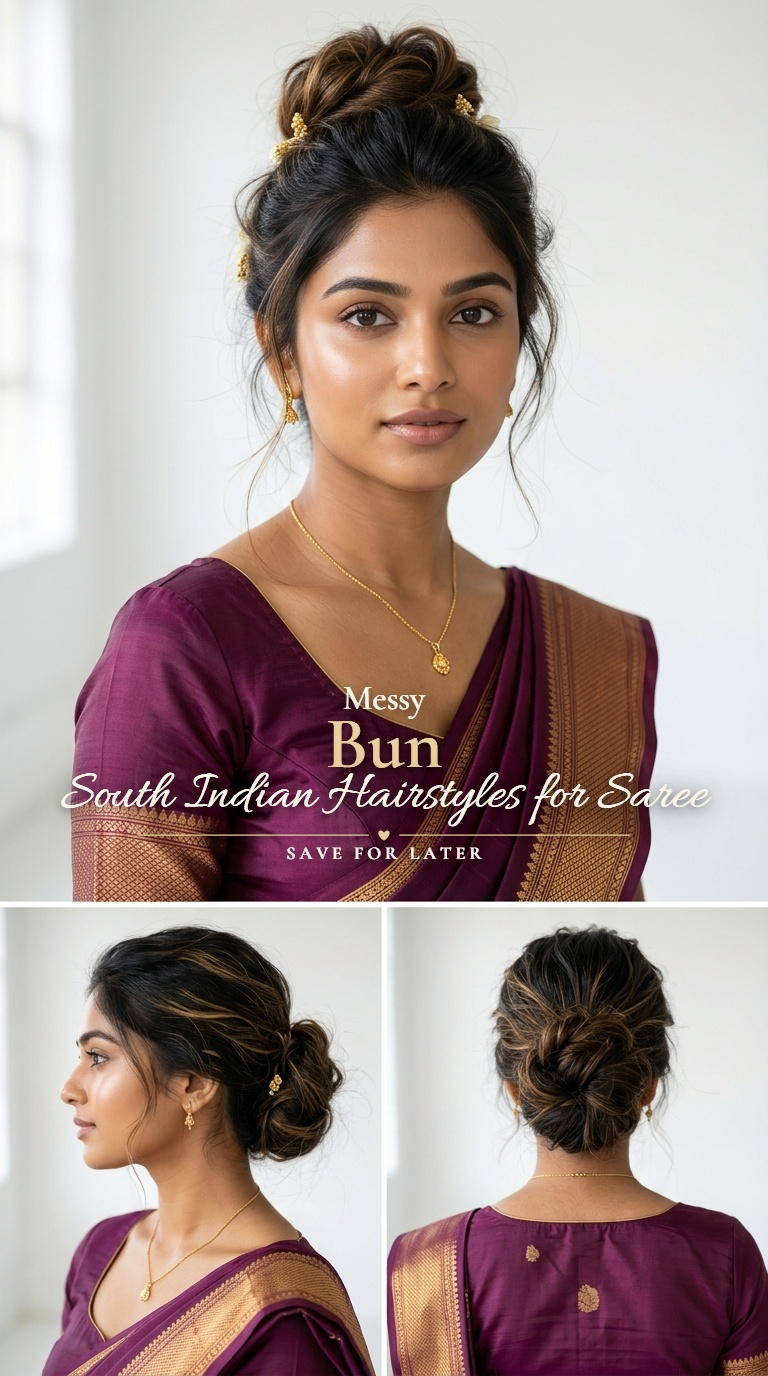
The messy bun is a modern favorite that adds a touch of effortless grace to a traditional outfit. It is an excellent choice for those who want a less rigid look while still appearing polished.
Texture is key here, so use a sea salt spray or light backcombing to create volume before pinning the hair up. Leave a few face-framing tendrils loose to soften the jawline and emphasize South Asian features.
Adorn the bun with a few stray rosebuds or a delicate gold chain to bridge the gap between modern and traditional. This style is particularly flattering for evening receptions and cocktail saree events.
7. Braided Bun South Indian Hairstyles for Saree
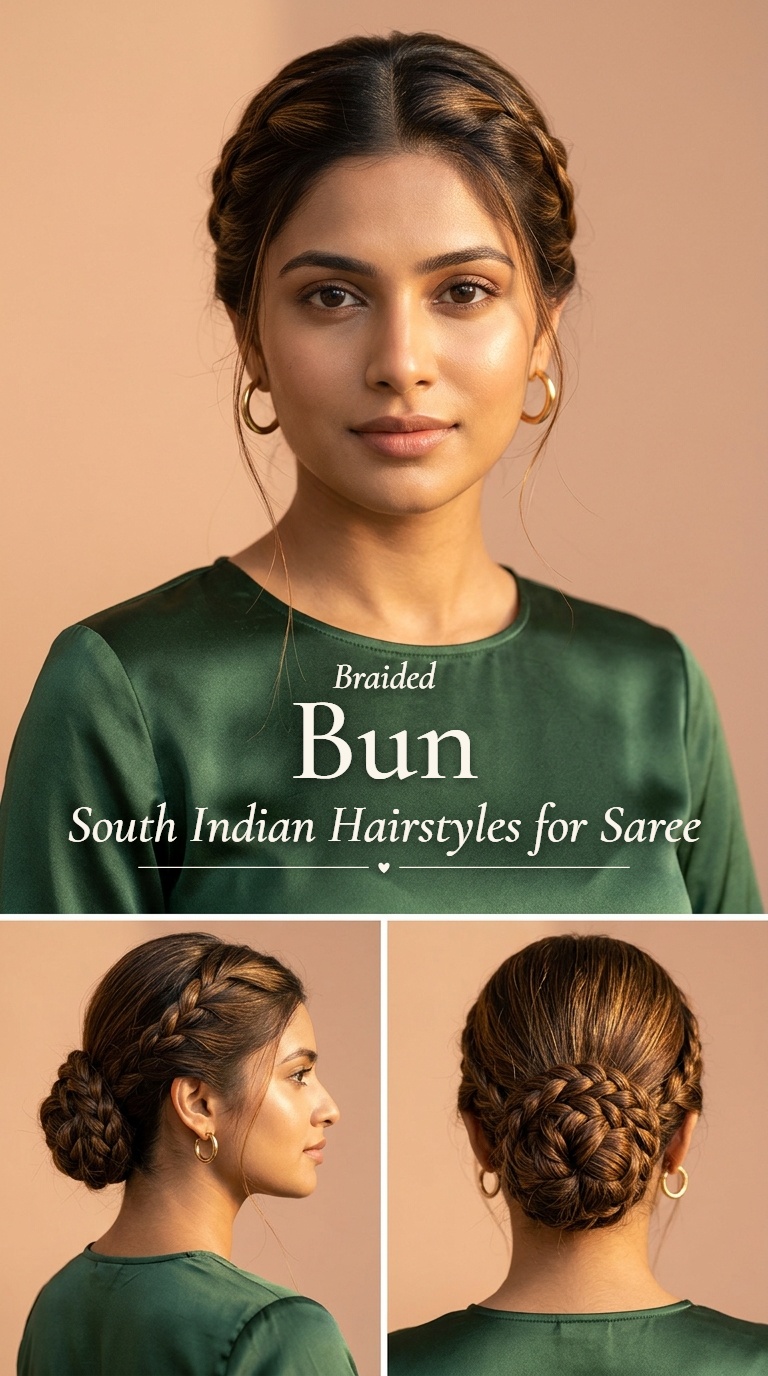
Combining a braid with a bun offers a structural and intricate look that is very secure. It involves braiding a section of hair and then coiling it into a circular shape at the back.
This hairstyle is highly recommended for women with very thick hair who find standard buns too bulky. The braided texture adds a layer of detail that looks stunning in professional photography.
Keep the front of the hair sleek to contrast with the detailed texture of the bun at the back. It is a professional yet festive choice for corporate ethnic days or religious festivals.
8. Fishtail Braid South Indian Hairstyles for Saree
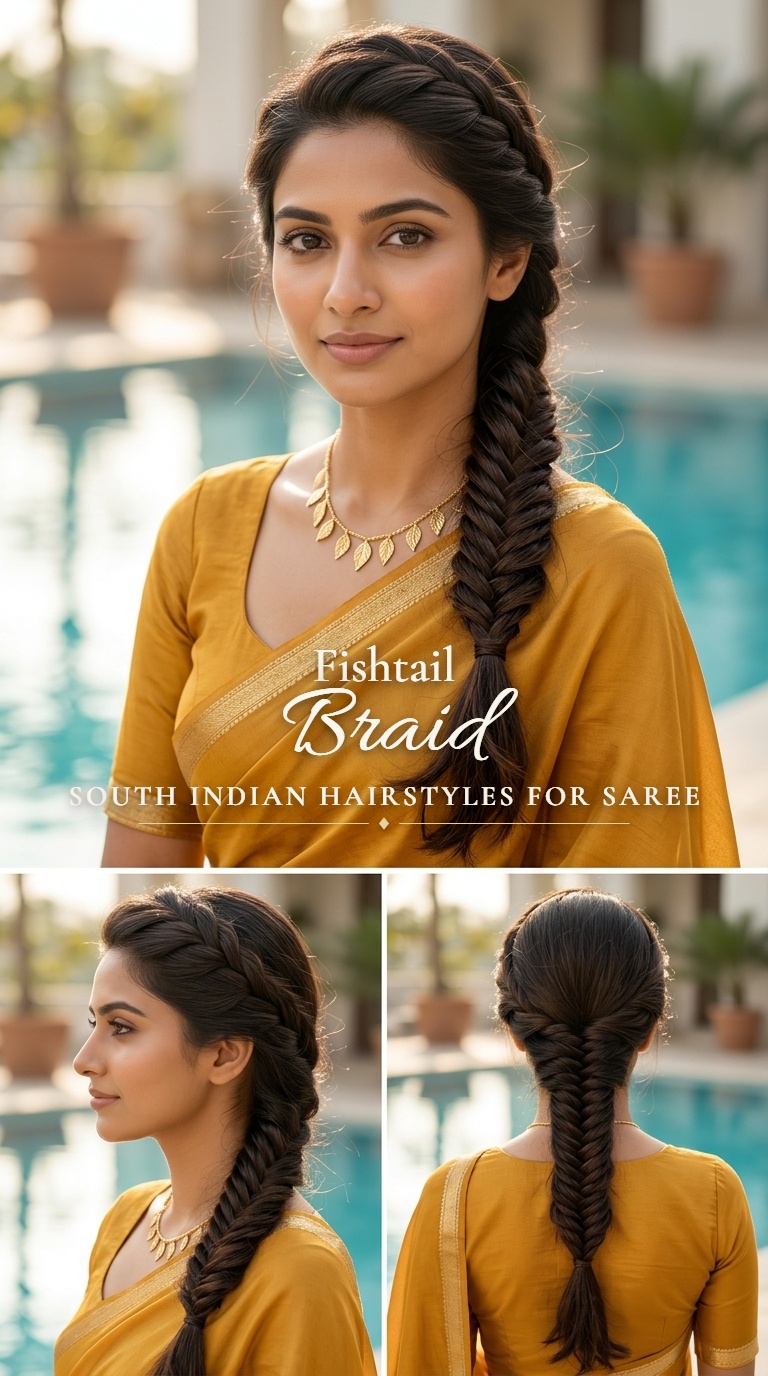
The fishtail braid offers a detailed and modern variation of the standard three-strand braid. It creates a flatter, wider appearance that showcases the natural thickness of South Asian hair beautifully.
Pull the sections slightly apart once the braid is finished to create a “pancaked” effect for more volume. This style looks particularly striking when draped over one shoulder in a side-swept fashion.
Add small pearls or tiny stone studs throughout the braid for a subtle sparkle that catches the light. This is an excellent choice for a contemporary saree look at a friend’s wedding.
9. Side Swept South Indian Hairstyles for Saree
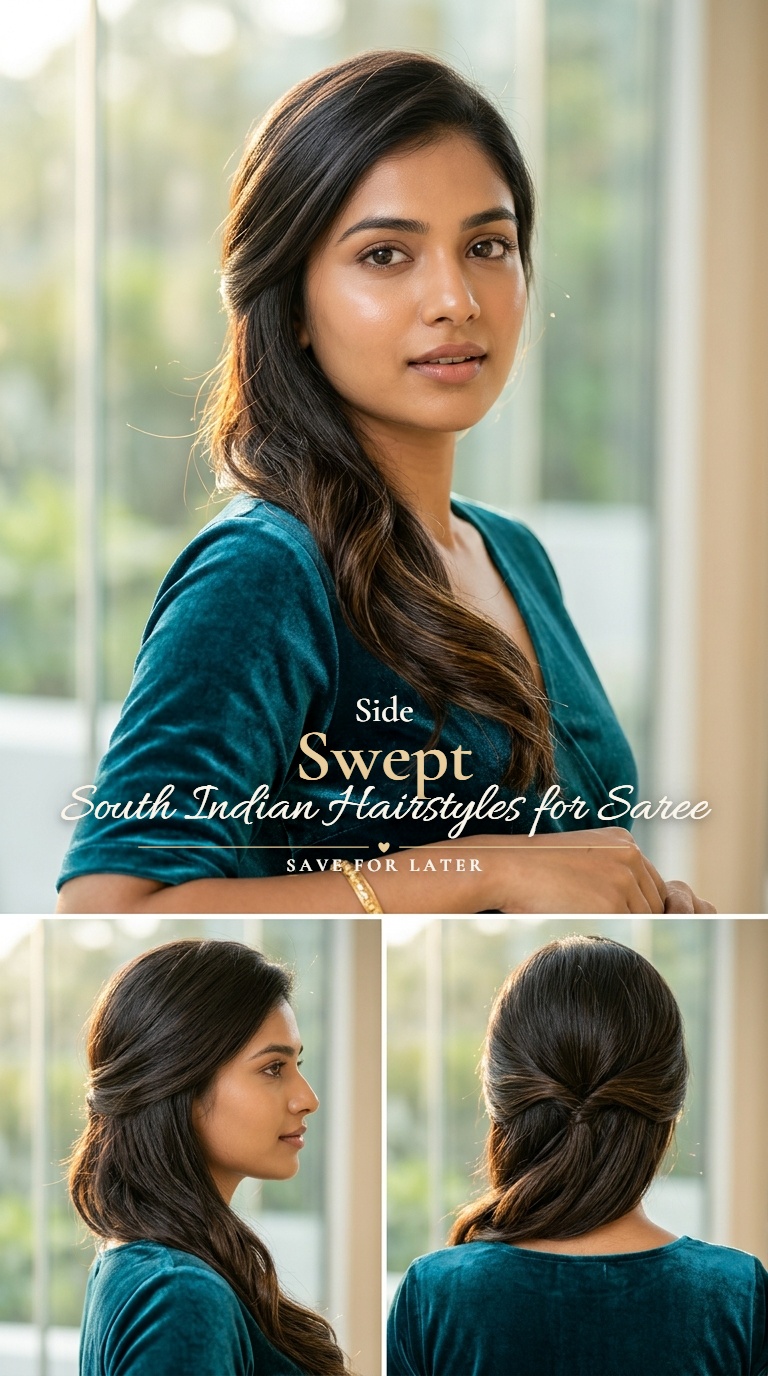
Side-swept hair is an incredibly flattering choice that creates an asymmetrical balance with the saree pallu. It draws attention to the neck and shoulder area, making it perfect for showcasing statement jewelry.
Pin the hair securely behind one ear and let the rest flow over the opposite shoulder in structured waves. This style is ideal for those with heart-shaped or oval faces common in the South Asian demographic.
Using a firm-hold hairspray is essential to keep the sweep in place, especially during dancing or movement. It provides a red-carpet feel while remaining deeply respectful of the traditional saree attire.
10. Twisted Braid South Indian Hairstyles for Saree
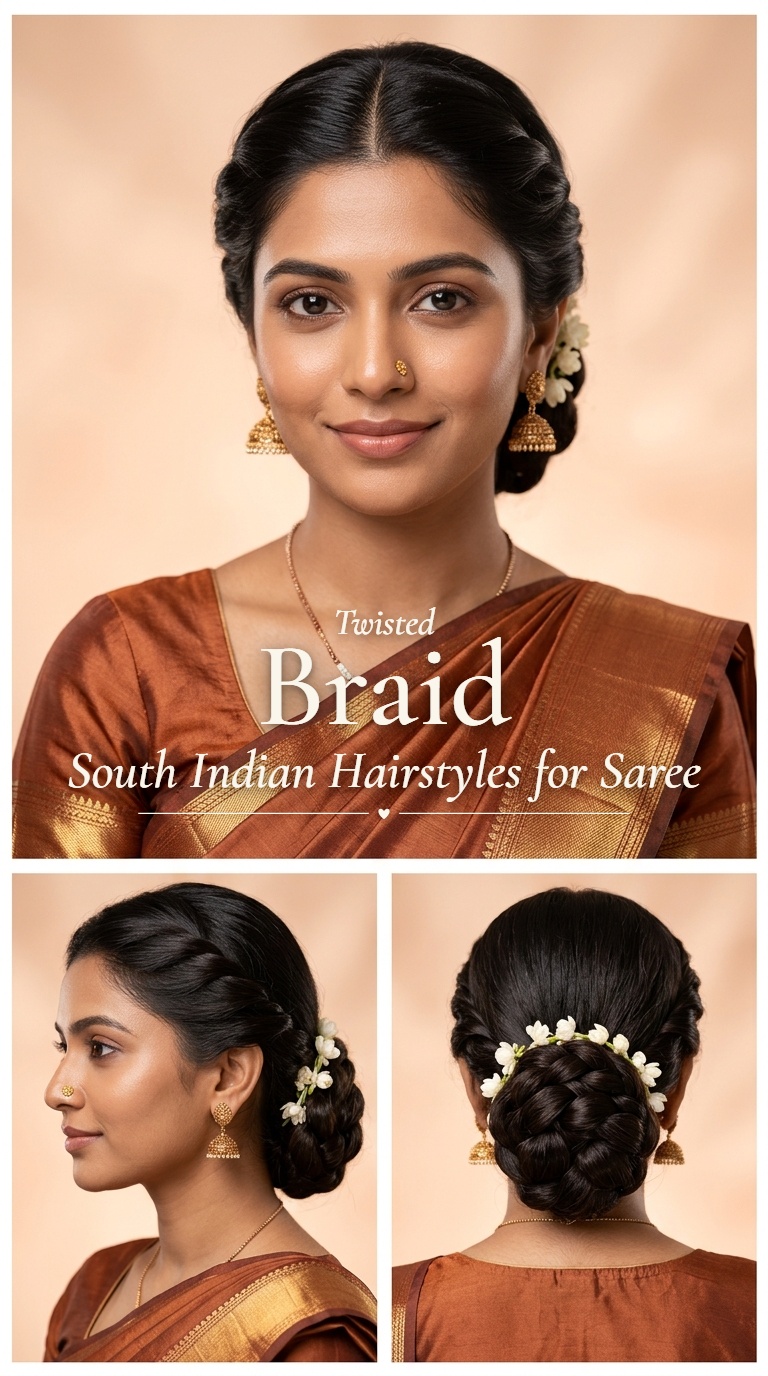
The twisted braid, or rope braid, is a simple yet effective way to manage long hair for a festive day. It involves twisting two sections of hair around each other to create a cord-like effect.
This style is particularly useful for showcasing multi-colored hair or highlights against a solid-colored silk saree. It offers a cleaner and more streamlined look than a traditional plait.
A light application of hair wax can help keep the twists tight and prevent stray hairs from popping out. It is a practical and stylish choice for long pujas or outdoor temple visits.
11. Puffed Braid South Indian Hairstyles for Saree
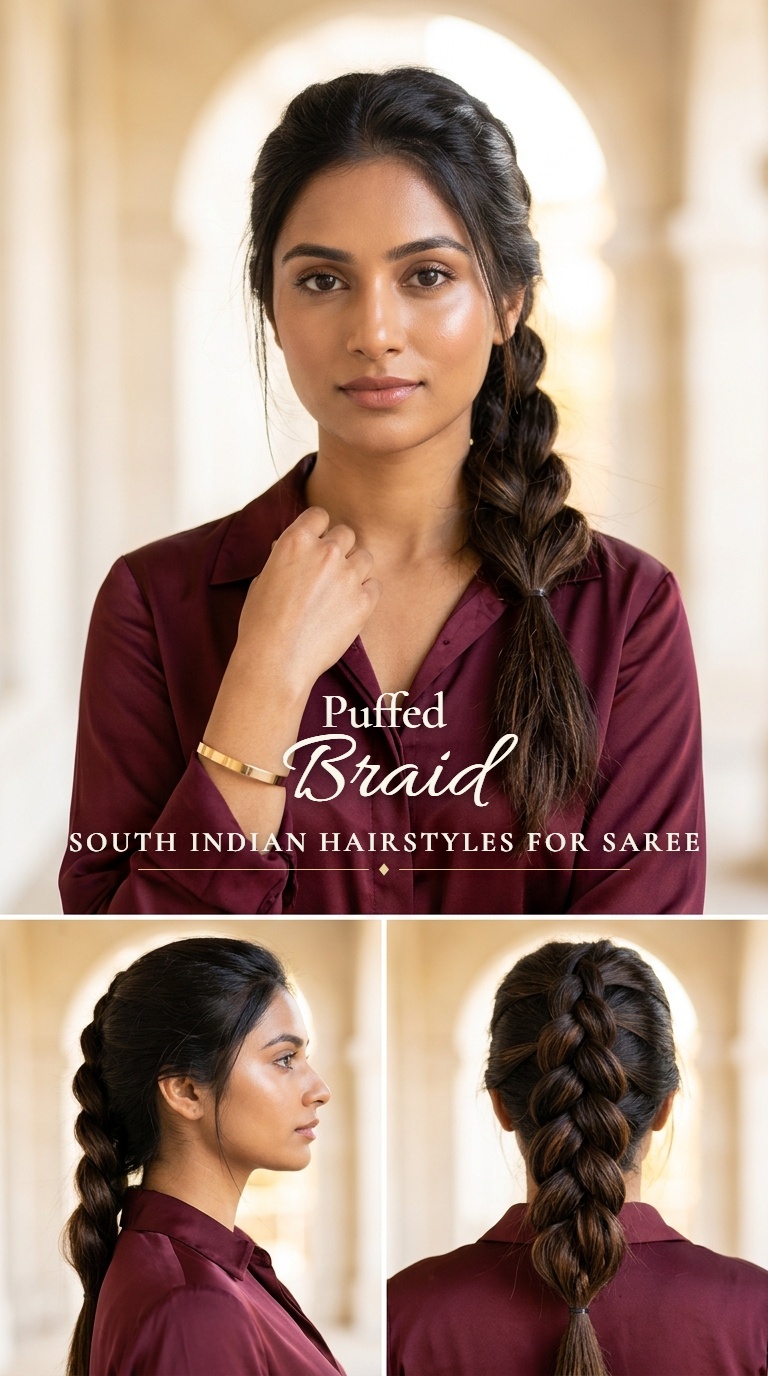
Adding a “puff” or slight elevation at the crown can significantly enhance the regal feel of a saree look. This height helps elongate the face and adds a sense of formality to the braid.
Secure the puffed section with hidden pins before starting the braid to ensure the volume doesn’t collapse. This technique is a favorite for South Asian brides who want to appear taller and more commanding.
The transition from the puffed crown to the sleek braid creates a dynamic silhouette that looks great from every angle. It pairs well with a traditional bindi and heavy forehead jewelry like a Maang Tikka.
12. Rose Bun South Indian Hairstyles for Saree
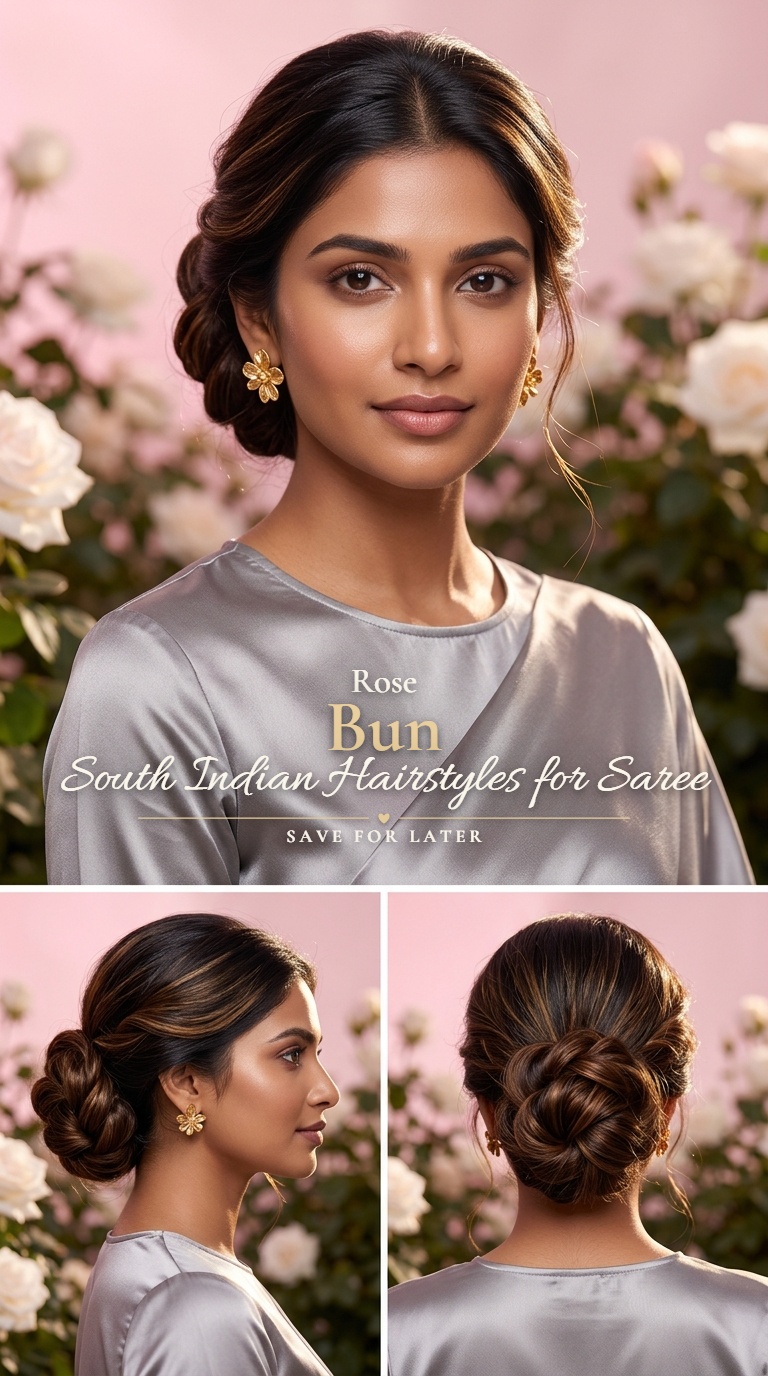
The rose bun uses the hair itself to mimic the petals of a flower, creating a masterpiece of hairstyling. It is a highly decorative option that works best for high-profile weddings and formal events.
Sections of hair are rolled and pinned in a circular pattern to create the floral effect at the back. This style requires precision and often the help of a professional stylist to achieve the best results.
Enhance the “rose” look by placing a single real red rose or a gold flower pin in the center. This is a stunning choice for a South Asian woman looking to make a grand entrance in a silk saree.
13. Sleek Bun South Indian Hairstyles for Saree
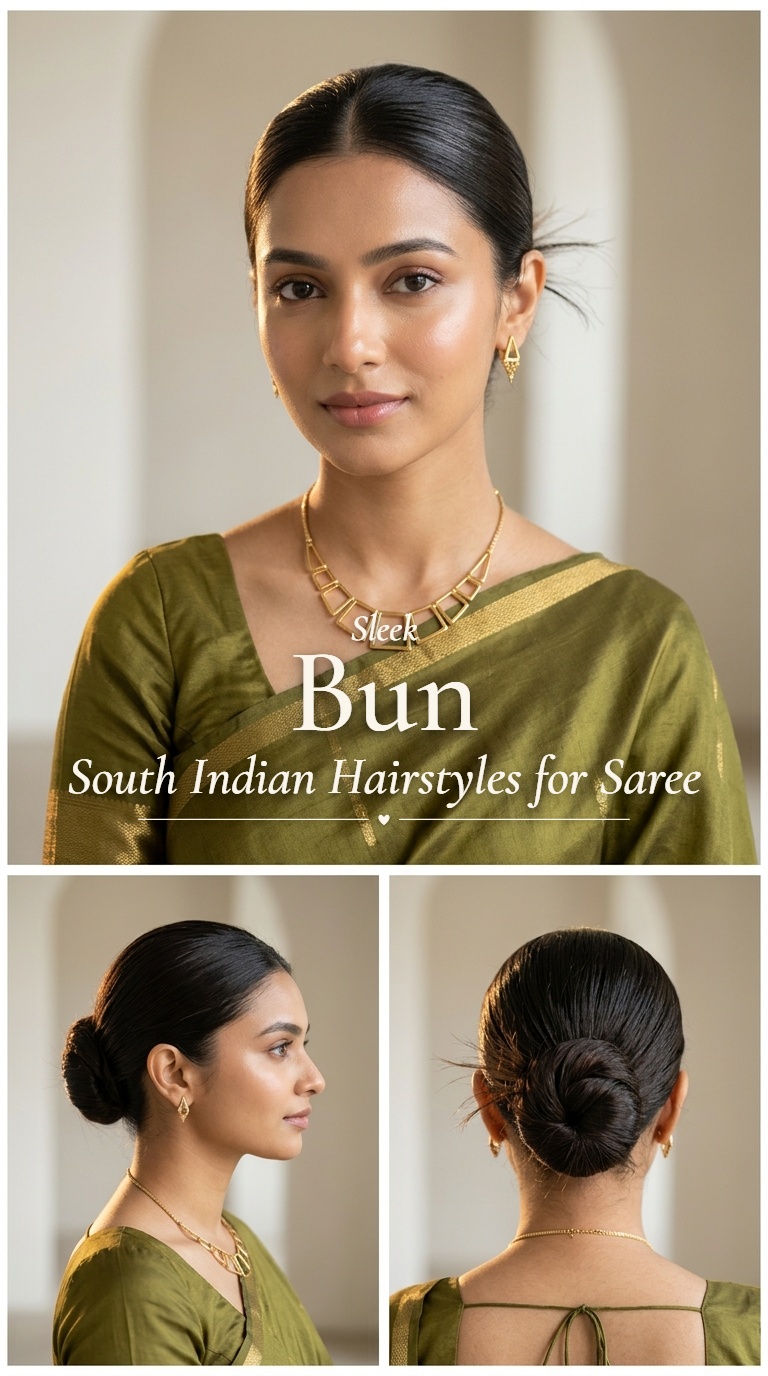
A sleek, center-parted bun is the epitome of modern South Asian elegance and minimalism. It highlights facial features and allows the intricate details of a saree’s blouse to be seen clearly.
Use a fine-tooth comb and a strong-hold gel to ensure every hair is perfectly in place. The bun should be smooth and compact, reflecting a disciplined and high-fashion aesthetic.
This hairstyle is a favorite among South Asian celebrities when wearing designer sarees for award functions. It is a powerful choice that conveys confidence and timeless sophistication.
14. Waterfall Braid South Indian Hairstyles for Saree
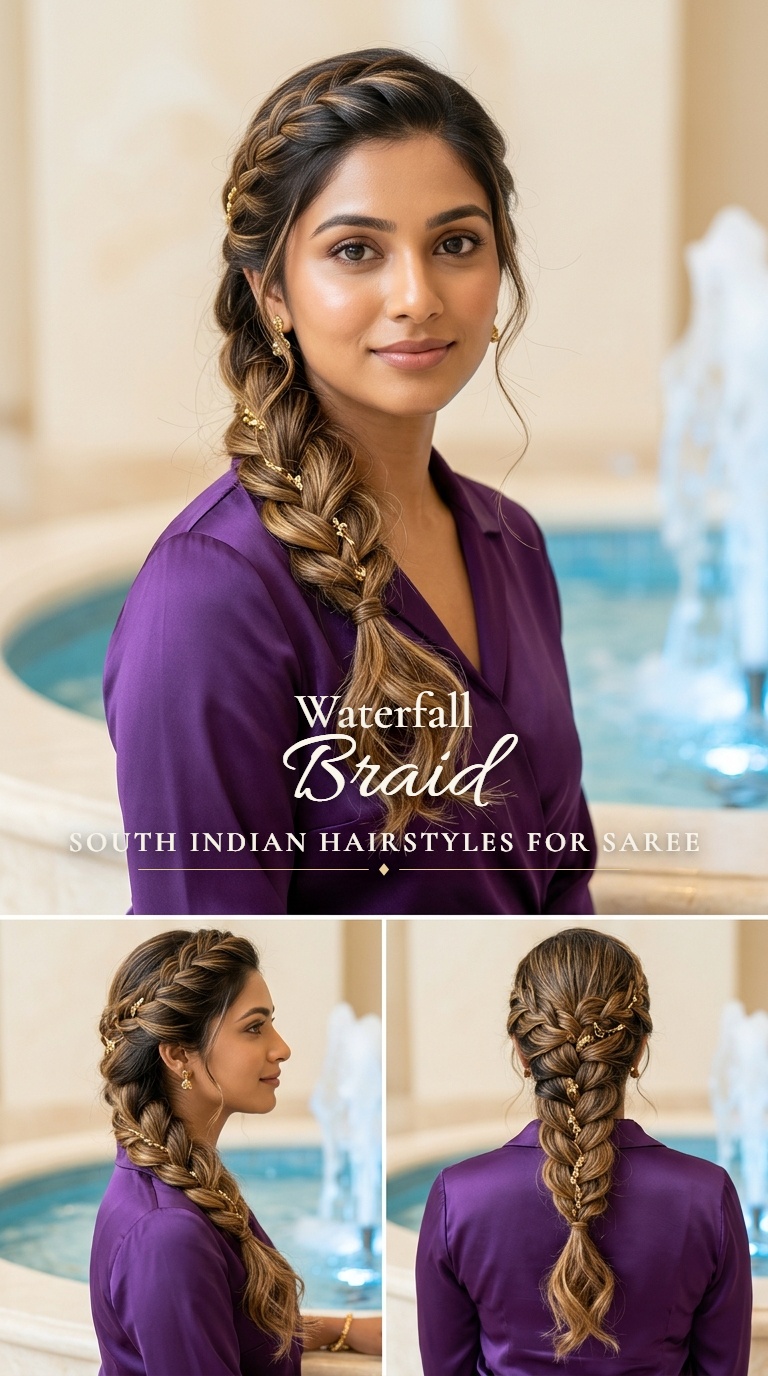
The waterfall braid creates a cascading effect where sections of hair “fall” through a horizontal braid. It is a delicate and feminine choice that adds a whimsical touch to a heavy saree.
This style works best on straight or slightly wavy hair where the cascading strands are clearly visible. It is an excellent middle ground for those who dislike tight braids but want an organized look.
Interweave a thin gold ribbon or a small string of pearls into the horizontal braid for extra flair. This style is perfect for day-time functions and engagement ceremonies.
15. Bubble Braid South Indian Hairstyles for Saree
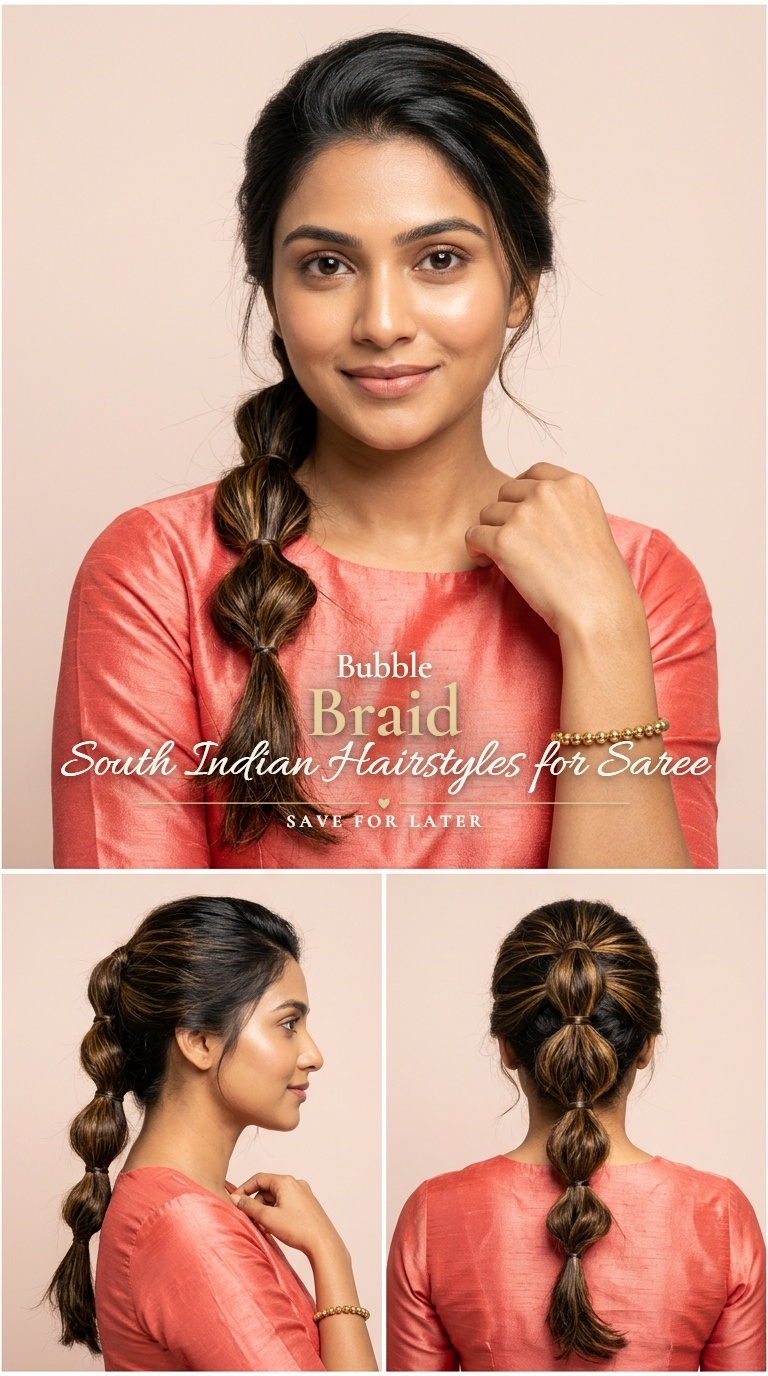
The bubble braid is a playful and trendy variation of the traditional ponytail that has gained popularity in ethnic fashion. It involves tying off sections of a ponytail to create round “bubbles” of hair.
This look is particularly effective for women with very long, voluminous hair who want to try something modern. Each bubble can be decorated with a small flower or a gold ring to keep the ethnic theme.
It provides a youthful energy that contrasts beautifully with the gravity of a traditional silk saree. This style is a great conversation starter at festive parties and family reunions.
16. Middle Part South Indian Hairstyles for Saree
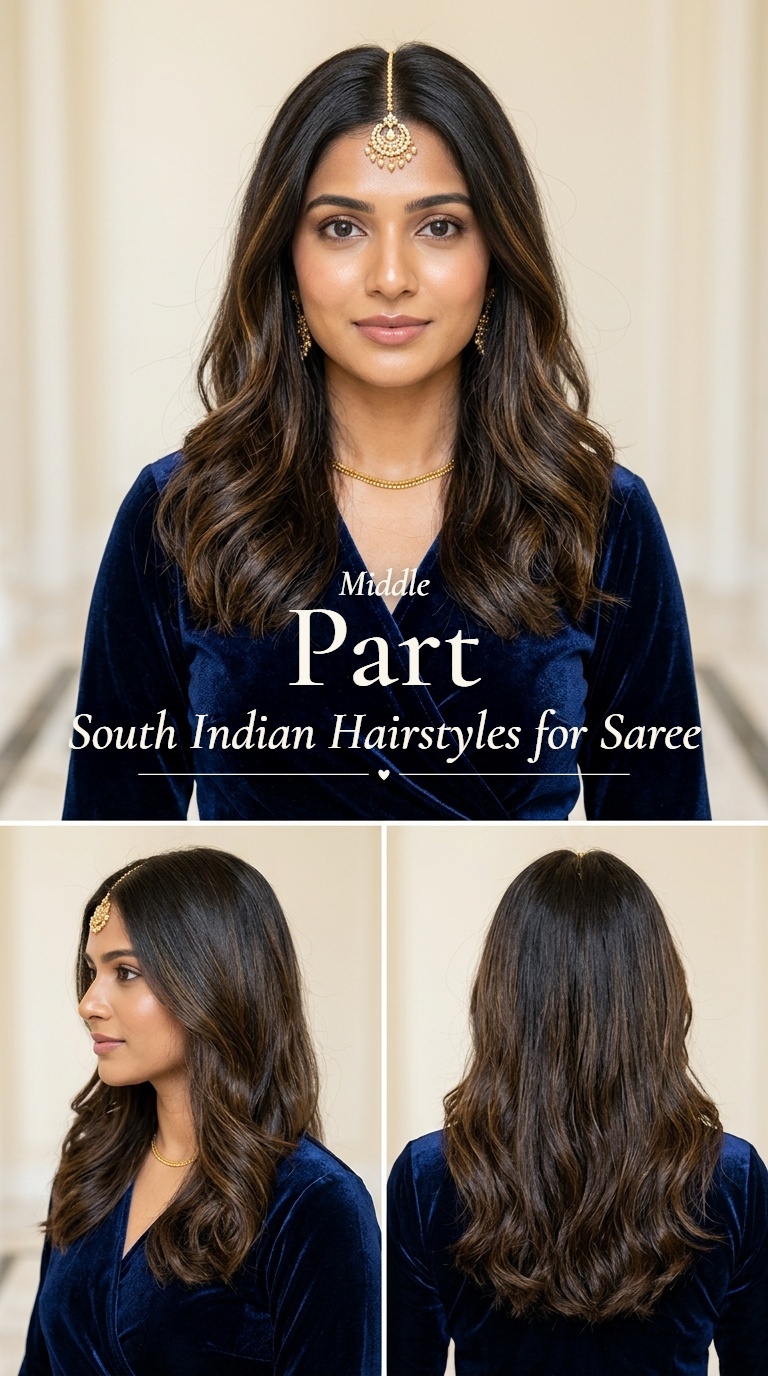
A sharp middle part is a classic South Indian look that frames the face symmetrically and highlights the forehead. It is the perfect foundation for wearing traditional jewelry like the Surya and Chandra ornaments.
Keep the hair sleek on both sides of the part before transitioning into a braid or a bun. This style is historically accurate for traditional temple dances and classical music performances.
For those with a broader forehead, a middle part can be paired with a larger bindi to create a balanced focal point. It is a look that never goes out of style in the South Asian fashion world.
17. Crown Braid South Indian Hairstyles for Saree
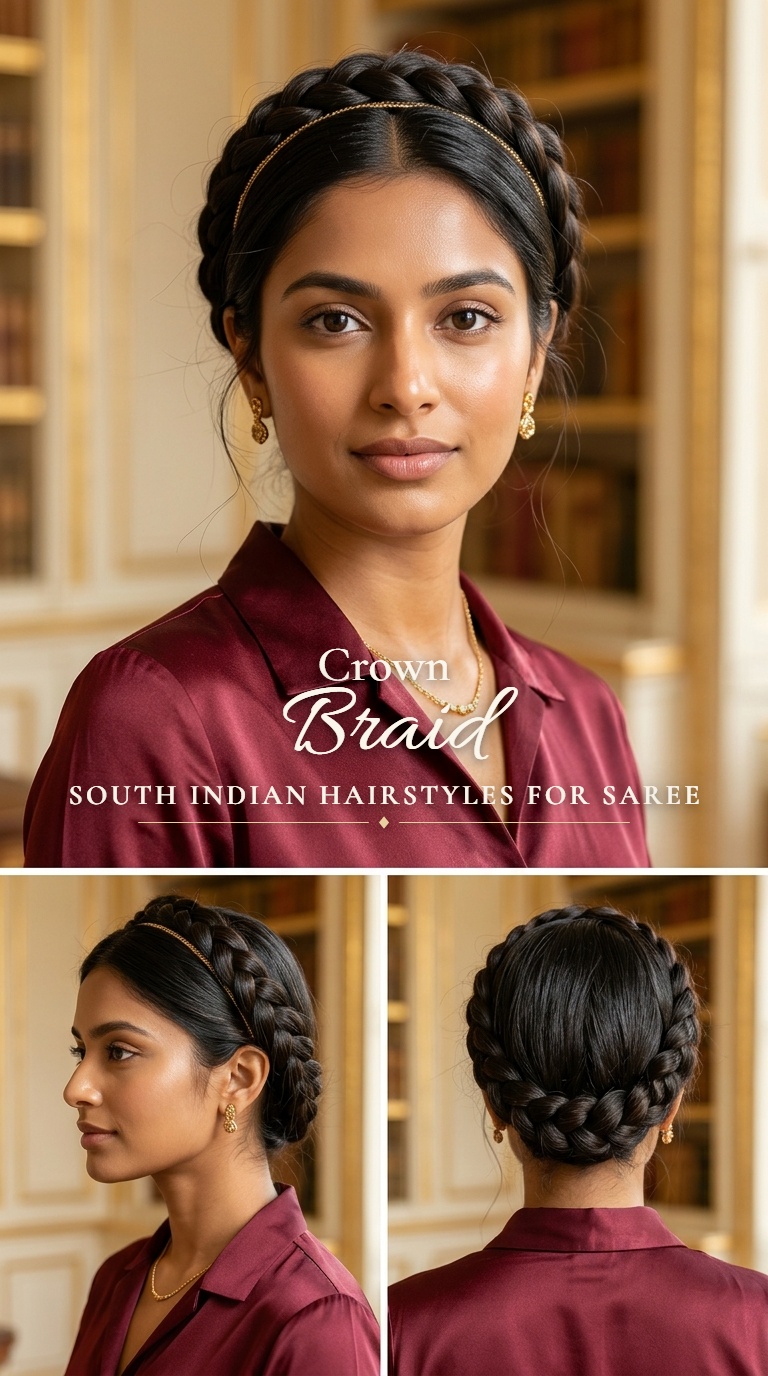
The crown braid wraps around the head like a halo, keeping all hair securely tucked away while looking incredibly intricate. It is an ideal choice for outdoor summer weddings where heat is a factor.
This style provides a vintage appeal that reminds one of old-world royalty from the Deccan regions. It works best with hair that has enough length to circle the head completely.
Tuck small sprigs of jasmine into the braid all the way around for a 360-degree floral effect. This hairstyle is both functional and exceptionally beautiful for high-energy celebrations.
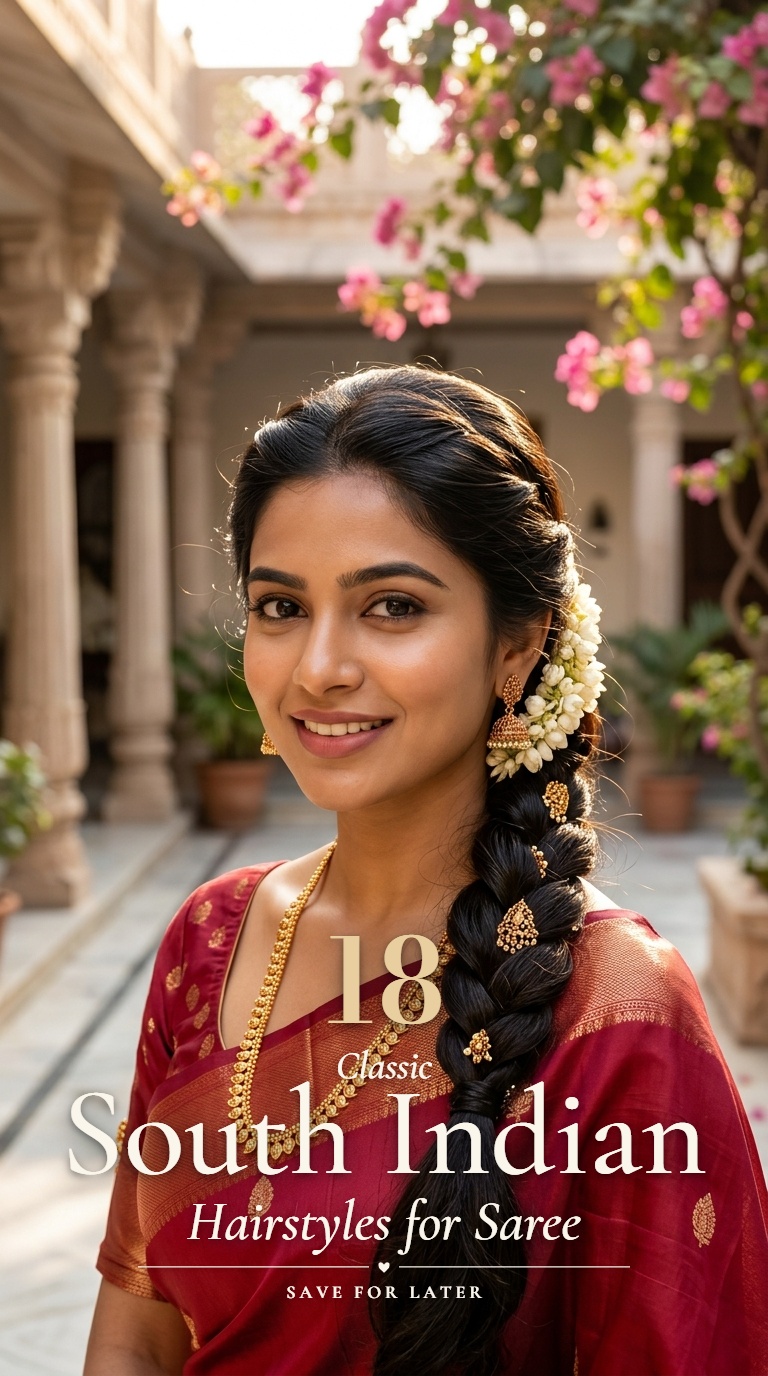
18. Jasmine Braid South Indian Hairstyles for Saree
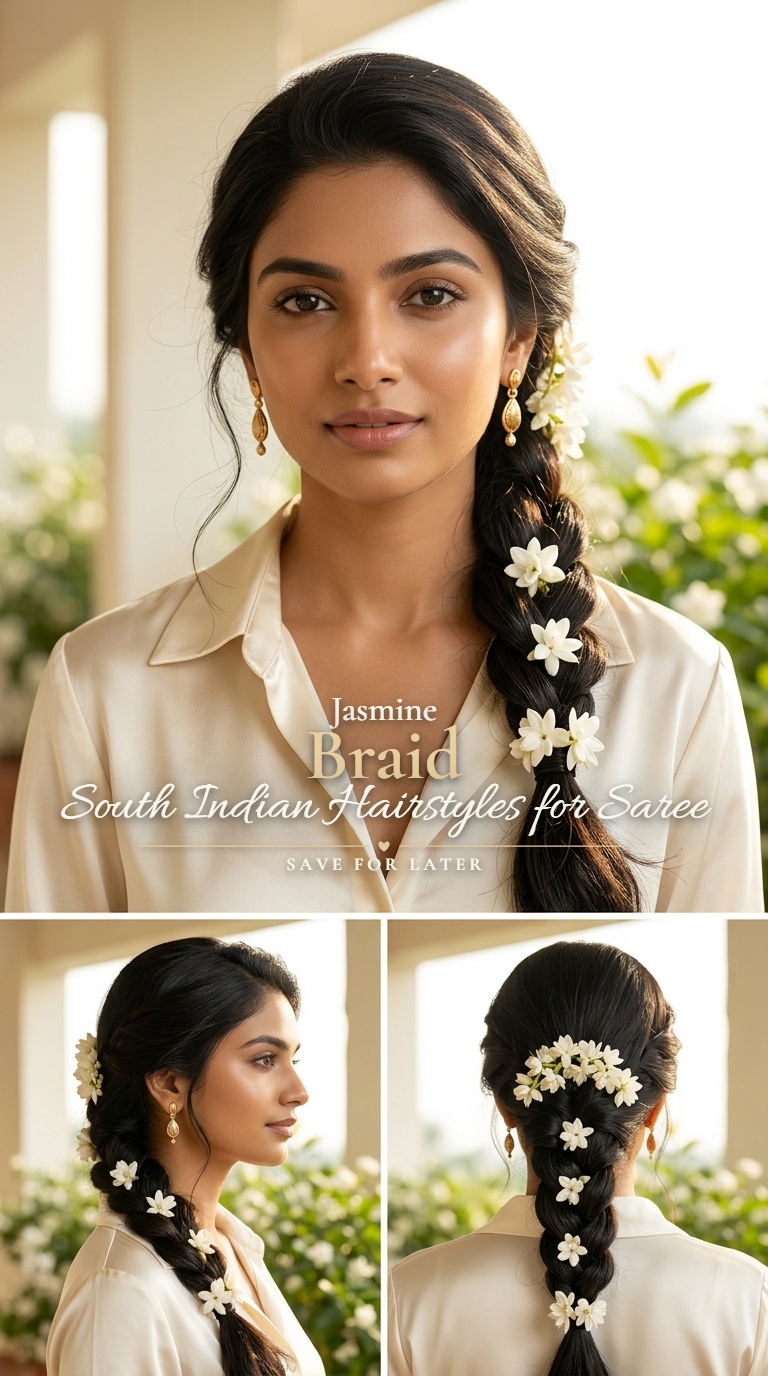
Nothing says “South Indian” quite like a long braid completely covered in layers of fresh jasmine. This style is the ultimate expression of traditional beauty and is often seen during weddings.
The flowers are usually wrapped in a spiral or layered in thick bands across the width of the braid. The scent of the jasmine is as much a part of the style as the visual impact.
This look requires a very sturdy braid base to support the weight of the fresh floral garlands. It is a sensory and visual delight that perfectly complements the heritage of a South Asian silk saree.
What are the best south indian hairstyles for saree for a wedding?
The most traditional and popular choice for a wedding is the long braid adorned with jasmine flowers and temple jewelry. This look is iconic in South Asian culture and perfectly balances the heavy weight of a bridal Kanjivaram saree. For a more modern wedding look, a classic low bun with a heavy floral wrap is also a top choice.
Which south indian hairstyles for saree suit short hair?
For those with shorter hair, a sleek low bun using a hair donut for added volume is an excellent option. You can also opt for a half-up style with the top sections pinned back using traditional gold clips to maintain the ethnic aesthetic. Fresh flowers can be used around a small bun or pinned to the side to enhance the traditional feel.
How do I maintain south indian hairstyles for saree in humid weather?
To prevent frizz and keep your style intact, use a strong-hold hairspray and anti-humidity serum before styling. Braid or bun styles are generally better than loose curls for humid South Asian climates as they keep the hair contained. Using traditional hair oils the night before can also help in taming the natural texture for a smoother finish.
Are fresh flowers necessary for south indian hairstyles for saree?
While not strictly necessary, fresh flowers like jasmine (malli) or roses are a defining element of South Indian hairstyling. They add a traditional touch and a natural fragrance that enhances the overall saree experience. If fresh flowers are unavailable, high-quality artificial floral accessories can serve as a practical and long-lasting alternative.
How do I choose south indian hairstyles for saree based on face shape?
Oval faces can carry almost any style, including sleek middle parts and high buns. For round faces, adding height at the crown through a puffed braid or a high bun can help elongate the appearance. If you have a square jawline, side-swept curls or loose tendrils around the face can soften your features and complement the saree drape.
Can I do these south indian hairstyles for saree on my own?
Many of the simpler styles like the traditional braid, sleek bun, or half-up look can be achieved at home with a bit of practice. However, intricate styles like the rose bun or temple jewelry braid may require the assistance of a professional stylist or a family member. Investing in good quality pins, hair donuts, and traditional ornaments makes the DIY process much easier.